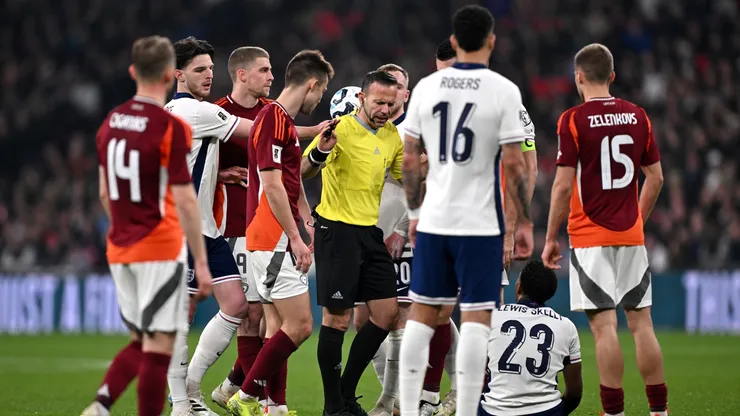
In soccer, the final whistle doesn’t always mean 90 minutes are up. That’s where stoppage time comes in—those tense extra minutes where anything can happen. But how is it calculated and why does it vary?
It’s a window where heroes rise and defeats sting the most. Stoppage time isn’t just extra minutes; it’s pure drama added to the script. Yet behind the chaos lies a method, a calculation shaped by the referee’s watchful eye.
As the clock stretches, strategy gives way to instinct. No one knows exactly how long it’ll last. In that haze of uncertainty, matches are stolen, hearts break, legends are born and soccer writes its most unforgettable lines.
Injury time
Stoppage time, commonly known as “added time” or “injury time”, refers to the extra minutes the referee adds at the end of each half to compensate for interruptions during the match, such as injuries, substitutions or deliberate time-wasting.
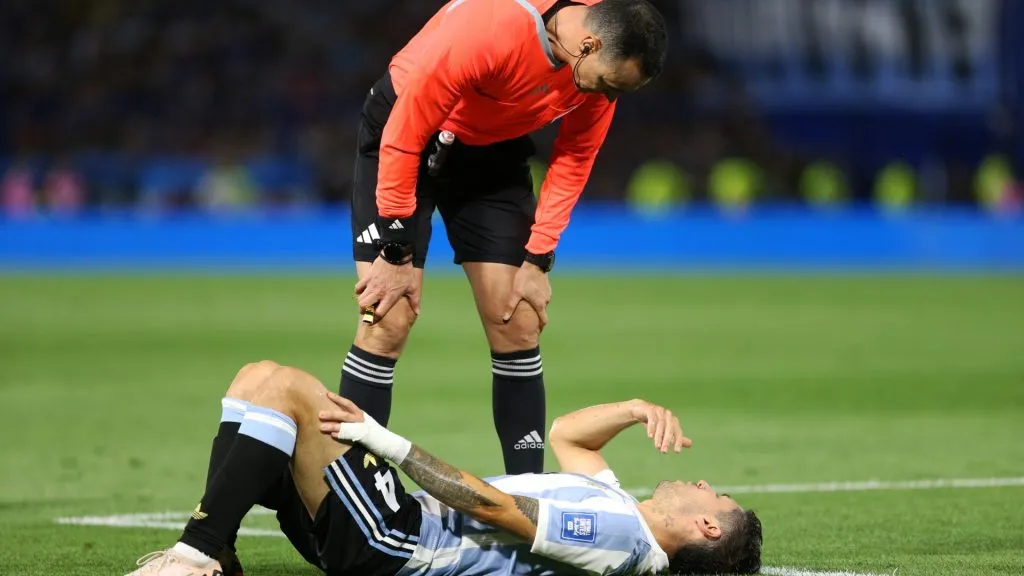
Referee Wilmar Roldán checks on Gonzalo Montiel after suffering an injury during the South American FIFA World Cup 2026 Qualifier match between Argentina and Peru in 2025. (Source: Daniel Jayo/Getty Images)
Traditionally, the duration of this added time has been a subject of controversy due to its apparent arbitrariness. An analysis of 32 matches revealed that an average of about 7 minutes was added, although the actual time lost during play suggested that around 13 minutes should have been added.
VAR delays
The Video Assistant Referee (VAR) was implemented with the intention of correcting clear and obvious errors in refereeing decisions. However, its use has sparked debate, especially when reviews cause significant delays in the game.
A perfect example occurred in a Premier League match between Tottenham Hotspur and Southampton, where a VAR review lasted nearly five minutes, resulting in the cancellation of a goal due to a marginal offside.
New FIFA guidelines
FIFA and the International Football Association Board (IFAB) introduced rule changes in September 2024 to improve transparency and efficiency in the game, fairness and the use of technology in soccer.
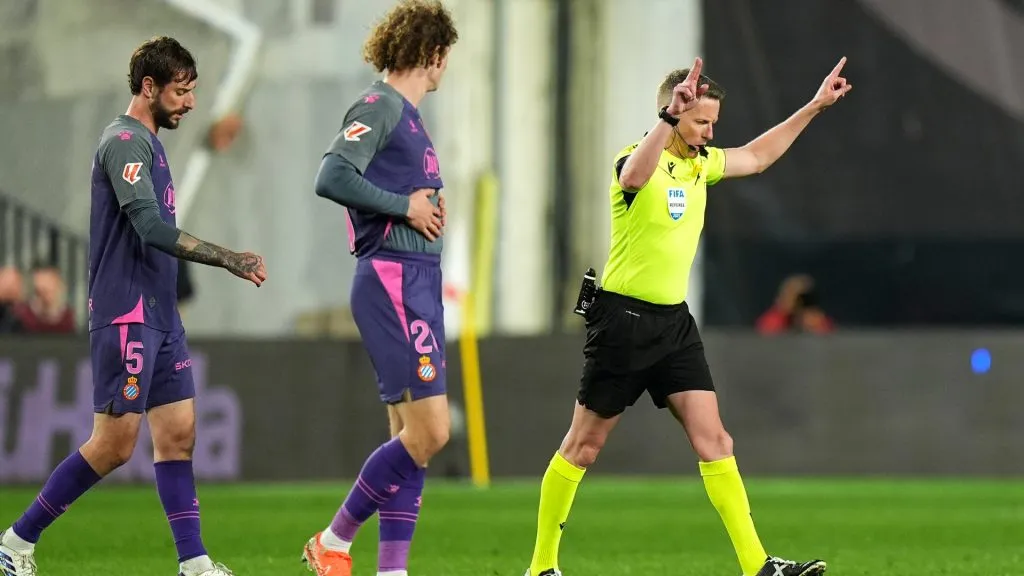
Match Referee Alejandro Hernandez gestures after a VAR review before awarding a penalty to RCD Espanyol during the LaLiga match between Rayo Vallecano and RCD Espanyol de Barcelona in 2025. (Source: Angel Martinez/Getty Images)
Among these modifications, referees are now allowed to publicly announce decisions made after a VAR review, aiming to keep spectators informed and reduce confusion.
In addition, measures have been implemented to address time-wasting, particularly by goalkeepers, granting indirect free kicks in cases of excessive delay, according to sources like Inside FIFA.
Controversial examples
Refereeing decisions, even with the help of VAR, have been a source of controversy on many occasions. A notable case occurred during the 2022 World Cup in the match between Tunisia and France.
Antoine Griezmann scored a goal in stoppage time that was later disallowed after a VAR review, even though play had already restarted — violating standard VAR protocol.
Another notable incident happened in the Merseyside derby between Liverpool and Everton, where a dangerous tackle by James Tarkowski on Alexis Mac Allister was only punished with a yellow card. Later, the PGMOL (the body responsible for referees in England) admitted that Tarkowski should have been sent off.