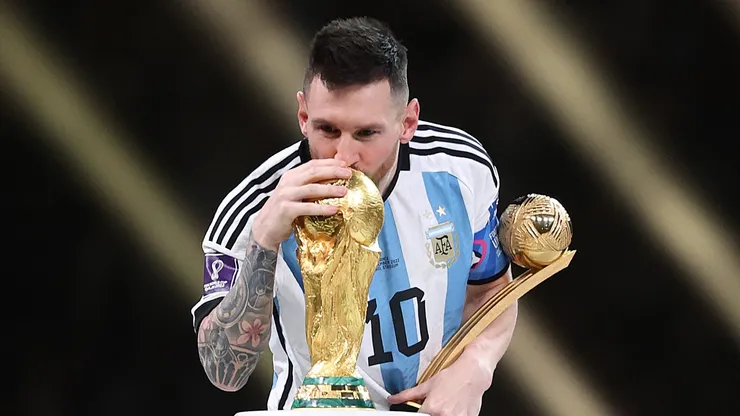
The FIFA World Cup trophy is undoubtedly the most coveted prize for any national team. It’s not just about the prestige, either; the trophy itself is worth over $20 million due to the sheer amount of gold it contains.
The original World Cup trophy is made of solid 18-karat gold, making it the most valuable prize in global sports, easily outpacing other major tournaments that offer flashy but far less expensive trophies.
Aside from the trophy, which is already incredibly valuable because of all its gold, the players also receive a gold medal for winning the World Cup. However, the trophy is undoubtedly what the players cherish most when they win the tournament.
Do World Cup winners keep the trophy or do they have to return it?
No, World Cup winners do not get to keep the original trophy. In addition to receiving a winner’s medal, they are given a bronze-plated replica to take back home. This replica is used for celebrations with fans and goes on display at their respective national federation’s headquarters.
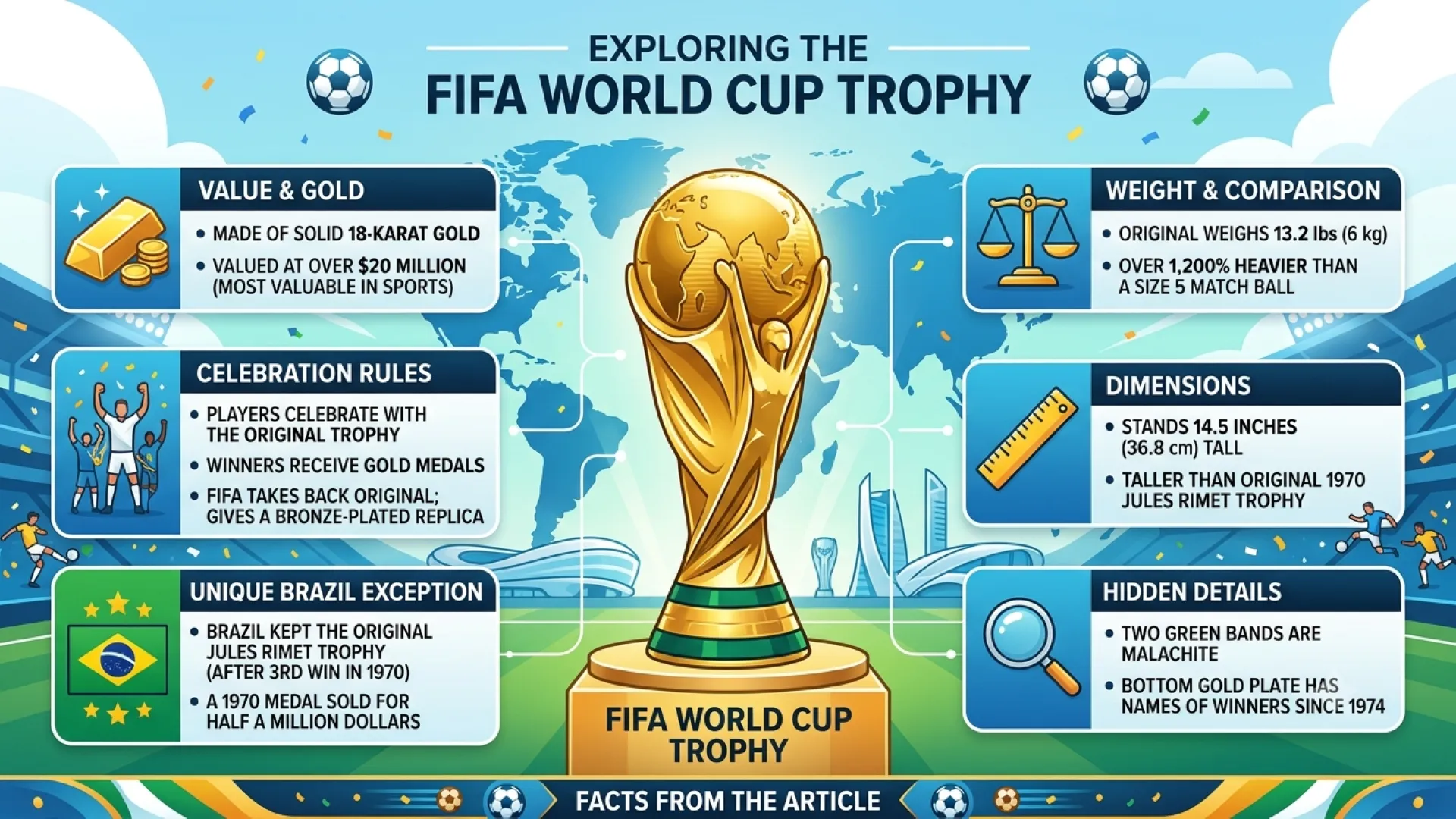
Infographic made with Gemini AI
To date, Brazil is the only team that has been allowed to keep an original solid gold trophy, a privilege earned after winning their third title in 1970. Reflecting just how valuable this history is, a single winner’s medal from that legendary 1970 tournament recently sold for half a million dollars.

How much does the trophy weigh and measure?
The original solid gold trophy weighs 13.2 pounds (6 kg), which is over 1,200% heavier than an official size 5 World Cup match ball. The replica trophy, of course, weighs much less since it lacks the solid gold composition of the original.
Standing 14.5 inches (36.8 cm) tall, it is a fairly standard size for an international sports trophy. However, it is about 2.3 inches (6 cm) taller than the original Jules Rimet trophy, which stood at just under 12 inches (30 cm).
Hidden details on the trophy’s base
The two green bands visible on the base of the trophy are made of malachite, a mineral that typically holds a commercial value of $2 to $5 per carat. One detail hidden from plain sight is the gold plate on the very bottom of the base. Measuring about 5 inches (13 cm) in diameter, this plate is engraved with the names of every winning nation since 1974.