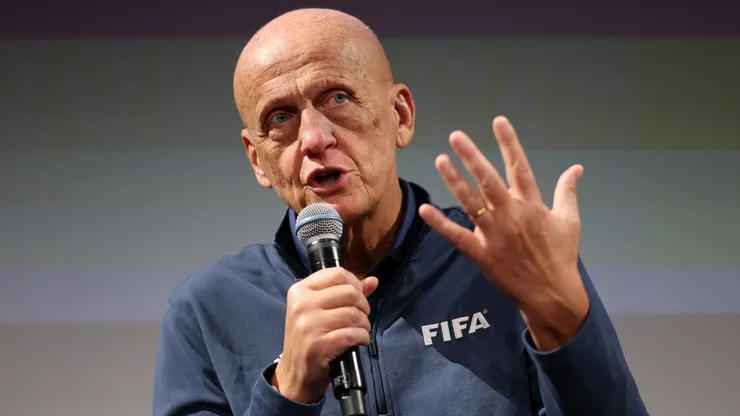
Pierluigi Collina, FIFA’s chief of refereeing, was at the center of the debate after Egypt’s dramatic Round of 16 defeat to Argentina at the 2026 FIFA World Cup, which sparked one of the tournament’s biggest refereeing controversies. The Egyptian Football Association voiced its frustration over several key decisions made during the match at Atlanta Stadium.
Following the controversy, Collina addressed the debate in a FIFA interview, defending the integrity of World Cup officials. “Of course, constructive discussion about decisions will always be part of football, but unfounded allegations have no place in our sport. Nobody can question the integrity of the FIFA World Cup match officials. When this happens, it may provoke reactions that lead to threats against them and their families. This is not right.”
Argentina completed a remarkable comeback from two goals down to defeat Egypt 3-2 and reach the quarterfinals. Yasser Ibrahim and Mostafa Ziko scored for Egypt, while Cristian Romero, Lionel Messi, and Enzo Fernández found the net for the defending champions.
Why did Egypt complain about the officiating?
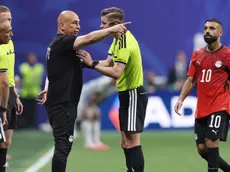
Egypt’s protests centered on two controversial moments during the Round of 16 clash, with Egypt’s head coach Hossam Hassan suggesting that refereeing decisions favored Lionel Messi and Argentina.
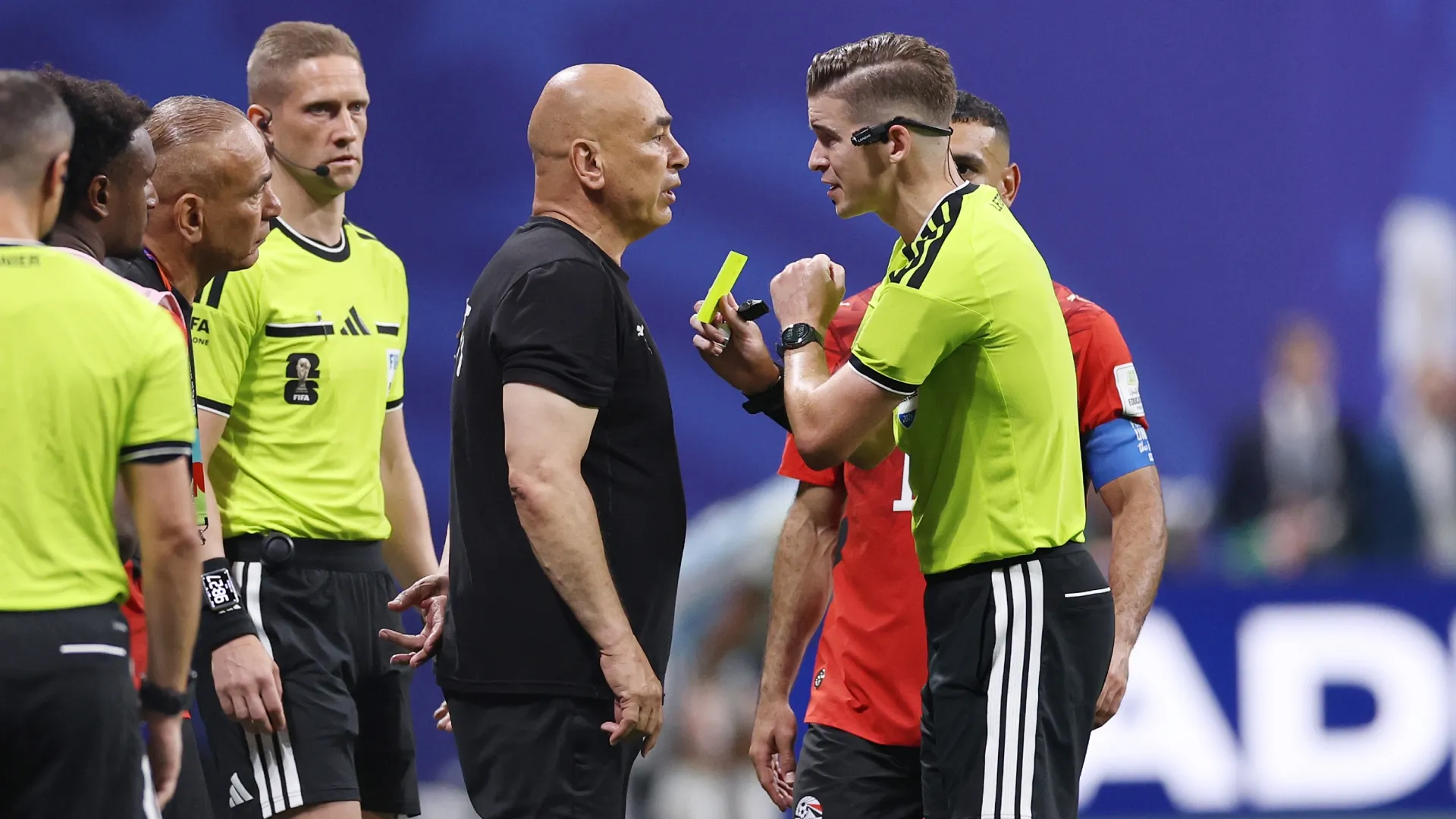
Referee Francois Letexier shows a yellow card to Hossam Hassan, Head Coach of Egypt. Buda Mendes/Getty Images
The first came when VAR disallowed what would have been Mostafa Ziko’s second goal after determining that Marwan Attia had committed a foul on Lisandro Martínez earlier in the attacking possession phase.
The second involved a penalty appeal late in the match after Mohamed Salah went down following contact with Julián Álvarez inside the penalty area, with both the referee and VAR allowing play to continue.
Collina explains FIFA’s interpretation of the incidents
Collina also explained why FIFA believed both decisions were correctly handled under the VAR protocol. “After every goal is scored, the VAR checks the attacking possession phase (APP). If a foul is identified in the build-up and is deemed to have had an impact on the goal, the VAR will recommend an on-field review. There is no defined limit regarding either the distance from goal or the amount of time between the incident and the goal.”
Referring specifically to the disallowed Egyptian goal, Collina stated that Marwan Attia’s challenge on Lisandro Martínez constituted a foul regardless of where it occurred during the attacking sequence.
SurveyDid FIFA explain the controversial decisions in Argentina vs. Egypt clearly?
Did FIFA explain the controversial decisions in Argentina vs. Egypt clearly?
ALREADY VOTED 0 PEOPLE
Regarding Egypt’s penalty appeal, he added that FIFA’s officials considered the contact between Mohamed Salah and Julián Álvarez to be “normal football contact,” meaning neither the referee nor the VAR identified an infringement that warranted a penalty.