
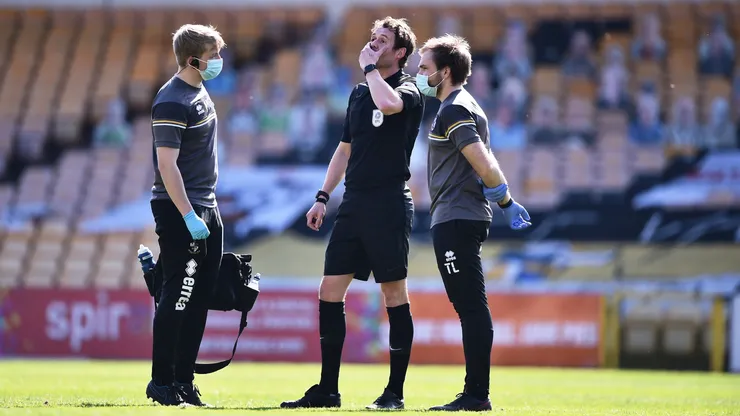
A bizarre scene unfolded during the high-stakes intercontinental playoff clash between Jamaica and the DR Congo ahead of the 2026 World Cup. Veteran referee Facundo Tello, who is confirmed as part of the tournament’s official refereeing pool, went down with an injury deep into stoppage time, forcing FIFA to immediately trigger its emergency contingency protocols.
Every 2026 World Cup match features a cohesive four-man on-field crew: the head referee, two assistant referees (linesmen), and the Fourth Official stationed between the technical areas. If the head referee is forced to exit due to injury, the roles immediately reshuffle, with the Fourth Official stepping in as the direct replacement.
To execute this transition seamlessly, the incoming official is quickly hooked up to the main referee’s communication headset, inherits the whistle, and steps onto the pitch to assume full authority for the remainder of the match.
These rigid regulations are designed to ensure the competitive integrity of the game, serving as just one of several updated guidelines for the 2026 World Cup compared to Qatar 2022, all aimed at helping players, coaches, and staff navigate unexpected scenarios.
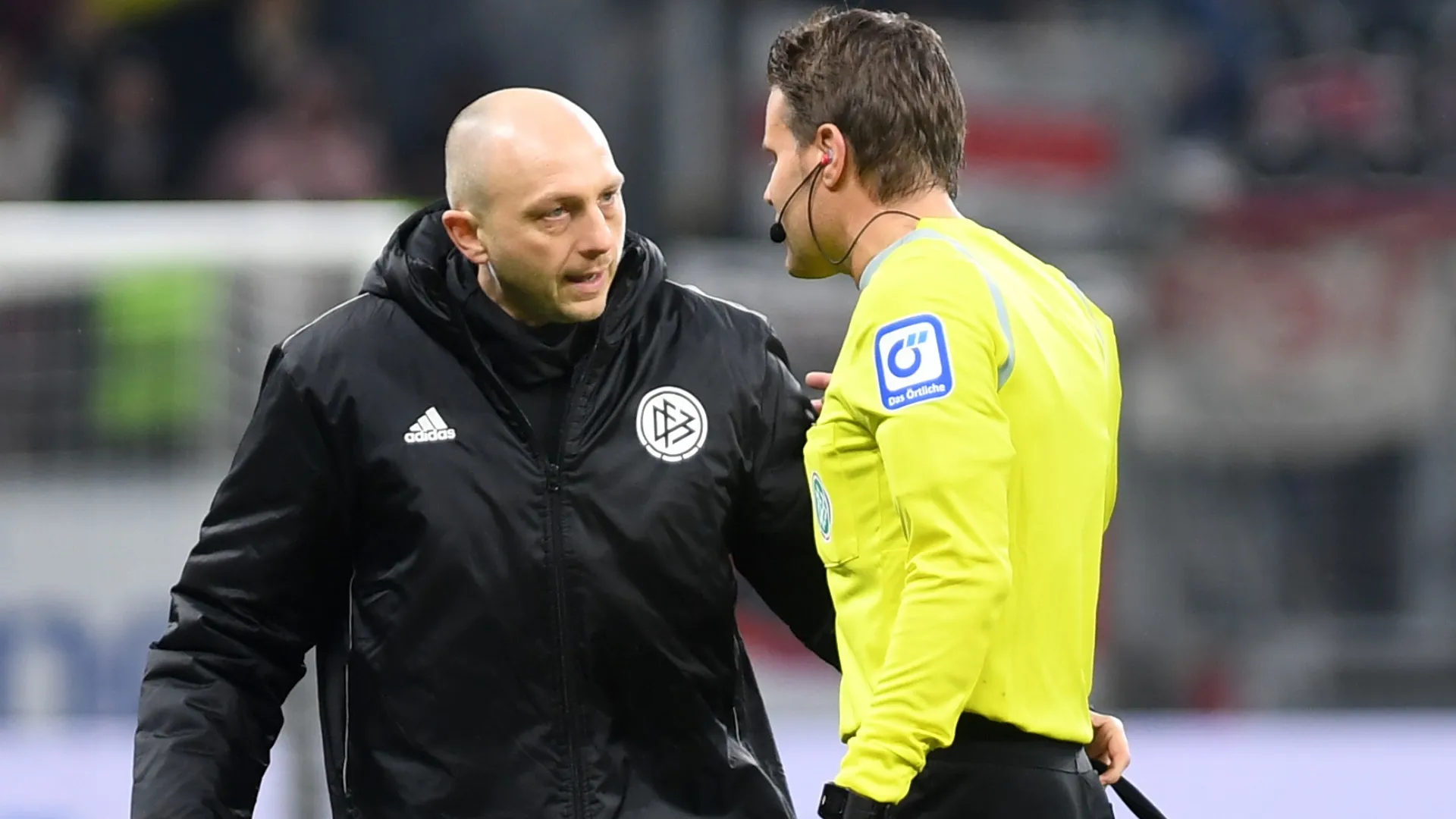
Referee gets reviewed by a doctor on the field.
What happens to the vacancy left by the fourth official?
To fill the sudden void on the sideline, a Reserve Assistant Referee—who belongs to the stadium’s officiating pool for the day but remains unassigned to the live match—is summoned from the stands to take over the technical areas, administrative duties, and the substitution board.
Through these precise guidelines, the IFAB guarantees that a complete crew is always available to absorb any injury. On sports’ biggest stage, where grueling schedules and intense summer temperatures will test physical limits, having a battle-tested contingency plan is vital.
What if an assistant referee goes down?
Just like the head referee, linesmen are not immune to mid-match physical breakdowns. While they might not log the exact same mileage as the players, the constant high-intensity sprinting along the touchline places an immense physical toll on their bodies, requiring a distinct protocol.
If an assistant referee suffer an injury during play, the following chain of command takes effect:
- Depending on the tournament’s specific pre-match assignment directives, either the Fourth Official or the Reserve Assistant Referee will grab the flag and take over the designated touchline.
- Typically, if a linesman goes down, the Reserve Assistant Referee steps directly into the role. Because they are specifically trained for offside tracking and boundary lines, this allows the Fourth Official to remain in place and maintain control of the chaotic sidelines.
Handling the mid-play fallout
What happens if a team is in the middle of a dangerous attack when the referee suddenly goes down? To keep the game moving fairly and prevent a complete operational breakdown, the rules outline three critical points:
- Play accommodations: According to IFAB Law 5, if the referee becomes incapacitated while the ball is live, play can actually continue under the visual supervision of the assistant referees until the ball naturally travels out of bounds.
- The operational delay: Once play halts, a brief administrative timeout occurs. Medical staff will evaluate the injured official, and if they cannot continue, the crew gathers at the sideline to swap communication gear, trackers, and official refereeing jerseys.
- Resuming play: The newly appointed head referee restarts play with the appropriate call—such as a dropped ball or the stoppage-specific set-piece—and assumes absolute final authority on the pitch, including the power to consult the Video Assistant Referee (VAR) crew operating in the video hub.