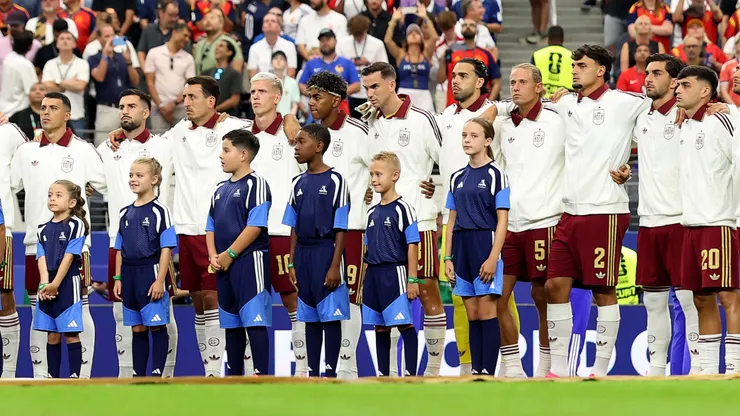
Spain’s national anthem, “La Marcha Real”, has no official lyrics, making it one of the few national anthems in the world performed only through music. Unlike many countries, players and fans listen to an instrumental composition. It explains the artist selected to perform Spain’s anthem before the 2026 World Cup final against Argentina.
The origins date back to 1761, when the melody appeared as “La Marcha Granadera” in a Spanish military document. King Carlos III later declared it a “March of Honor” in 1770 and became associated with the Spanish monarchy.
Although several attempts have been made throughout history to add lyrics to the anthem, none achieved enough consensus to become official. The lack of words has remained part of “La Marcha Real’s” identity.
When was ‘La Marcha Real’ created and why did it become Spain’s anthem?
“La Marcha Real” dates back to 1761, when the melody first appeared as “La Marcha Granadera” in a Spanish military document, before becoming Spain’s national anthem through tradition and royal recognition.
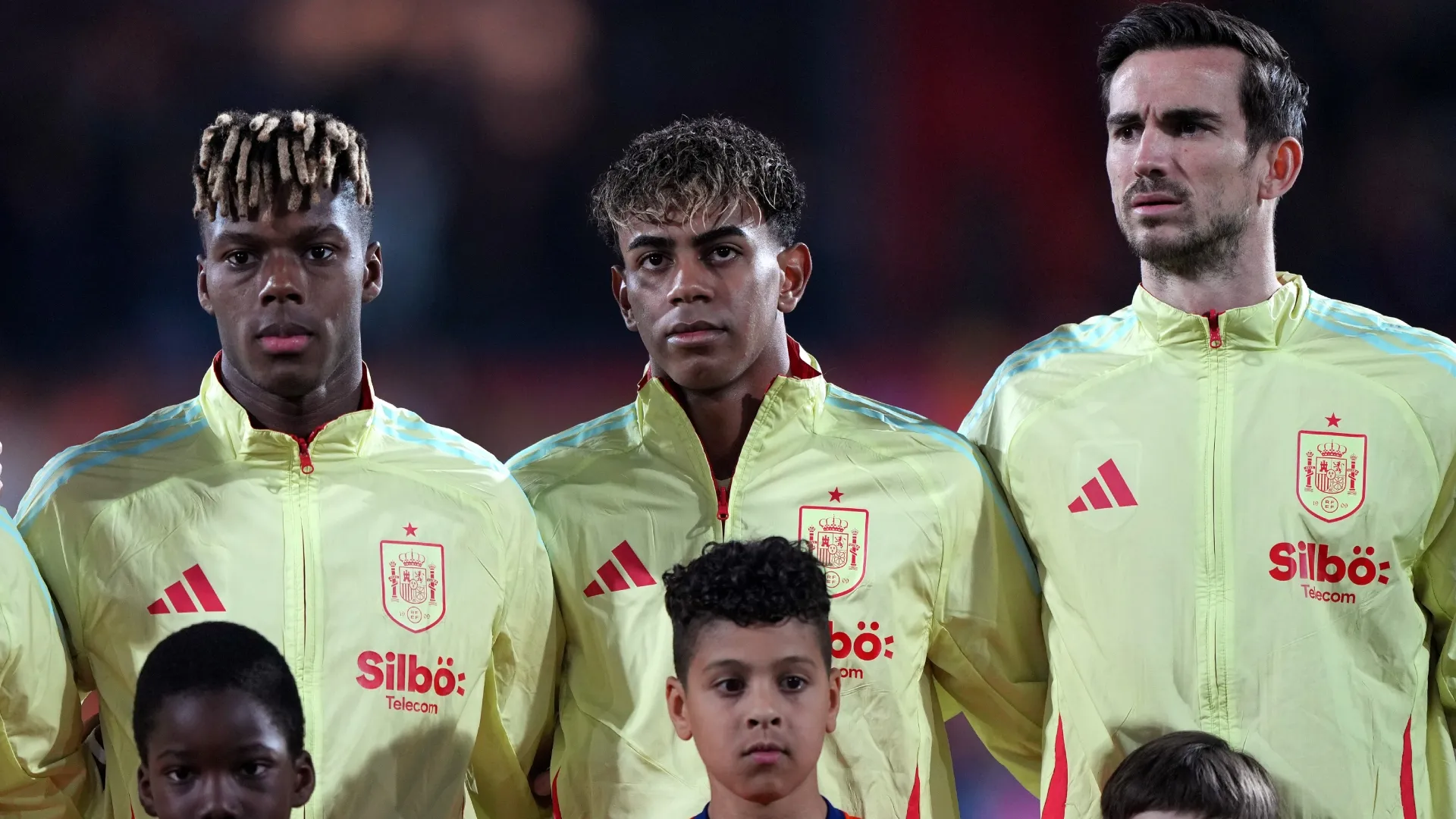
Nico Williams, Lamine Yamal and Fabián Ruiz during the national anthem ahead of the UEFA Nations League quarterfinal leg one match (Source: Alex Bierens de Haan/Getty Images)
The composition was included in the Libro de Ordenanza de los toques militares de la Infantería Española, although its exact authorship remains debated by historians. King Carlos III declared the march an official “March of Honor” and it gradually became associated with ceremonies involving the Spanish monarchy.

Because it was regularly played at public events attended by the royal family, the piece became known among Spaniards as the “Royal March” and eventually developed into the country’s national anthem without a formal adoption process at the time.
The anthem’s status changed during different periods of Spanish history, including the Second Spanish Republic, when another song replaced it. After the Civil War, “La Marcha Real” returned as Spain’s anthem, and its current official regulation was established through Royal Decree 1560/1997, which defines the anthem’s musical versions and use.
Has Spain ever tried to add lyrics to its national anthem?
Yes! Spain has made several attempts to give “La Marcha Real” official lyrics, but none of the proposals achieved enough public and political consensus to become the anthem’s permanent version.
One of the earliest attempts came in 1870, when General Juan Prim organized a national competition to create a new anthem, but the jury ultimately recommended keeping the existing march.
During the 20th century, lyrics were also associated with “La Marcha Real” during Francisco Franco’s dictatorship, but those words were later abandoned because of their connection with that period of Spanish history.
Since then, different initiatives have tried to create a new version that could represent the entire country. The most notable modern effort came in 2007, when the Spanish Olympic Committee supported a project to introduce new lyrics.
The proposal, written by Paulino Cubero and publicly presented with a performance by Placido Domingo, was eventually withdrawn after receiving significant criticism and failing to generate broad agreement.
As a result, Spain remains one of the few countries whose national anthem has no official words, meaning players and fans do not have a traditional verse to sing during international competitions such as the FIFA World Cup.
What does ‘La Marcha Real’ mean?
“La Marcha Real” means “The Royal March” in English, a name that reflects the anthem’s historical connection with Spain’s monarchy and royal ceremonies. The title comes from the tradition of playing the composition during official events attended by the king, queen or members of the royal family.
Before becoming widely known as “La Marcha Real”, the piece was called “La Marcha Granadera” or “March of the Grenadiers”, referring to its origins as a military-style composition.
Today, it is unique among major international anthems because its identity is based entirely on its melody rather than lyrics. Its instrumental nature has become one of the defining characteristics of Spain’s national representation.