
A new officiating tool is set to impact games across Major League Baseball in 2026, as the Automated Ball-Strike (ABS) challenge system is introduced as part of the league’s ongoing push toward greater accuracy.
Rather than fully automating every pitch, MLB has chosen a hybrid approach in which umpires continue to make calls, but players can challenge certain decisions. This creates a balance between traditional officiating and the use of technology.
As teams adjust to these changes, the ABS challenge system is expected to influence everything from pitch framing to late-game decision-making, making it an important rule to understand heading into the 2026 season.
How the ABS Challenge System works in the 2026 MLB season
The Automated Ball‑Strike (ABS) Challenge System will be used in every Major League Baseball game throughout the 2026 regular season as a hybrid officiating tool that blends technology with traditional umpiring.
Rather than automatically calling every pitch, ABS gives teams the ability to challenge whether a pitch was a ball or a strike when they believe the home‑plate umpire got it wrong.
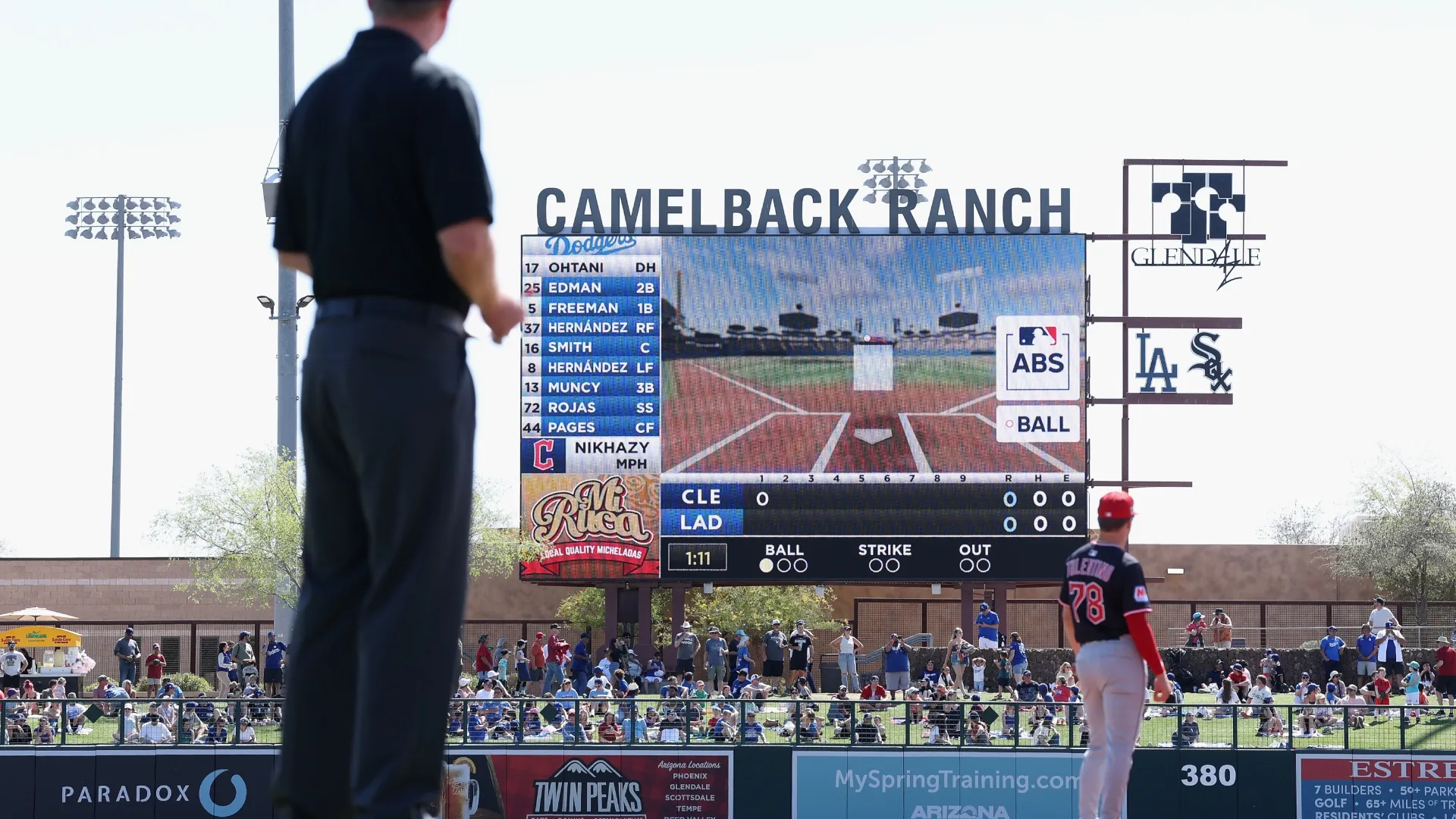
The video board displays the ABS system during a challenge in 2025 (Source: Christian Petersen/Getty Images)
This system aims to increase fairness and accuracy in ball‑strike calls while keeping the human element intact. It was tested extensively in the Minor Leagues and during spring training in 2025 before being approved by MLB’s Joint Competition Committee for full implementation.
Pitch tracking technology will operate behind the scenes, but the final in‑game use depends on teams initiating challenges under specific rules.
How many ABS challenges does each team get?
Each team will start with two ABS challenges per game, and they keep a challenge if it is successful, meaning it overturned the umpire’s original call. This design encourages teams to be strategic about when they use their challenges, saving them for high‑leverage situations where a correct call could significantly affect the outcome of the game.
If a game goes into extra innings, a team that has used up its challenges before entering the inning will be awarded one challenge per extra inning. This ensures that teams still have recourse in extended games and that crucial late‑game calls can be contested.
Who can initiate an ABS challenge and how?
Only the pitcher, catcher or batter can initiate an ABS challenge, and it must be done immediately after the pitch is called. To signal a challenge, the player taps his hat or helmet to make the home‑plate umpire aware of the request.
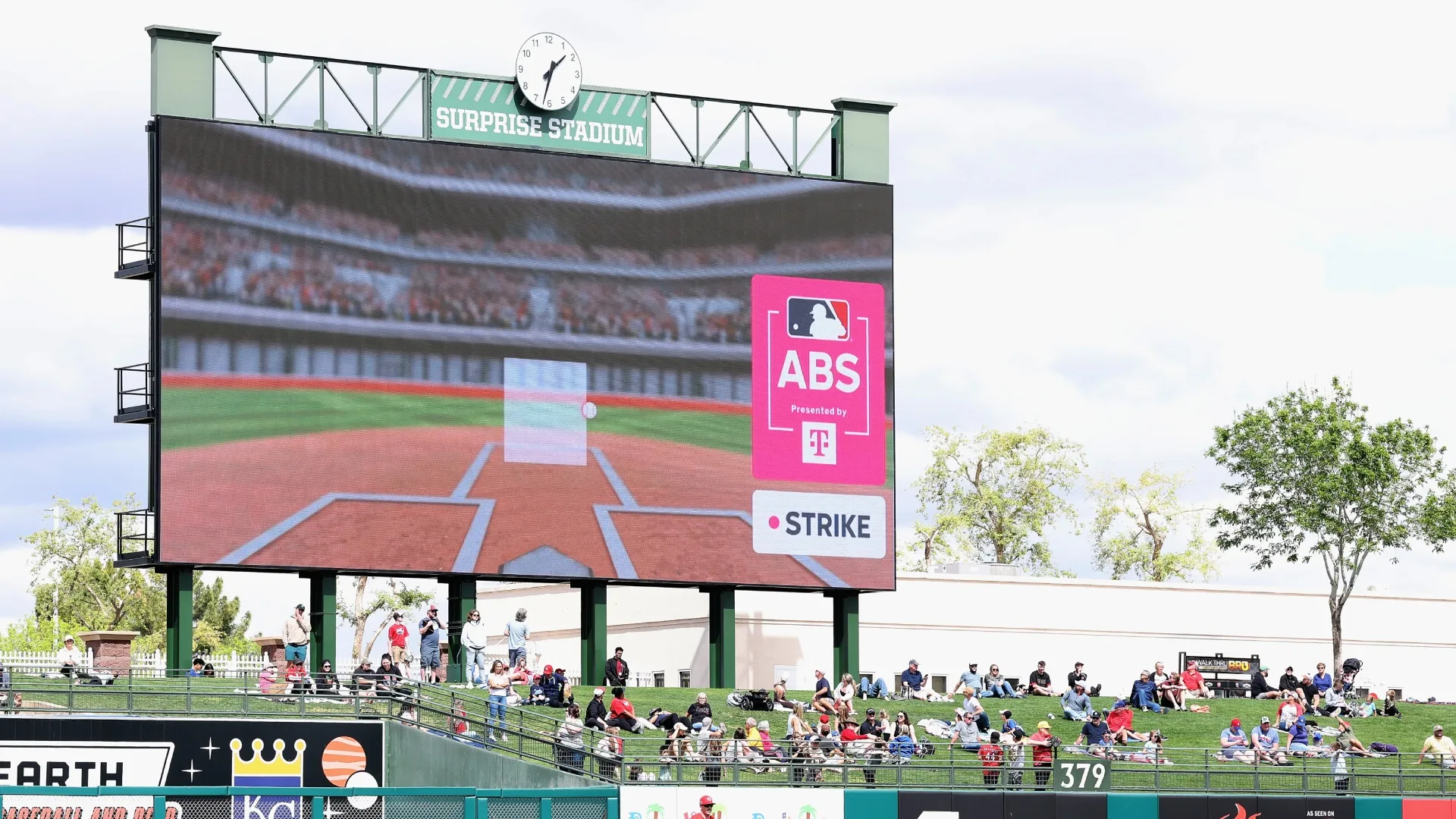
The video board displays the Automated Ball-Strike system in 2025 (Source: Christian Petersen/Getty Images)
No other players, coaches or personnel in the dugout are permitted to influence or signal a challenge. Once the challenge has been signaled, the system quickly reviews the pitch using tracking technology.
If any part of the baseball touches the automated strike zone, which is defined based on each batter’s height and a precise rectangular zone, the call is either confirmed or overturned, and the game resumes.
Strategic impact of ABS challenges
Introducing ABS challenges adds a clear strategic element to games. Because teams only start with two challenges, managers and players must judge when it’s most valuable to use them — for example, on borderline strikes with runners in scoring position or in tight counts that could change the entire inning’s momentum.
Data from the 2025 spring training tests, where about 2.6% of all pitches were challenged, showed that just over half of the challenged calls (52.2%) were overturned. Catchers tended to be slightly more successful at challenging calls than batters or pitchers, which could influence how teams prioritize who signals the challenge.
The technology behind ABS and how calls are displayed
The ABS Challenge System relies on high‑speed Hawk-Eye cameras positioned around MLB ballparks. These cameras feed data via a private T-Mobile 5G network, allowing near‑instantaneous tracking of each pitch relative to a batter’s personalized strike zone.
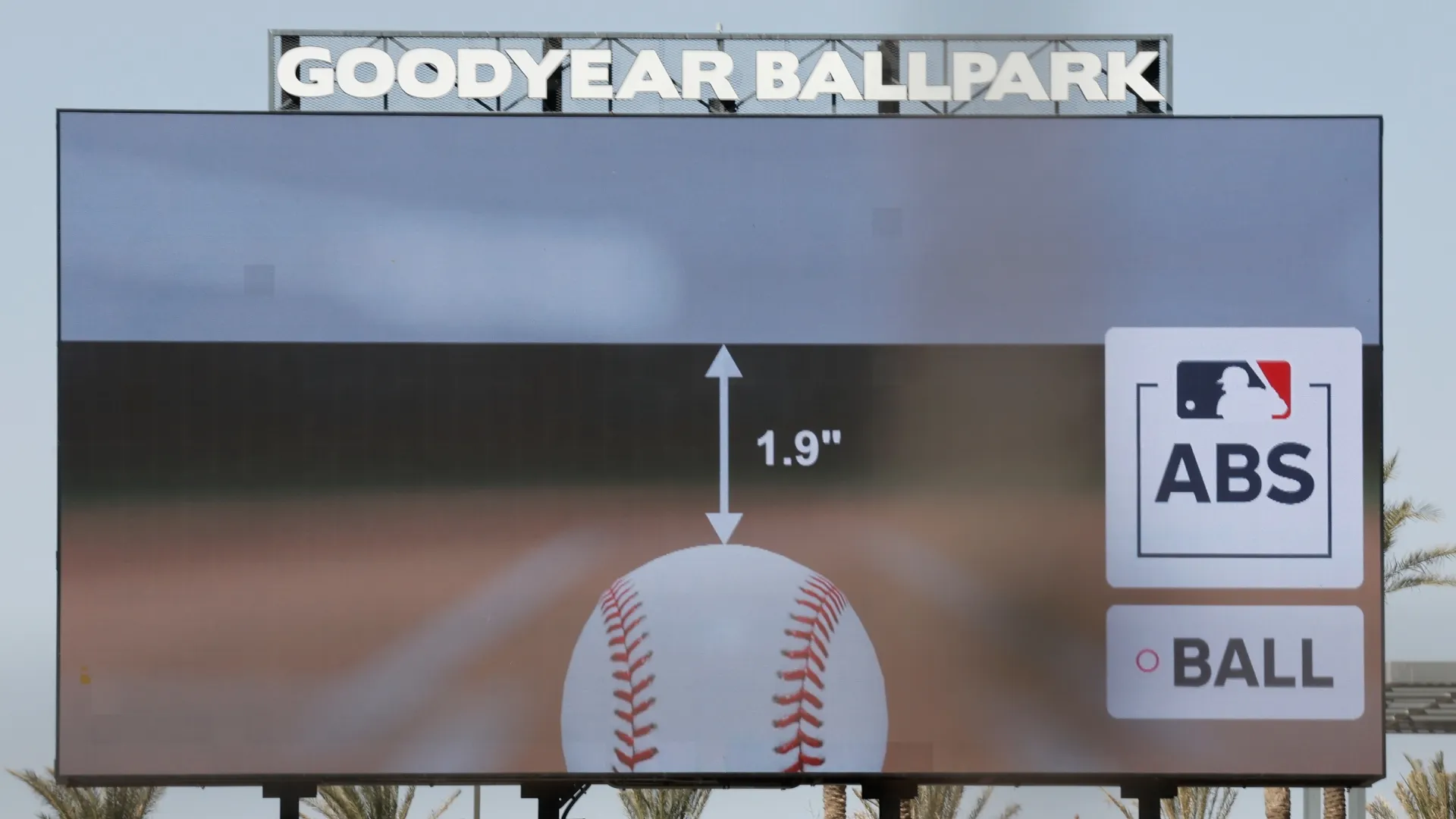
A general view of the scoreboard during an ABS challenge in 2025 (Source: Tim Warner/Getty Images)
Once a challenge is initiated and reviewed, the result is displayed visually on stadium scoreboards and broadcast graphics so both fans and players can see whether the original call is upheld or overturned.
This approach is seen asa middle ground between “robot umpires” calling every pitch and relying solely on human judgement, with the goal of reducing controversy while preserving the pace and tradition of the game.