Cap space rarely grabs headlines in October, but by the time the 2026 offseason unfolds, it will sit at the center of the Las Vegas Raiders’ plans. Projections suggest meaningful flexibility, especially with the NFL’s spending limit continuing to rise.
Still, the numbers beneath that surface are layered. Dead cap from previous moves remains part of the equation and several high-impact contracts begin to carry heavier weight on the balance sheet.
The result is a financial landscape filled with possibility and pressure. How those figures are managed in the months ahead could quietly shape the direction of the franchise more than any single splashy signing.
How much is the Raiders’ cap space in 2026?
Heading into the 2026 NFL league year, Las Vegas is projected to have a very large amount of salary cap space, placing it among the teams with the most financial flexibility in the entire league.
According to recent projections from Spotrac, the Raiders are expected to have around $85.7 million in cap room for 2026, which would rank them near the top — second only to the Tennessee Titans in terms of available salary cap space.
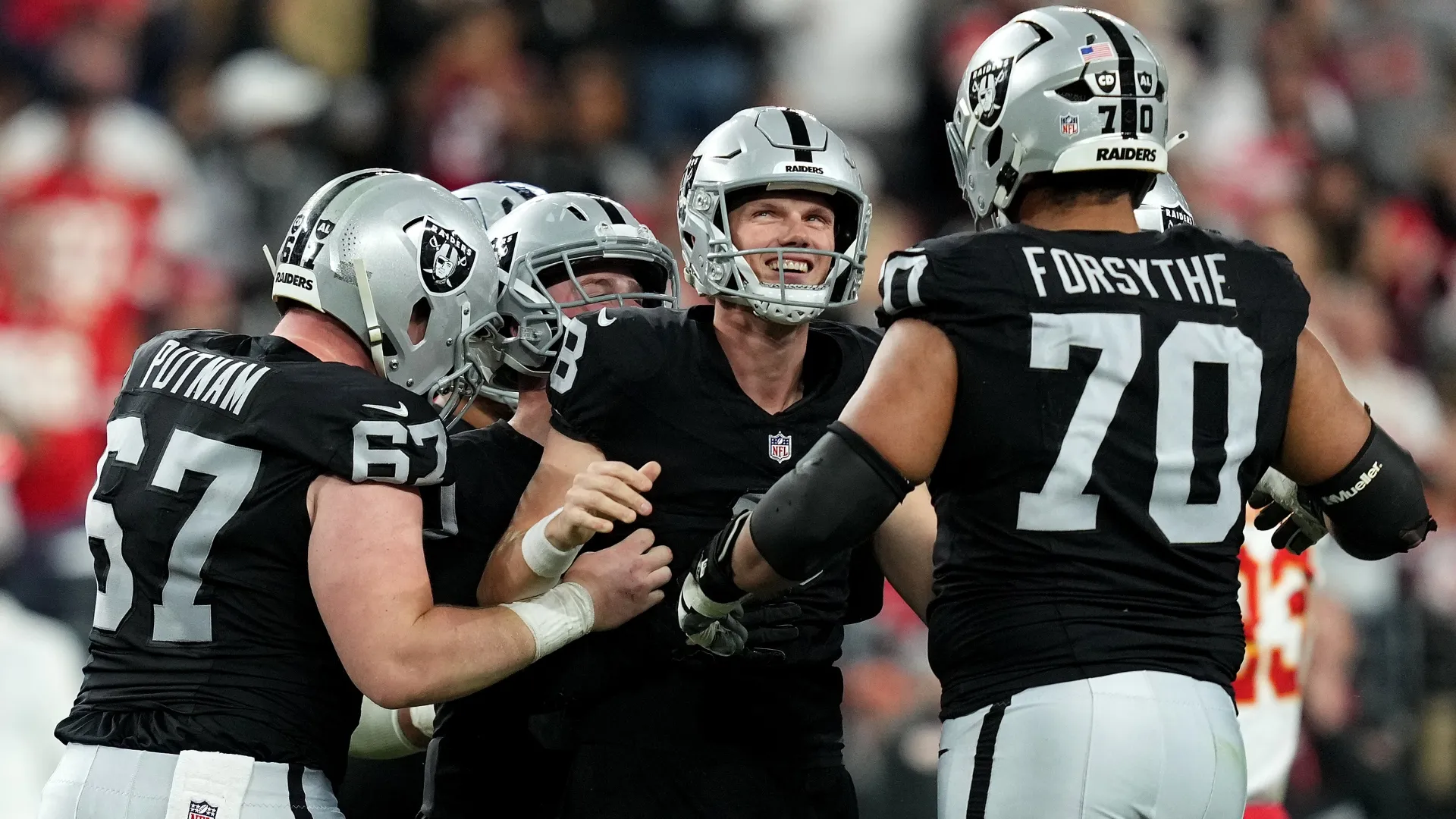
Daniel Carlson #8 of the Las Vegas Raiders celebrates with teammates in 2026 (Source: Candice Ward/Getty Images)
This substantial cap number reflects the difference between the NFL’s projected salary cap for 2026, which is just over $301 million, and their current contractual commitments, including player salaries, bonuses, and dead money obligations.
The cap table shows that Las Vegas has been managing its roster in a way that keeps a significant portion of the cap uncommitted, giving them enormous freedom to target free agents, re-sign key players or trade for impact additions without being handcuffed by prior financial commitments.