

The official draw for the 2026 FIFA World Cup is now in the spotlight for soccer fans around the world, with extremely high expectations for a tournament hosted by the United States, Canada, and Mexico. All eyes are especially on Argentina and Lionel Messi, as the reigning world champions already have their group confirmed.
During the draw, it is revealed that Argentina are in Group J and the official group they will have, along with their confirmed rivals, is the following: Algeria, Austria, and Jordan. This is expected to generate considerable attention and provide excellent entertainment throughout the group stage.
With the group confirmed, and according to Gaston Edul, Argentina are set to play their group stage matches in Kansas City, Dallas, or San Francisco. However, the insider notes that if La Albiceleste win their group, they will play the round of 16 in Miami.
There is no doubt that expectations are sky-high. Argentina have a relatively manageable path on paper, and the belief is that the World Cup holders should advance without major issues, setting up potentially massive knockout-round clashes later in the tournament.
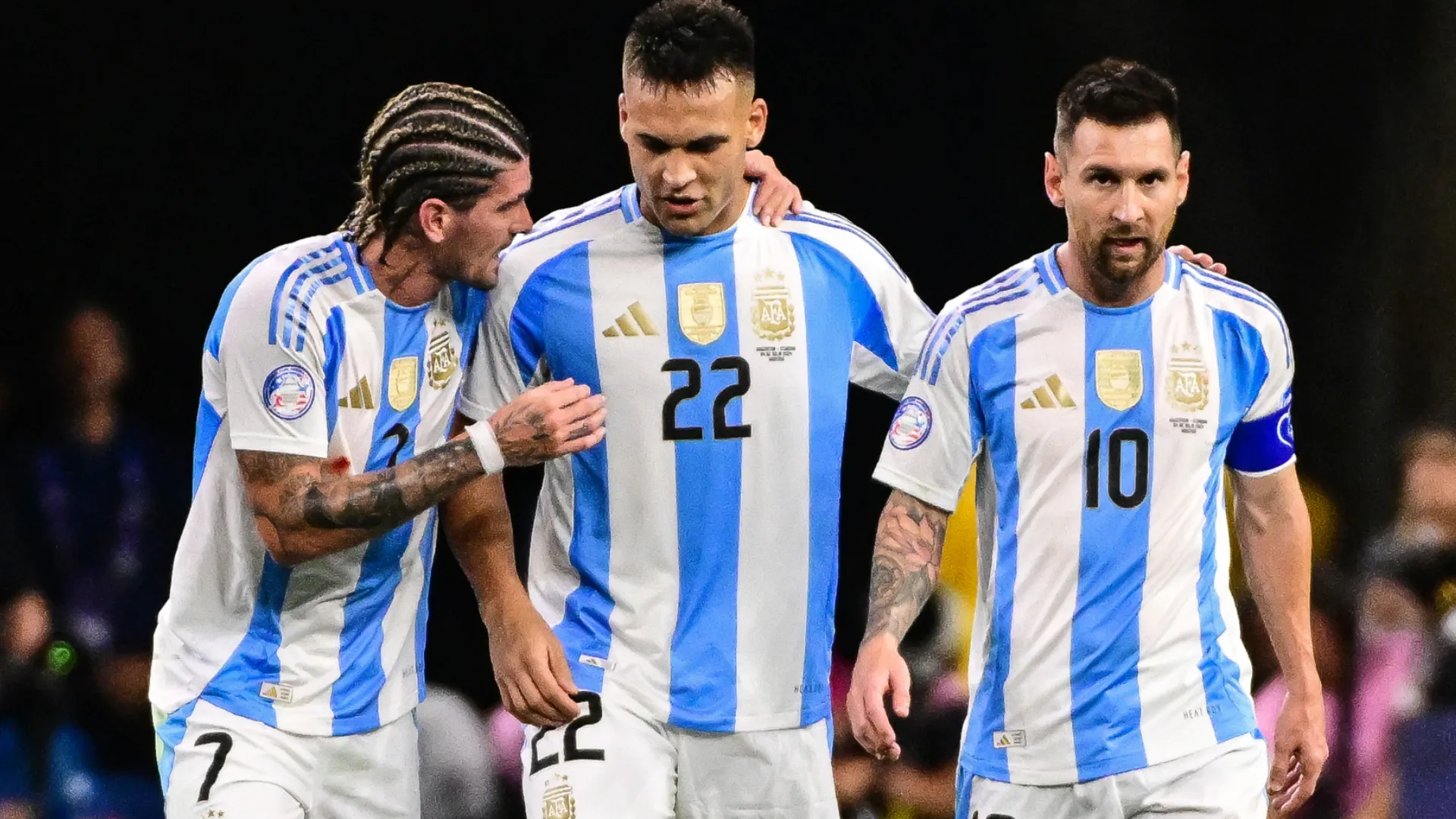
Rodrigo De Paul, Lautaro Martinez and Lionel Messi of Argentina celebrate a goal.
Match dates
While awaiting official confirmation, Argentina are scheduled to open their World Cup campaign on Tuesday, June 16, 2026, against Algeria at either Kansas City Stadium or the San Francisco Bay Area Stadium. Their second match is initially set for Monday, June 22, 2026, against Austria in Dallas or San Francisco. The group stage finale will be played on Saturday, June 27, 2026, against Jordan, either in Kansas City or Dallas.
Argentina’s possible knockout paths
Before the draw, La Albiceleste already knew they could not face a host nation or another top seed from Pot 1, which included Spain, France, England, Brazil, Portugal, the Netherlands, Belgium, and Germany.
If Argentina finish first in their group, they will meet the second-place team from Group H, featuring Spain, Cape Verde, Saudi Arabia, and Uruguay, in the round of 32. A second-place finish would lead to a matchup with the Group H winners. If Argentina advance as one of the eight best third-place teams, they will face a group winner.
How the group-stage qualification system works
The group stage consists of 12 groups of four teams each. The top two finishers in every group and the eight best third-place teams advance to the round of 32, which begins the single-elimination phase all the way to the final. Five of the best third-place finishers will be paired with the winners of Groups E, G, I, L, and K, while the remaining three will take on the leaders of Groups A, B, and D — the groups headlined by Mexico, Canada, and the USA.