
Every spring, the “March Madness” turns college basketball into a spectacle of passion, drama, and surprises. In this arena, the teams entering as top seeds—the highest-ranked—carry the pressure of making history.
Being number one doesn’t guarantee success, but it does place these powerhouses under the spotlight. Some have responded with dominant campaigns, when for the first and only time, the top four seeds reached the Final Four.
Others, however, have delivered unforgettable disappointments, falling to teams no one expected. But it’s not all about the favorites— the NCAA tournament also serves as fertile ground for stunning upsets.
| Tournament Stage | Lowest Seed | Team(s) | Year(s) |
| Round of 32 | 16 | UMBC | 2018 |
| Sweet 16 | 15 | Florida Gulf Coast, Oral Roberts, Saint Peter’s, Princeton | 2013, 2021, 2022, 2023 |
| Elite Eight | 15 | Saint Peter’s | 2022 |
| Final Four | 11 | LSU, George Mason, VCU, Loyola Chicago, UCLA, NC State | 1986, 2006, 2011, 2018, 2021, 2024 |
| Championship Game | 8 | Villanova, Butler, Kentucky, North Carolina | 1985, 2011, 2014, 2022 |
| National Champion | 8 | Villanova | 1985 |
No. 1 seeds: Consistency and dominance
The No. 1 seed holds a special status in the NCAA Tournament—typically reserved for the nation’s strongest teams. Since the introduction of seeding in 1979, these teams have not only dominated but also set the standard for excellence. Of all the tournament champions, 27 have been No. 1 seeds, making it the most successful position by a significant margin.

Robert Dozier #2 of the Memphis Tigers and Darrell Arthur #00 of the Kansas Jayhawks both jump for the tip-off to start the first half during the 2008 NCAA Men’s National Championship game. (Source: Ronald Martinez/Getty Images)
One of the most remarkable showcases of No. 1 seed dominance occurred in 2008, when all four top seeds—Kansas, Memphis, North Carolina and UCLA—advanced to the Final Four.
This remains the only time in tournament history that the bracket unfolded according to those expectations. In the championship game, Kansas faced off against Memphis in a dramatic battle.
Memphis seemed destined for victory, leading by nine points with just over two minutes left. But Kansas mounted a stunning comeback, fueled by Mario Chalmers’ game-tying three-pointer with 2.1 seconds remaining, forcing overtime. Kansas would ultimately claim the title, solidifying one of the most thrilling endings in NCAA history.
More recently, Baylor made headlines in 2021 when they captured their first national championship. Their journey was particularly significant given that it was their first Final Four appearance since 1950.
In the title game, Baylor overwhelmed the previously undefeated Gonzaga with stifling defense and sharp shooting, winning 86-70 and ending the Bulldogs’ dream of a perfect season.
No. 2 seeds: Consistent contenders, occasional champions
While the No. 2 seed does not carry the same mystique as the top spot, it remains a formidable position. Historically, No. 2 seeds have reached the Final Four more than 37 times and claimed the championship on six occasions. One of the most dominant performances by a No. 2 seed came from Villanova in 2018. Their run to the title was defined by offensive brilliance.
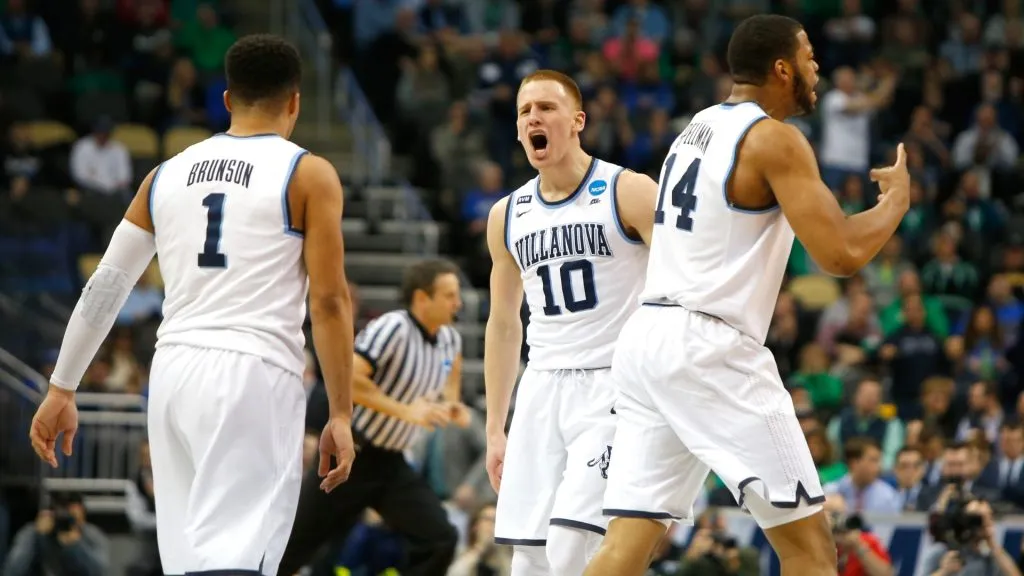
Donte DiVincenzo celebrates with his teammates against the Alabama Crimson Tide during the second half in the second round of the 2018 NCAA Men’s Basketball Tournament. (Source: Justin K. Aller/Getty Images)
In the championship game against Michigan, Villanova’s Donte DiVincenzo put on a historic show, scoring 31 points off the bench—the most by a reserve in title game history. Villanova’s victory marked their second championship in three years, firmly establishing themselves as a modern college basketball powerhouse.
No. 3 seeds: Dangerous dark horses
While No. 3 seeds have fewer championships (five total), they have produced some unforgettable tournament moments. One of the most iconic came in 2003, when Syracuse, led by freshman phenom Carmelo Anthony, marched to the national championship.
Anthony delivered one of the most memorable performances in tournament history, scoring 20 points and grabbing 10 rebounds in the title game against Kansas, securing the Orange’s first and only championship.
More recently, Texas Tech came tantalizingly close to glory in 2019. They faced Virginia in a thrilling overtime championship match. With the game on the line, Virginia’s De’Andre Hunter hit a clutch three-pointer to force overtime.
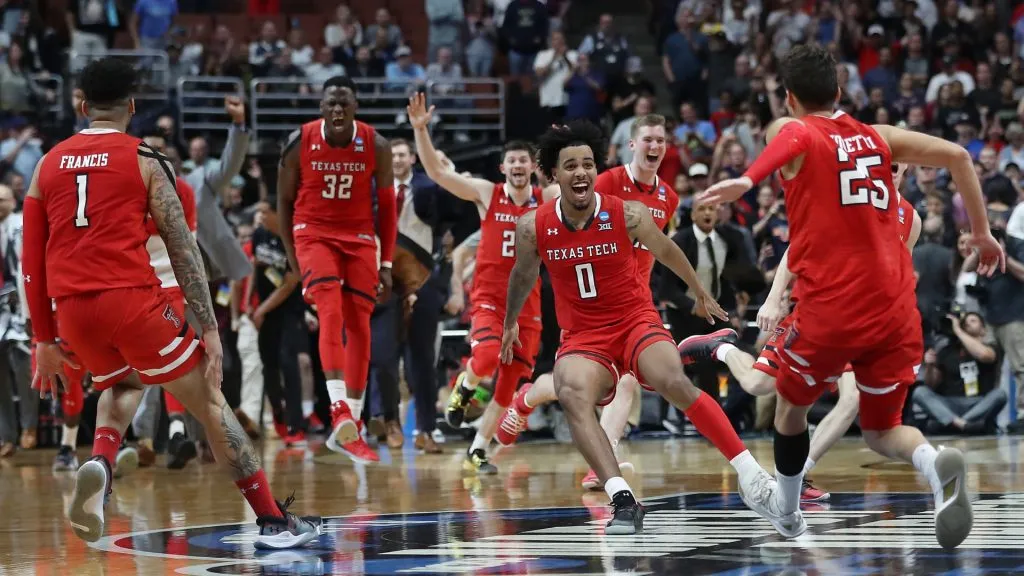
The Texas Tech Red Raiders celebrate their victory against the Gonzaga Bulldogs during the 2019 NCAA Men’s Basketball Tournament West Regional. (Source:Sean M. Haffey/Getty Images)
Virginia would eventually win their first national title, leaving Texas Tech with the bitter taste of being one play away from making history as a No. 3 seed champion.
No. 4 seeds: UConn’s rise to the top
No. 4 seeds have only won the title twice, but when they do, it tends to be spectacular. The most recent example came in 2023, when UConn dominated the tournament field.
Their path to the championship was marked by decisive victories, including a lopsided 76-59 win over San Diego State in the final. This victory secured UConn’s fifth national title, reinforcing their reputation as a program that thrives in the chaos of March.
No. 8 seeds: Villanova’s fairytale run
Of all the lower seeds, No. 8 holds a unique distinction—it is the lowest seed ever to win the championship. That achievement belongs to Villanova in 1985, a team that pulled off what is widely regarded as the greatest upset in NCAA Tournament history.

The Villanova team as after becoming the national champions of the 1985 March Madness. (Source: @NovaMBB)
In the final, Villanova faced a juggernaut in Georgetown, led by the towering presence of Patrick Ewing. Playing a near-flawless game, Villanova shot 78.6% from the field, an efficiency unheard of in a championship setting. Despite the pressure, they held on to win 66-64, delivering a Cinderella story for the ages.
More recently, North Carolina made a surprise run to the Final Four as a No. 8 seed in 2022, ultimately falling to Kansas in the title game. Their unexpected journey reinvigorated the legend of the lower-seeded underdog.
No. 11 seeds: Masters of the Cinderella run
If any seed has come to symbolize the magic of March Madness, it is No. 11. Though they have never won a championship, six No. 11 seeds have reached the Final Four—a feat no other double-digit seed can claim.
One of the most beloved stories came in 2018, when Loyola Chicago made an improbable run. Powered by their defense and the inspiration of Sister Jean, their 98-year-old team chaplain, the Ramblers captivated fans with upset victories over Miami, Tennessee and Kansas State before falling to Michigan in the Final Four.
No. 16 seeds: When David toppled Goliath
For decades, the idea of a No. 16 seed defeating a No. 1 seed seemed impossible—until 2018. In one of the most shocking upsets in sports history, the University of Maryland, Baltimore County (UMBC) stunned Virginia with a 74-54 blowout win.
UNREAL.
— NCAA March Madness (@MarchMadnessMBB) March 17, 2018
UMBC becomes the first 16 seed to upset to beat a No. 1 seed!#MarchMadness pic.twitter.com/iLdbVhNC0A
It wasn’t just the victory—it was the manner in which UMBC dismantled a Virginia team that had entered the tournament as the top overall seed. That night, UMBC didn’t just rewrite history—they shattered it.
Recent and notable moments: A new chapter in 2024
The 2024 tournament continued the tradition of unexpected twists. Colorado emerged as the national champion, defeating Florida in a hard-fought final, adding a fresh chapter to the tournament’s rich lore. Meanwhile, earlier rounds saw Maryland defeat UConn and Rutgers upset Clemson—reminders that in March Madness, nothing is ever guaranteed.