In college football lore there are a handful of running plays so electrifying that they live forever in the record books — long touchdown runs where a back (or even a quarterback) breaks free and turns a snapshot of chaos into pure speed.
The all-time longest rushing touchdowns have become legends, moments that define a game and sometimes a career. One standout chapter: Armani Rogers, then quarterback for the Ohio Bobcats, sprinted 99 yards for a touchdown.
That kind of explosive play shocks the stadium and rewrites expectations of what’s possible on the gridiron. Yet these aren’t lone flashes. Behind every historic long TD are plays that turned ordinary downs into page-turning plays.
Armani Rogers, Ohio | 99-yard rushing TD
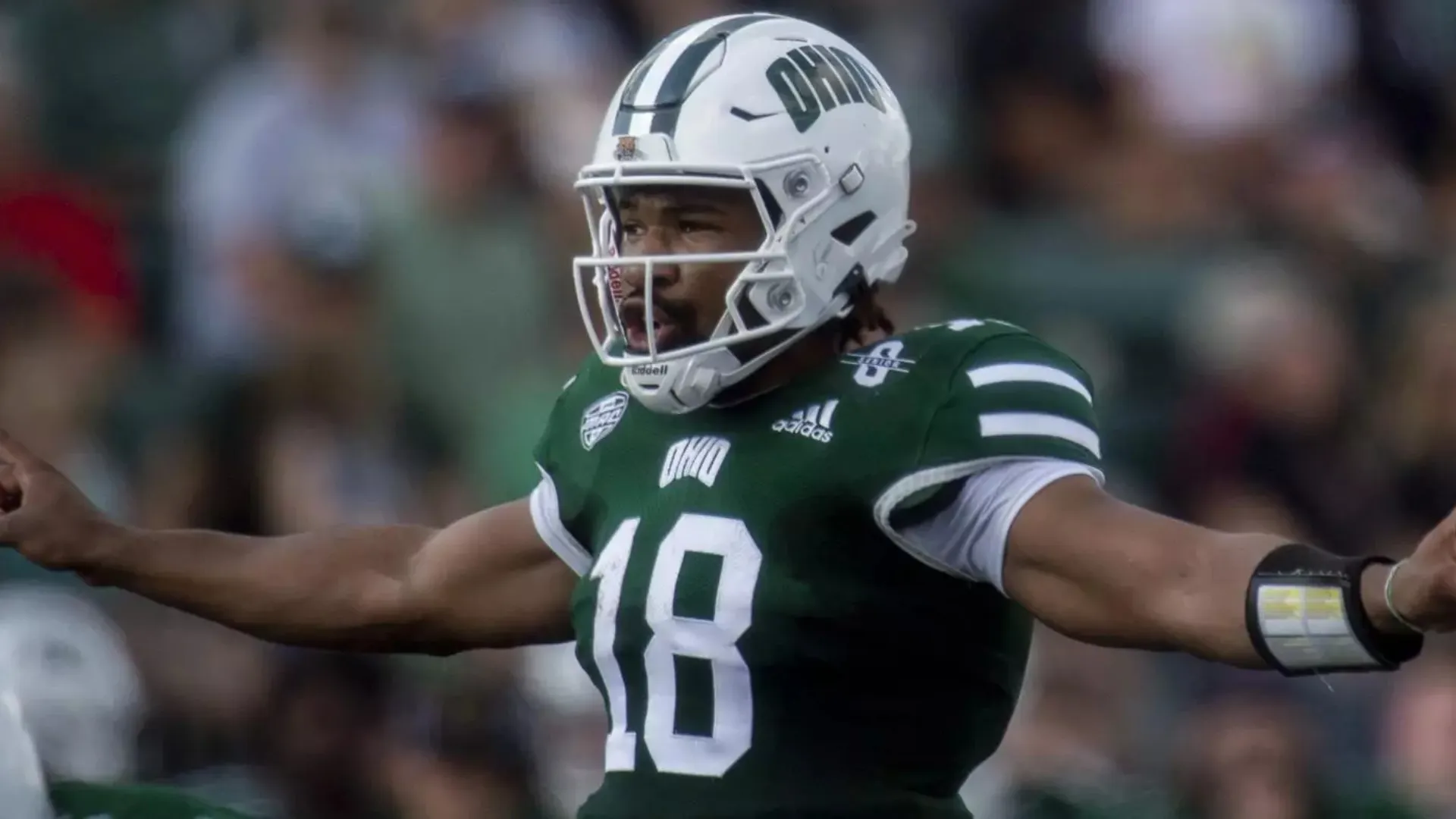
Armani Rogers (Source: Ohio University)
Armani Rogers stamped his name into college-football lore with a play that defied expectations: taking a shotgun snap in his own end zone, he slipped outside the left tackle and raced down the sideline for a full 99-yard touchdown run — untouched all the way.
That run, against Buffalo in October 2021, set the record for the longest rushing TD by a quarterback in NCAA history. It wasn’t just length — it was timing, athleticism and suddenness. He exploited a defensive mis-step, hit a seam thanks to solid blocking, and after about 20 yards the race was on.
From there it turned into a pure breakout: a sprint that caught a defense off guard and rewrote what a quarterback run could look like. The play became an instant highlight, and even though his team didn’t end up winning that game, Rogers’ 99-yard dash remains a benchmark.
Montrell Johnson Jr, Louisiana | 99-yard rushing TD
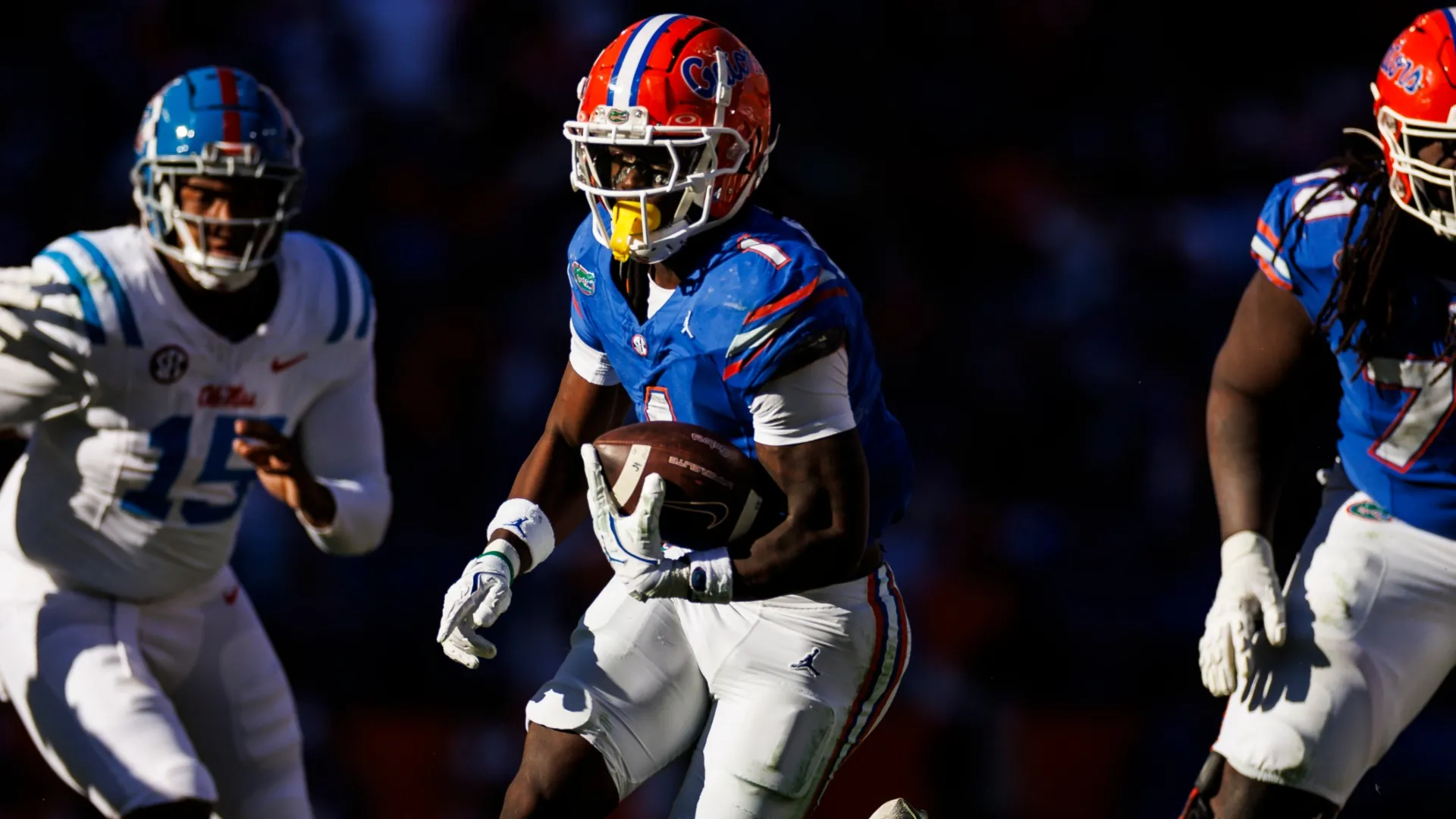
Montrell Johnson Jr. (Source: James Gilbert/Getty Images)
As a freshman for the Louisiana Ragin’ Cajuns, Montrell Johnson Jr. exploded onto the national radar with a 99-yard touchdown run — tying one of the longest possible plays in college football. That rush didn’t just set a program record; it made him one of only a handful in NCAA history to ever complete a full-field sprint for a score.
His carry came after his team was pinned deep near their own goal line — not a setting that usually spells fireworks. But with a combination of sharp vision behind blocks, a downhill burst, and sideline speed, he turned danger into a statement. In a single moment he demonstrated how a back’s burst can shift momentum and flip the script.
What makes the run even more compelling is his youth at the time: a freshman making one of his first big moves under pressure, notching a play that will be referenced anytime anyone in Louisiana dreams of a long, electrifying rush.
Keenan Reynolds, Navy | 88-yard rushing TD
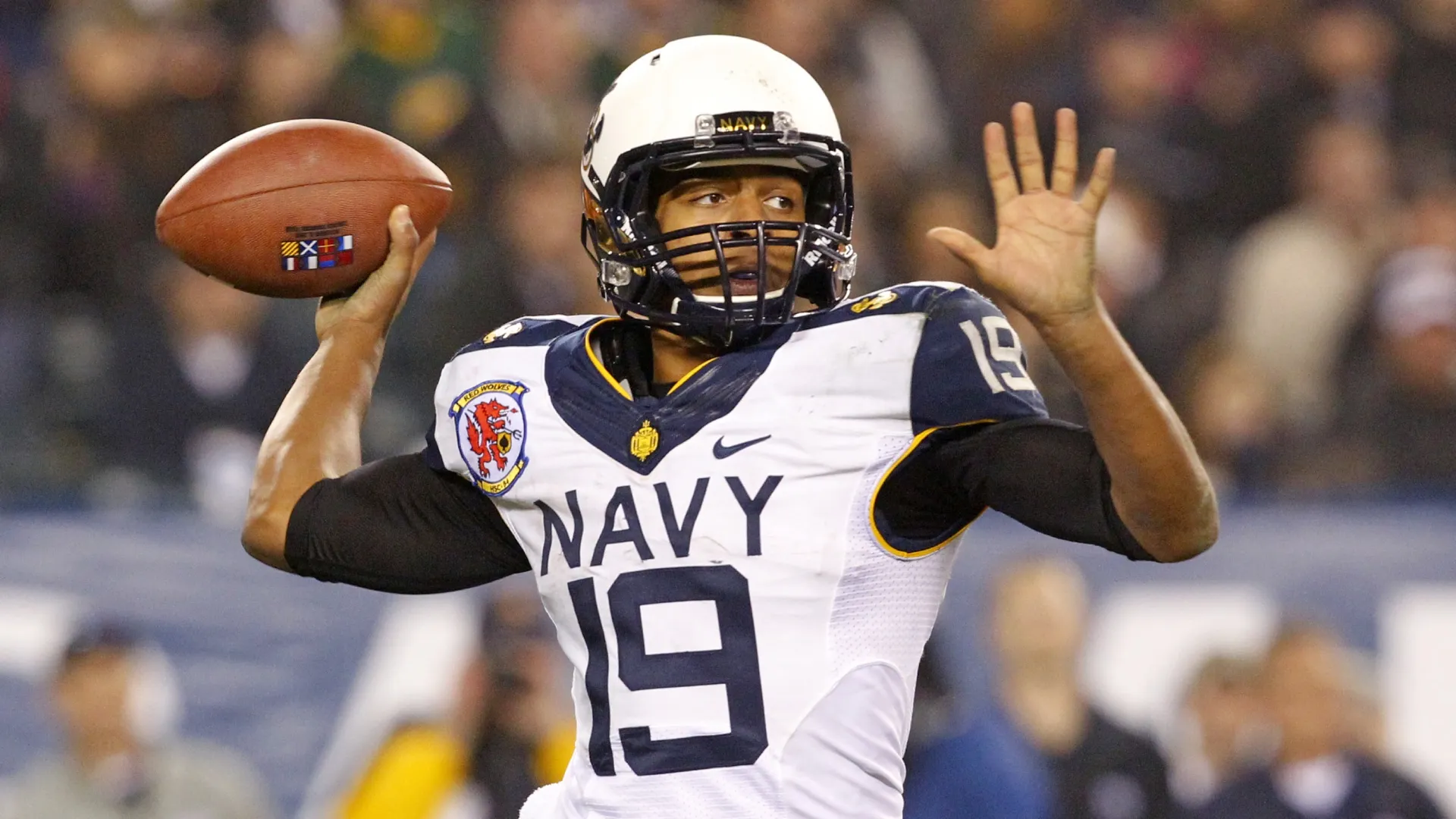
Keenan Reynolds (Source: Hunter Martin/Getty Images)
In the ranks of the United States Navy, Keenan Reynolds not only learned discipline but also rewrote the record books with a rare audacity in college football. Operating the Navy’s Triple-Option offense with martial mastery, this quarterback became an unstoppable scoring machine, a true commander of the rushing touchdown.
His career is defined not just by a single moment, but by a consistent and methodical accumulation of end-zone incursions that culminated in an all-time NCAA Division I record of 88 rushing touchdowns. He wasn’t just a runner; he was the engine, the brain, and the battering ram of the Midshipmen.
Upon concluding his time in Annapolis, he left an astonishing legacy: he not only surpassed Montee Ball’s rushing touchdown mark but also set the record for most rushing yards by an FBS quarterback with 4,559.
His achievement is doubly impressive, as he accomplished this feat from the quarterback position, demonstrating a lethal efficiency in the ground game that broke traditional molds.
Montee Ball, Wisconsin | 77-yard rushing TD
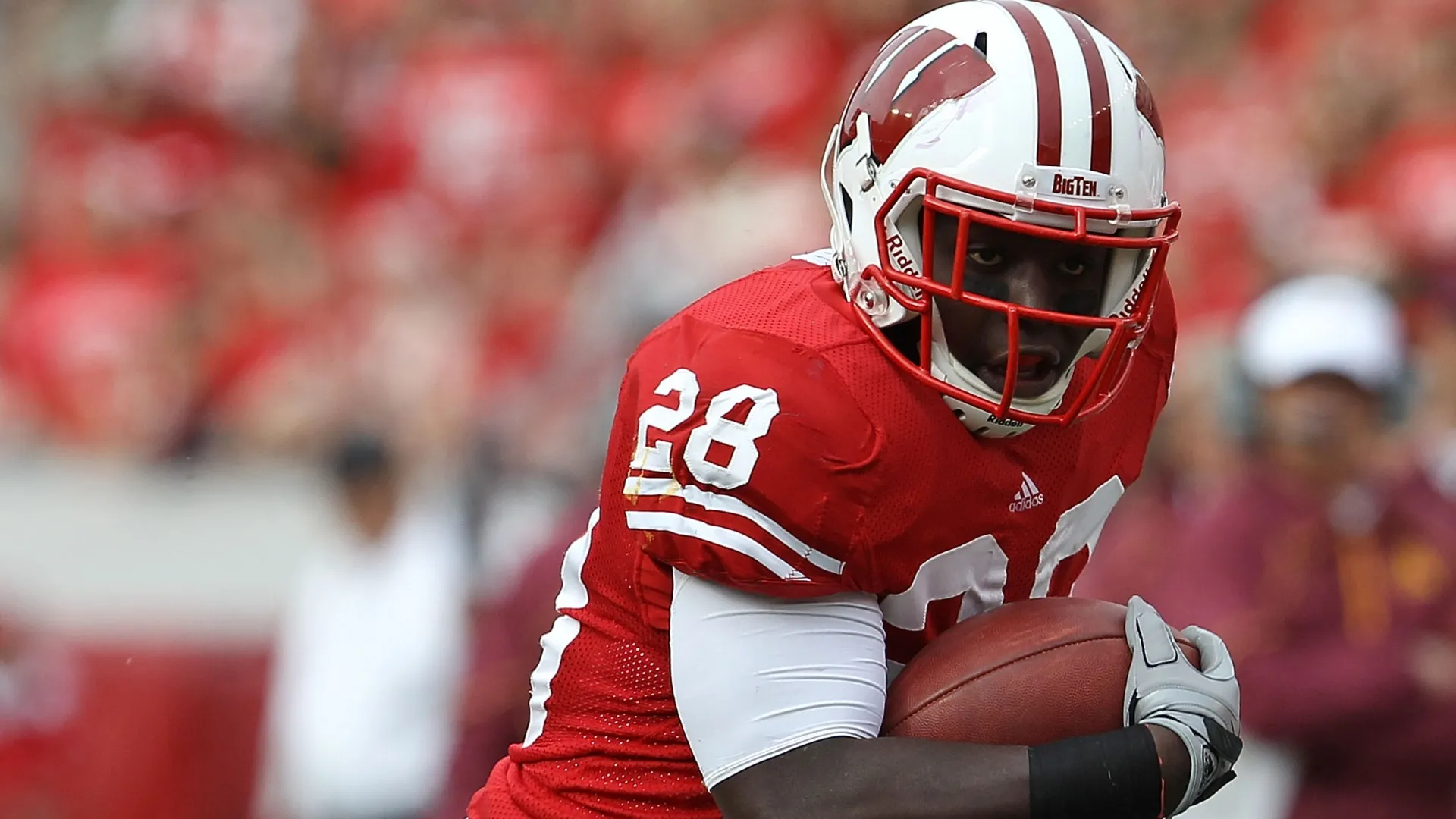
Montee Ball (Source: Jonathan Daniel/Getty Images)
Before Keenan Reynolds ascended to the throne, Montee Ball’s name was synonymous with the pinnacle of college football scoring. Wisconsin’s imposing offensive line was his platform, and Ball, with a blend of power and vision, took care of the rest.
His 2011 season is one of the most legendary in history, as he tied Barry Sanders’ single-season record of 39 total touchdowns, a figure that had seemed untouchable. His final tally of 77 rushing touchdowns momentarily placed him as the FBS all-time leader, a testament to his consistency and his ability to close out drives with a trip to the promised land.
He was not only prolific but dominant, becoming the only player in college football history to rush for over 100 yards in three consecutive Rose Bowls. His induction into the College Football Hall of Fame cemented his status as one of the most dominant and epic running backs ever to grace the Big Ten conference.
Travis Prentice, Miami (OH) | 73-yard rushing TD
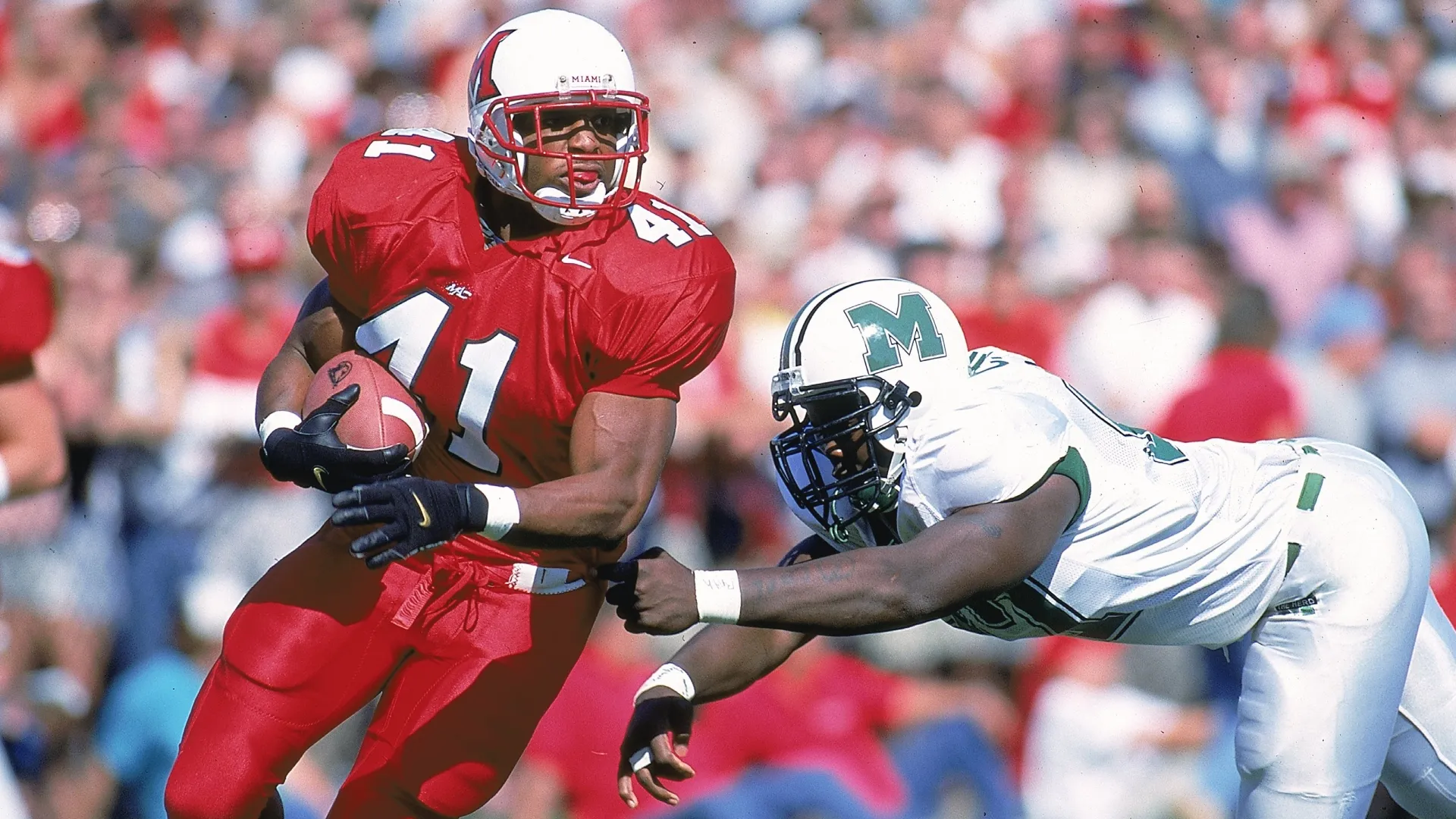
Travis Prentice (Source: Jonathan Daniel /Allsport)
As the turn of the century approached, Travis Prentice, playing for Miami (OH) in the Mid-American Conference (MAC), became the standard-bearer for the rushing touchdown.
With a collegiate career spanning from 1996 to 1999, he not only set the mark of 73 rushing touchdowns, which was the Division I-A record at the time, but he was also distinguished by his incredible durability and ball security, setting NCAA records for the most consecutive carries without a fumble, both in a season and throughout his career.
His impact wasn’t limited to his conference; he was a recurring semifinalist for the Doak Walker Award and forced voters to acknowledge the talent emanating from a program outside the Power Five conferences.
Kenneth Dixon, Louisiana Tech | 72-yard rushing TD
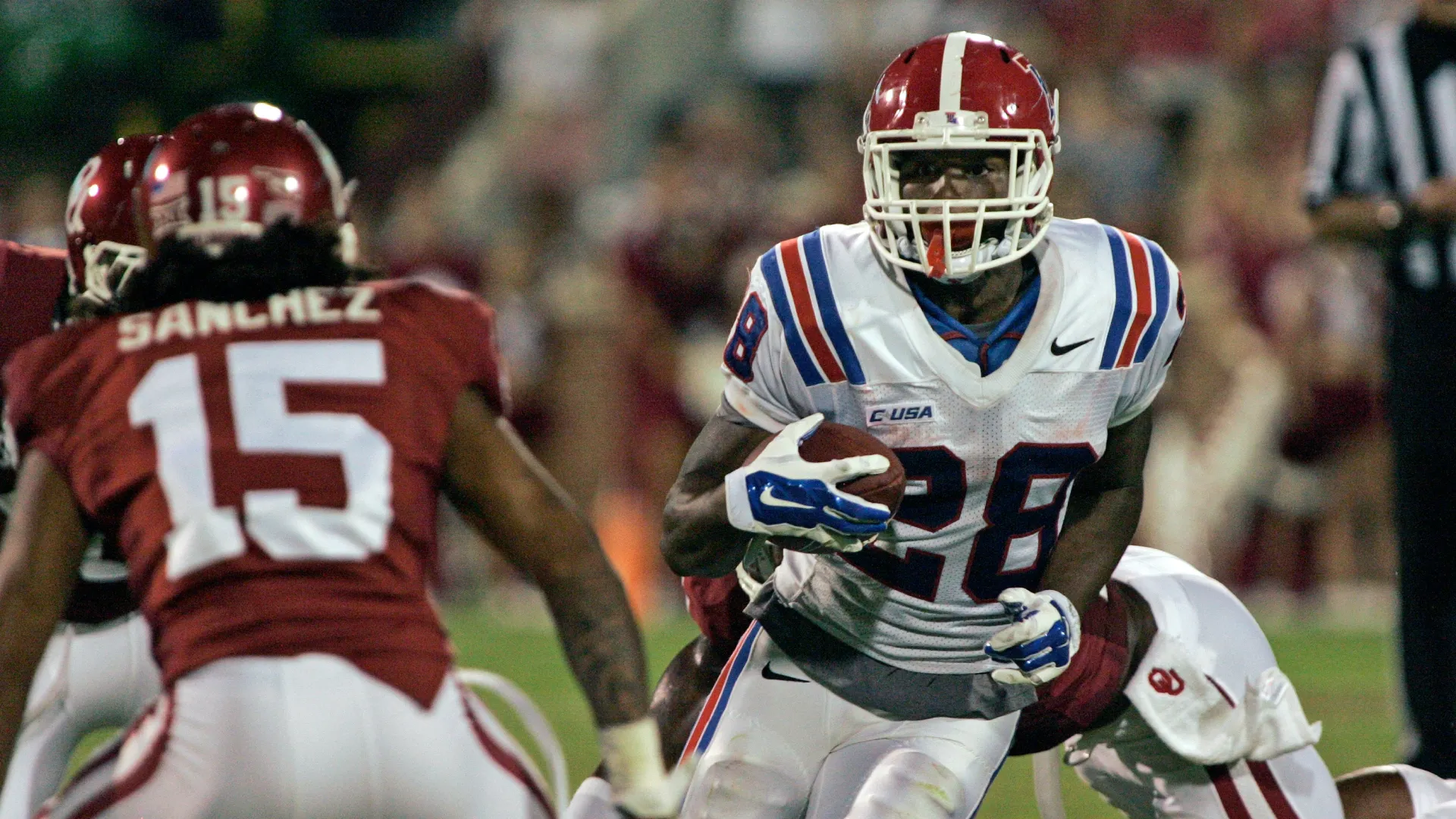
Kenneth Dixon (Source: Brett Deering/Getty Images)
From Ruston, Louisiana, emerged a running back with modern versatility: Kenneth Dixon. He was a prolific scorer for Louisiana Tech, and his mark of 72 rushing touchdowns places him in a tie with the great Ricky Williams.
However, what makes his inclusion on this list unique is not just his power as a runner, but his dimension as an all-around weapon. He was a constant threat in both the ground and air game, accumulating a total of 87 career touchdowns (rushing and receiving), a figure that briefly placed him second in NCAA history, just behind Keenan Reynolds.
In 2012, he broke the FBS record for rushing touchdowns in a single season by a freshman with 27, announcing his dominance from the start of his career. He represents the contemporary running back who is not limited to carrying the ball but demands the entire defense’s attention.
Ricky Williams, Texas | 72-yard rushing TD
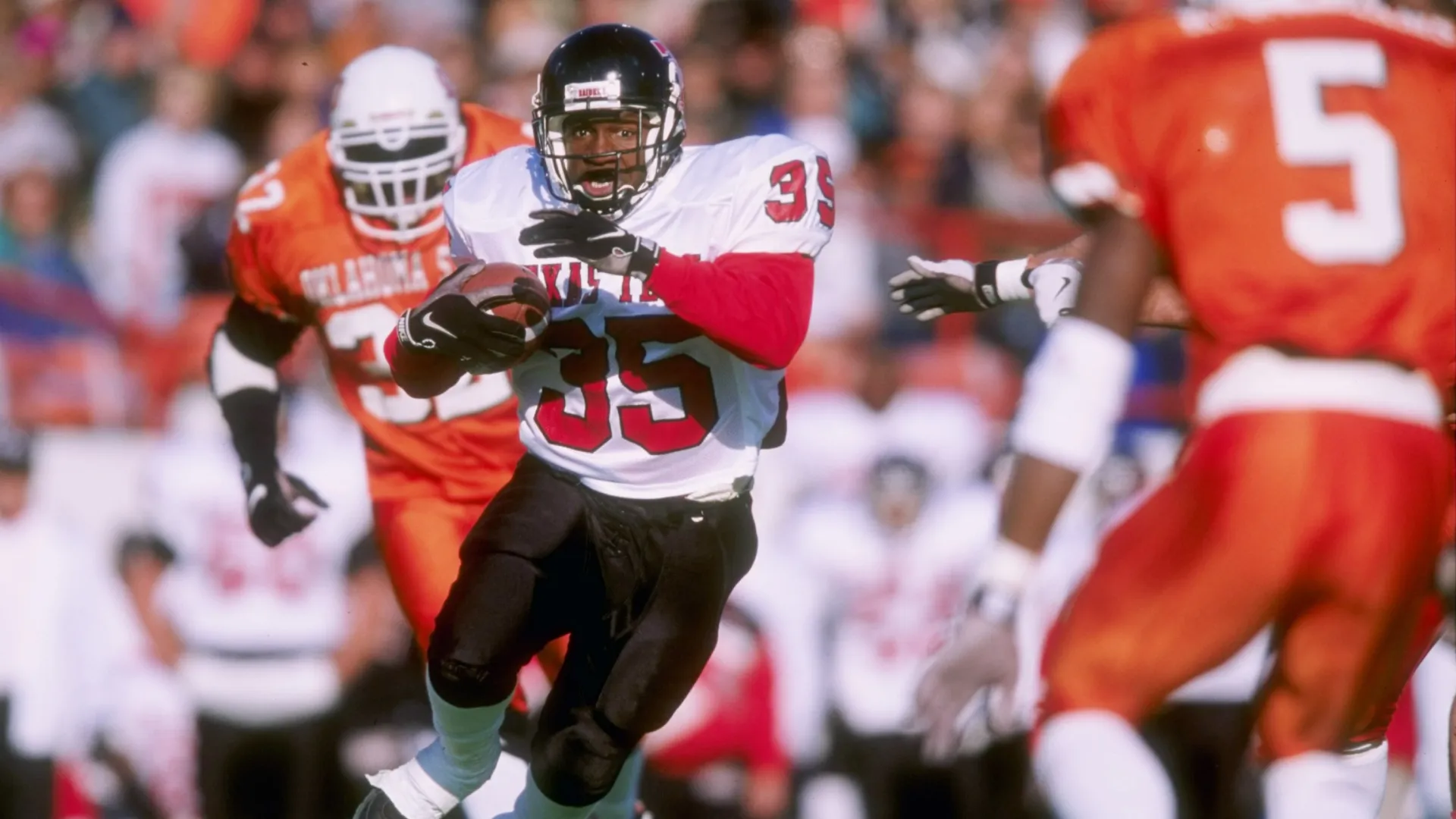
Ricky Williams (Source: Getty Images)
In the heart of Texas, Ricky Williams’ career was not just a series of numbers; it was a cultural phenomenon that culminated in one of the most iconic Heisman trophies. The player, with his unmistakable style and flowing dreadlocks, shattered multiple records in the 1990s.
His 72 rushing touchdowns cemented him as a Longhorns and College Football legend. Upon graduation, he held the NCAA career rushing yards record with 6,279 and the rushing touchdowns mark.
He won consecutive NCAA scoring titles and claimed the Heisman Trophy in 1998, in one of the most dominant individual campaigns ever seen, resulting in a staggering 21 NCAA records and 46 University of Texas records. His time in Austin is a golden chapter that exemplified what it means to carry the entire offense on your shoulders.
Ron Dayne, Wisconsin | 71-yard rushing TD
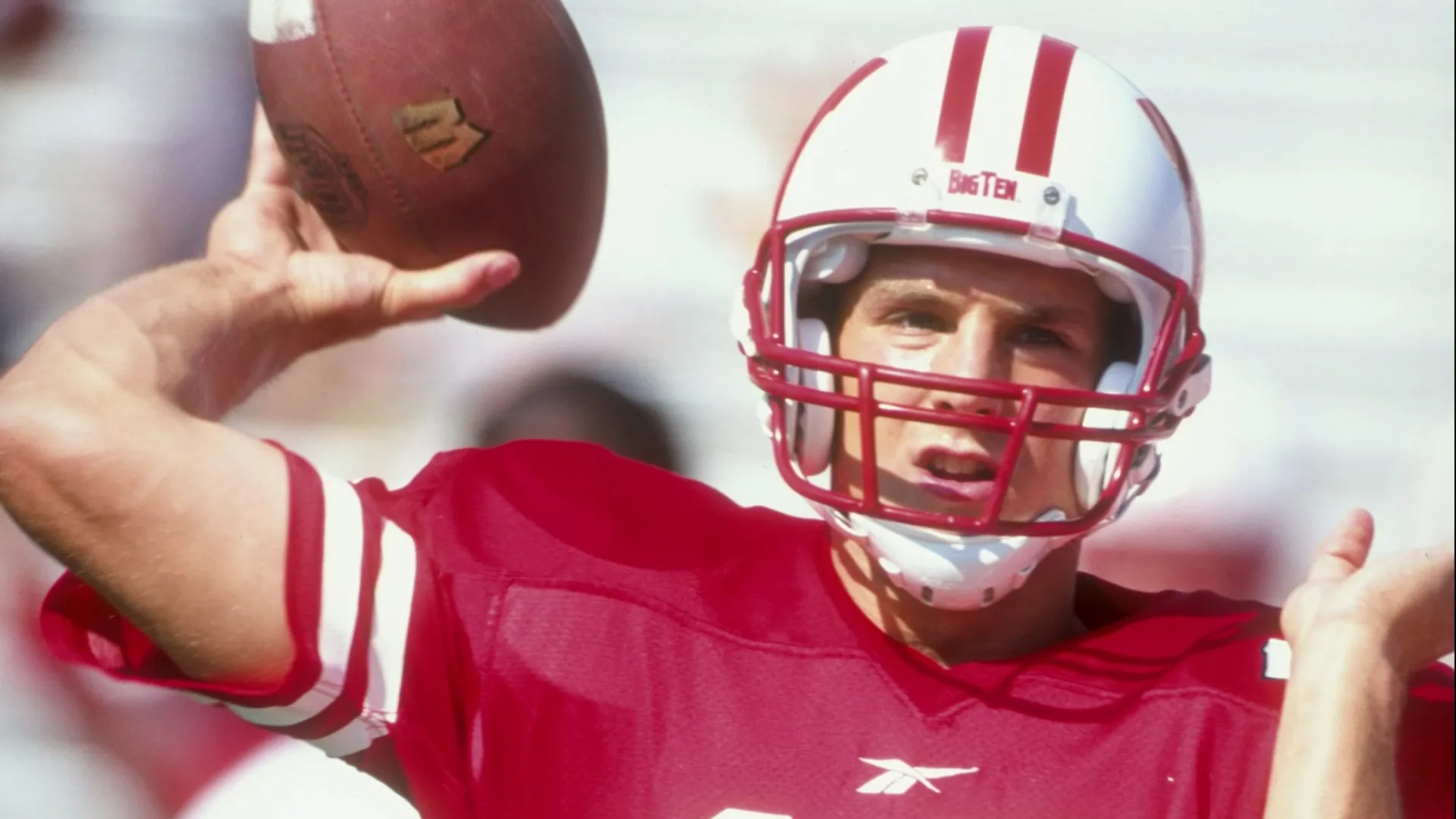
Ron Dayne (Source: Getty Images)
When Ron Dayne put on the Badgers uniform, he didn’t just join a team; he became a tectonic force that redefined the standard of durability and production for a college running back.
Known as the “Dayne Train” for his imposing physique and devastating running style, he carved out a place in history with 71 rushing touchdowns, an impressive number that places him among the greatest.
But his true legend lies in the sheer volume of yards he accumulated: 6,397 career yards (not including bowl games at the time), a mark that broke Ricky Williams’ record and stood for years as the pinnacle of college football.
He was a consistent and dominant four-year back, which translated into four consecutive 1,000-yard seasons, a feat he capped off by winning the Heisman Trophy in 1999. He is the archetype of the Big Ten power back: an unstoppable hammer that grew stronger as the game progressed.
Travis Etienne, Clemson | 70-yard rushing TD
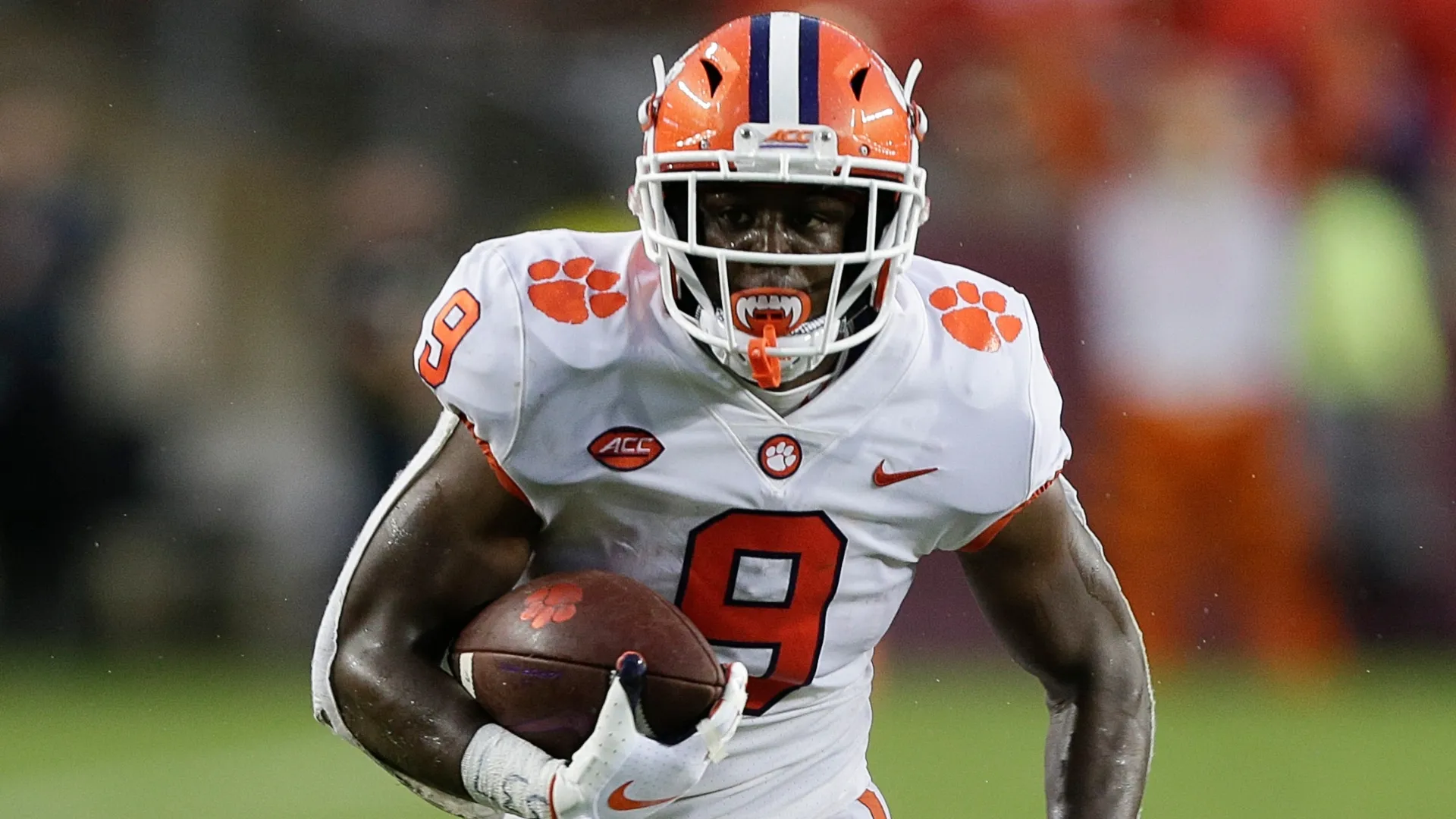
Travis Etienne (Source: Bob Levey/Getty Images)
Travis Etienne represents the new era of college football: an explosive, versatile running back who was fundamental to a winning dynasty. Leading the Clemson offense during its peak and national championship years, he became the team’s most dangerous offensive weapon, demonstrating elite speed capable of turning a short carry into an 80-yard score.
His 70 rushing touchdowns place him in an exclusive club, but what sets him apart is his efficiency, averaging an astounding 7.2 yards per carry for his career. He wasn’t just running to the end zone; he was also a lethal receiver, finishing his career with the ACC record for rushing yards (4,952) and the NCAA record for total touchdowns (78) by an ACC player. His impact was instant and sustained, serving as a cornerstone in the NCAA playoff era.
Anthony Thompson, Indiana | 67-yard rushing TD
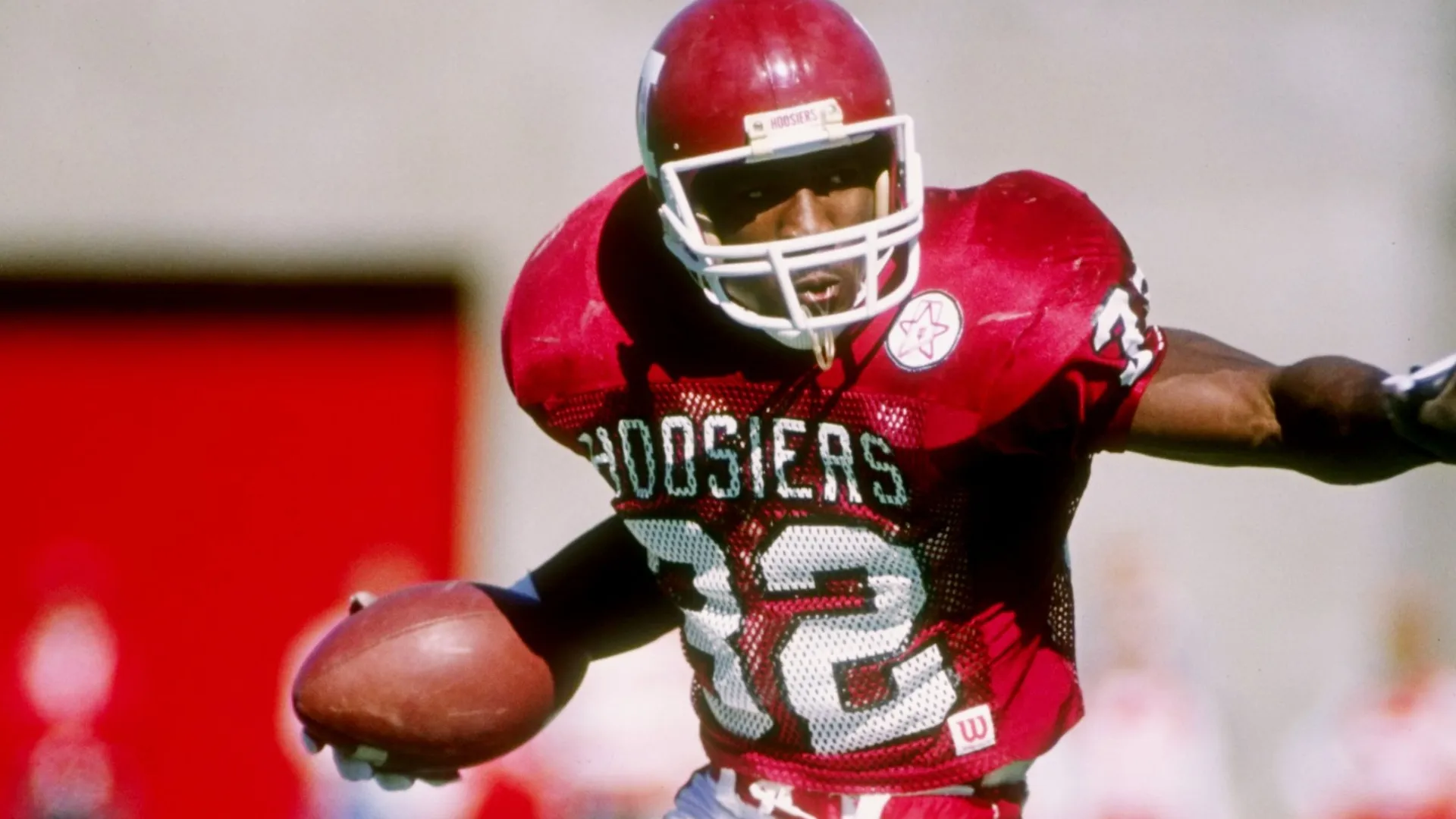
Anthony Thompson (Source: Getty Images)
In a program not traditionally known for football supremacy, Anthony Thompson emerged as a phenomenon that forced the entire country to look towards Bloomington. Thompson, a running back with a blend of power and elusiveness, was the engine of the Indiana offense in the late 80s.
His mark of 67 rushing touchdowns was, at one point, the NCAA Division I-A career rushing touchdown record. He shouldered a historic workload, reflected in his Heisman Trophy runner-up finish in 1989, the highest ever achieved by an Indiana player.
In a memorable display that etched his name into the record books, he accumulated 377 yards in a single game against Wisconsin in 1989, setting the NCAA single-game record at the time. He didn’t just score; he rewrote the history of an institution.
Devin Singletary, Florida Atlantic | 66-yard rushing TD
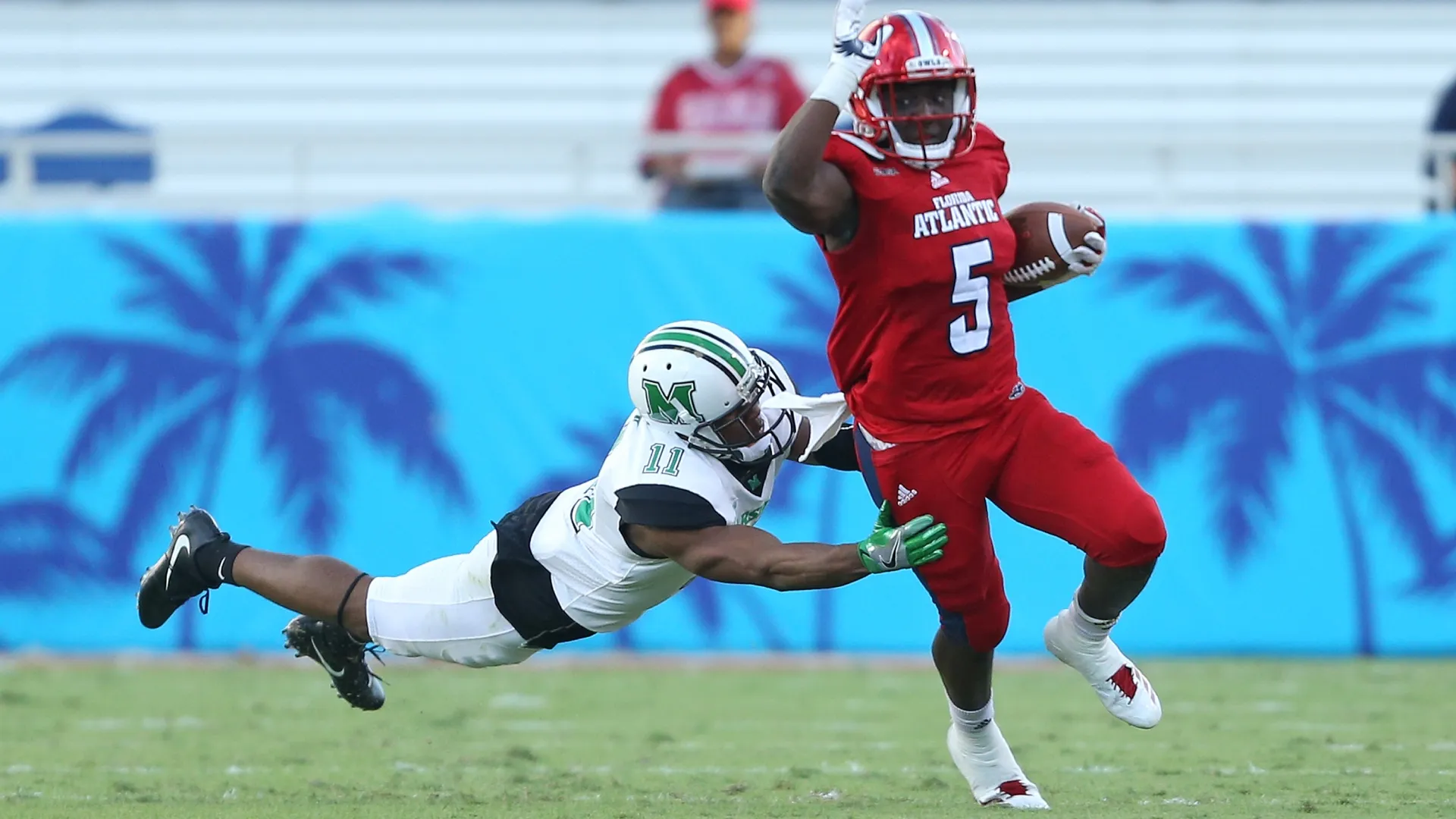
Devin Singletary (Source: Joel Auerbach/Getty Images)
Known by his fitting nickname, “Motor,” Devin Singletary was a whirlwind of production for Florida Atlantic in Conference USA (C-USA). In just three seasons, Singletary became one of the most prolific scorers college football had ever seen, accumulating 66 rushing touchdowns.
His 2017 season is a case study in dominance, as he led the FBS in rushing touchdowns with 32 and became the first FAU player ever to be named an All-American. His playing style was characterized by exceptional vision and an innate ability to break tackles near the goal line.
He proved that greatness and record-breaking ability are not exclusive to elite conferences, leaving an indelible mark on C-USA history and the NCAA scoring list.
Cedric Benson, Texas | 64-yard rushing TD
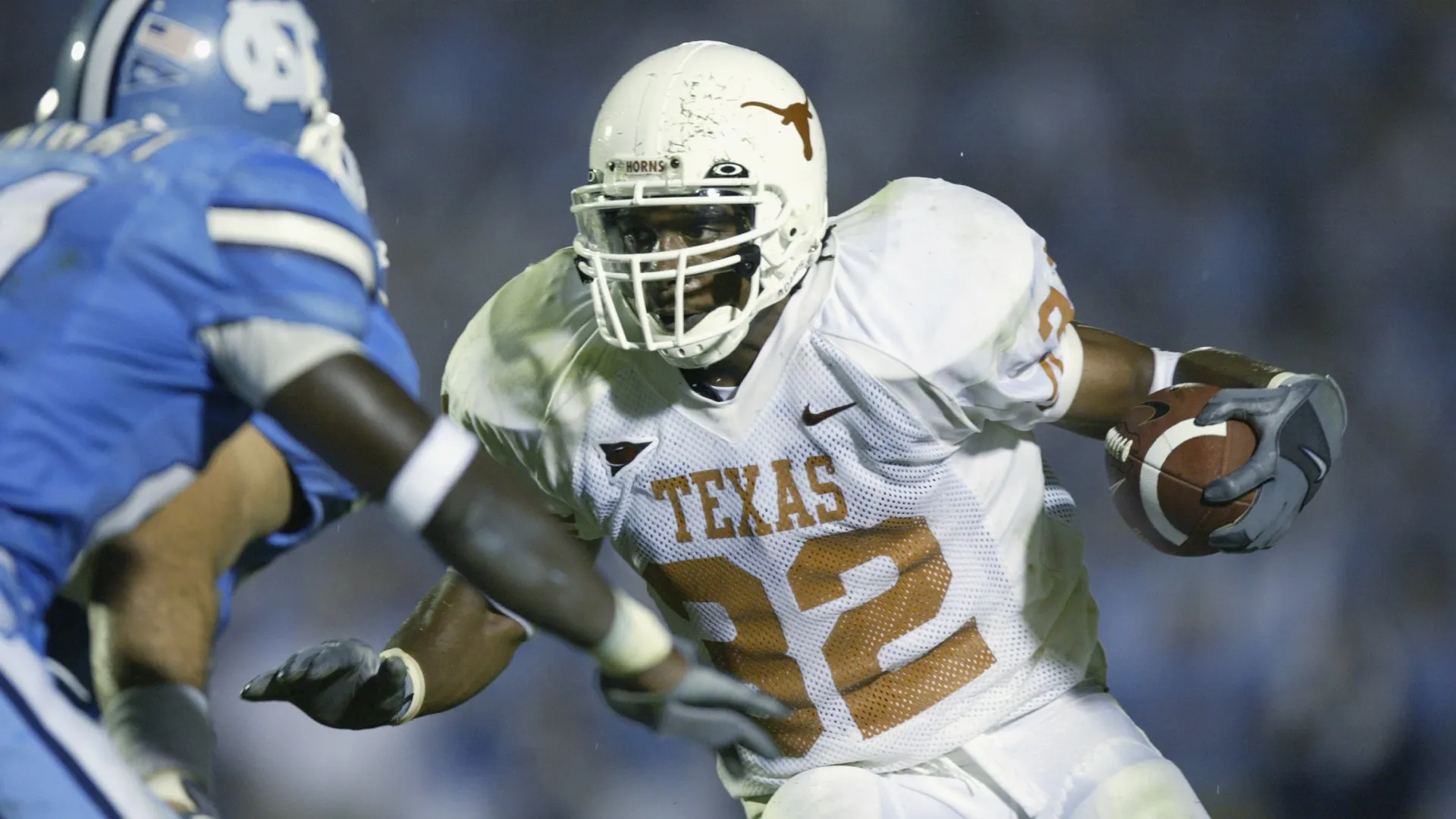
Cedric Benson (Source: Craig Jones/Getty Images)
At the University of Texas, following the Ricky Williams era, the pressure on Cedric Benson was immense, but he handled it with admirable consistency. He was a four-year running back who surpassed the 1,000-yard mark in each of his four seasons, an accomplishment only a few have ever achieved in NCAA history.
His 64 rushing touchdowns are the result of this durability and his focus on the constant grind, leading the Longhorns to multiple bowl game victories. As a senior in 2004, he capped off his career by winning the Doak Walker Award as the nation’s best running back, solidifying his legacy as one of the cornerstones of the Texas offense. His tenure in Austin, with its combination of strength and reliability, firmly places him on this elite list.