
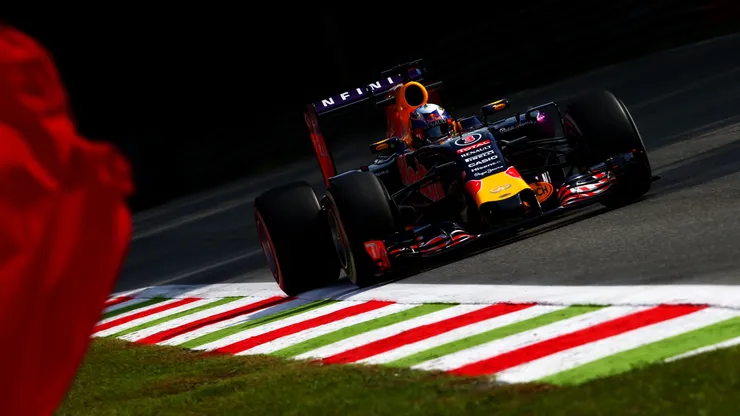
When the red flag waves in Formula 1, time seems to freeze. Engines go silent, fans hold their breath and strategy boards light up. It’s a rare but powerful signal—one that flips the script mid-race and brings the paddock to a standstill.
But what exactly triggers this dramatic pause in the world’s fastest sport? From unpredictable crashes to sudden weather chaos, a red flag moment is as tense as it is crucial. And when it happens, every second off-track counts.
Behind the scenes, drivers reset, teams scramble and decisions are made that can make or break a race. It’s not just about safety—it’s about seizing opportunity. So, what really unfolds during a red flag period? Let’s take a closer look.
Reasons for red flag
A red flag isn’t just a dramatic visual, it’s a decision that stops the race entirely for safety reasons. From terrifying crashes to sudden weather chaos, the red flag acts as the sport’s emergency brake. When deployed, all cars must return to the pit lane, and no overtaking is allowed.
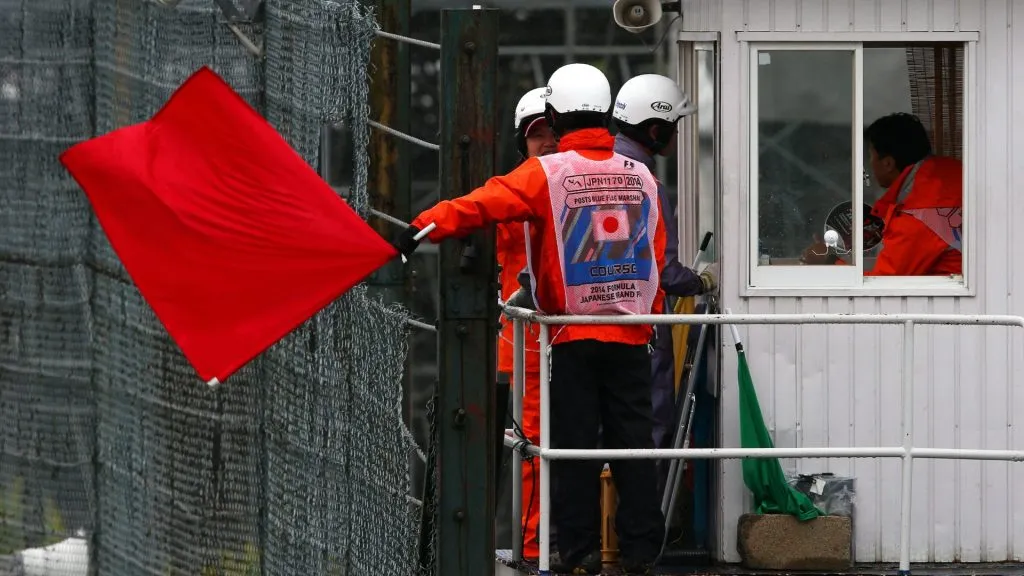
A course marshall waves a red flag during the Japanese Formula One Grand Prix at Suzuka Circuit on October 5, 2014. (Source: Justin Davies/Getty Images)
Common triggers include heavy rain, multiple-car collisions or unsafe track conditions like debris or barriers needing repair. One notable case? The 2007 European GP, when a sudden downpour caused mass aquaplaning at Turn 1—an unforgettable moment that froze the race and fans alike.
Pit lane rules
Once the red flag is waved, the pit lane becomes a hive of activity—but within strict boundaries. Teams can change tyres, repair visible damage, and perform limited adjustments (like replacing a damaged front wing or working on brake cooling systems).
However, the FIA prohibits full-scale mechanical changes or suspension tweaks that would give teams a competitive edge. It’s a delicate balance between safety and fairness. This period can be a lifeline for drivers who’ve suffered minor damage—or a strategic headache if the rules prevent a quick fix.
Restart format
Restarting a race after a red flag isn’t always straightforward. Depending on the conditions, the race may resume with either a standing start (cars line up on the grid as at the race’s beginning) or a rolling start behind the Safety Car.
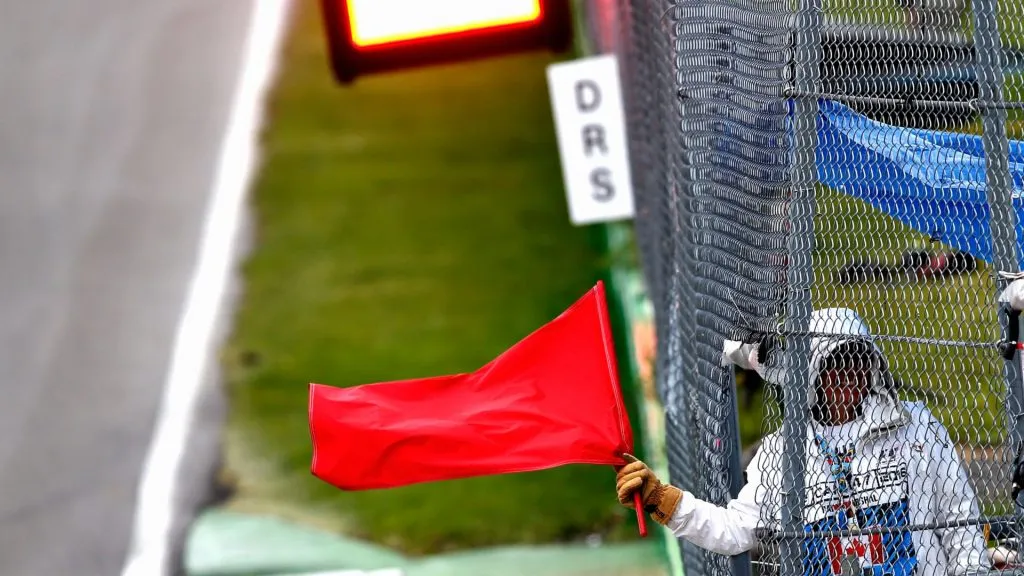
A marshal waves a red flag at the end of the session during final practice ahead of the Canadian Formula One Grand Prix at Circuit Gilles Villeneuve on June 11, 2016. (Source: Charles Coates/Getty Images)
Standing starts are more thrilling but riskier in damp or damaged conditions, while rolling starts offer a safer alternative. The decision lies with the race director and the FIA.
After the chaos of the 2023 Australian GP—which saw multiple red flags and crashes—the FIA refined restart protocols, giving teams more time to prepare and ensuring clearer communication.
Historical moments
Red flags don’t just pause races, they shape legacies. The first red-flagged race in F1 history was the 1971 Canadian Grand Prix, cut short by heavy rain. In 1976, James Hunt’s chaotic win at Silverstone came after a red-flag restart and a dispute over his eligibility—an incident still debated decades later.
More recently, in Monaco 2024, a first-lap crash involving multiple cars forced an immediate red flag, shaking up strategies and reshuffling the field. These moments prove how red flags don’t just disrupt races, they define them.