RJ Luis, a rising talent out of college basketball, has officially landed with the Boston Celtics. As one of the most storied teams, they’re investing in what they believe could be part of their future core.
The rookie shooting guard joins a roster packed with experience and ambition. While his minutes may be limited early on, his deal reflects the growing value teams place on untapped potential and positional versatility.
His contract, like many rookie deals, offers a glimpse into the economics of the modern NBA. Between guaranteed money and performance incentives, the numbers behind his deal say plenty about how teams structure risk and reward.
What is RJ Luis’s salary with the Boston Celtics?
RJ Luis arrives in Boston still on the contract he signed with the Utah Jazz on July 7, 2025. That means his 2025–26 base pay clocks in at approximately $559,782, followed by a slight bump to $571,978 in the next year, as Essentially Sports reported.
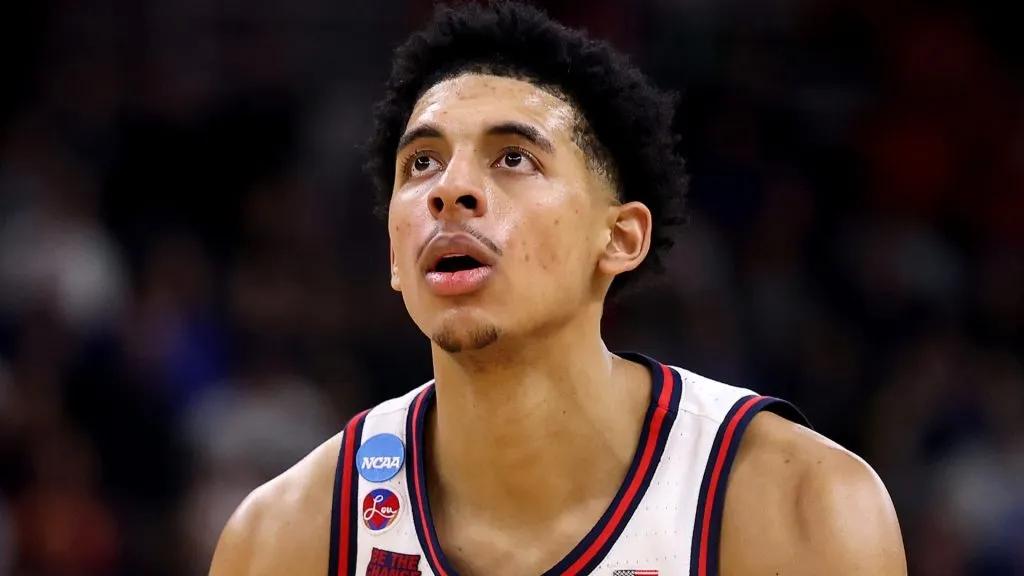
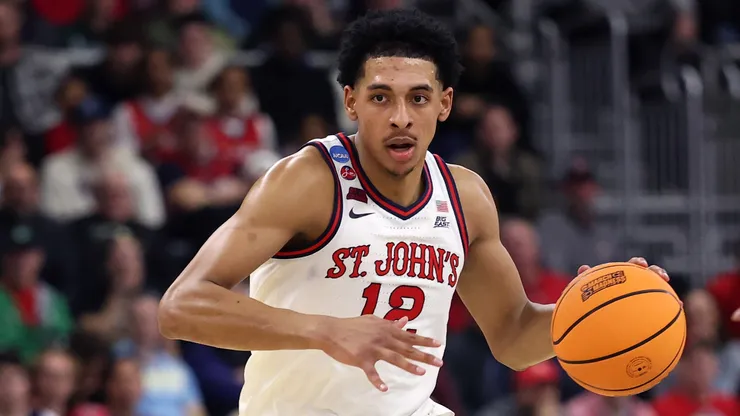
RJ Luis Jr. shoots a free throw against the Arkansas Razorbacks during the second half in the second round of the NCAA Men’s Basketball Tournament in 2025. (Source: Maddie Meyer/Getty Images)
This modest compensation is a stark contrast to typical NBA rookie deals—but that’s exactly the point: the franchise needed cap relief. By bringing him in on a short-term deal, they swapped Georges Niang’s looming $8.2 million cap hit for a much leaner, developmental investment.
RJ Luis’s contract: How long does the deal last?
RJ Luis Jr. officially became a member of the Boston Celtics following a trade just weeks after signing a two-way contract with Utah. That same deal now carries over to Boston, and it’s set to run for two full seasons under the NBA’s two-way player structure.
A two-way contract allows a player to split time between the team and its G League affiliate—in this case, the Maine Celtics. Under current NBA rules, he can appear in up to 50 regular-season games with Boston while spending the remainder of his time developing in the G League.
Both years of his contract are guaranteed under the two-way format. That means the Celtics have secured his rights through the 2026–27 season without needing to commit a full-time roster spot or significant cap space. However, the door remains open: They can convert the two-way deal into a standard NBA contract at any point.
For now, this setup gives them a chance to evaluate a young guard recovering from a serious leg injury suffered in November 2023, without rushing his development. It’s a low-risk, high-upside play—one that reflects how modern teams manage talent pipelines while navigating luxury tax concerns.