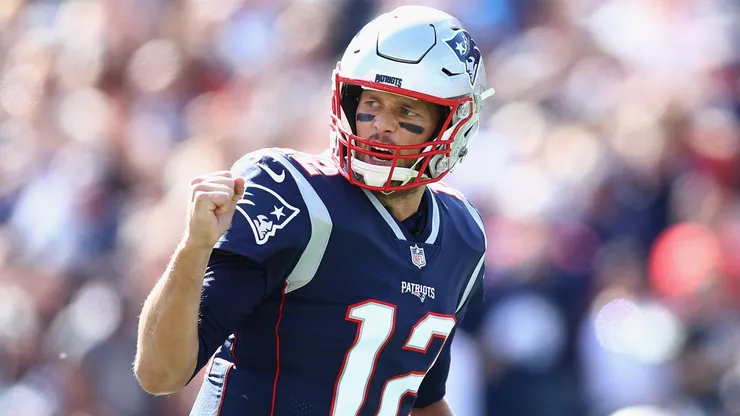
It starts with a flick of the wrist and ends in chaos… ninety, sometimes ninety-nine yards of pure disbelief. The kind of plays that silence a stadium for a heartbeat before erupting into thunder.
Some came from legends in their prime, others from backups with nothing to lose. But each one turned the improbable into highlight-reel immortality, traveling farther than logic—or even hope—should allow.
Across decades, these deep bombs have defined careers, crushed defenses, and reminded everyone why the NFL is as much about spectacle as precision. These are the passes that rewrote what “too far” means in football.
The 99-yard touchdown passes in NFL history
The longest touchdown pass that can possibly be thrown in the NFL is 99 yards. This feat is so rare and so dependent on perfect execution under extreme pressure that it has only been accomplished 13 times in the entire history of the league. It is a record that, by the very design of the field, can never be broken.
For a 99-yard pass to occur, three crucial elements must align:
- The starting point: The offense must be backed up to its own one-yard line, meaning the ball is just three feet away from a potential safety. This high-pressure starting position is inherently risky and often dictates a conservative, run-heavy play call.
- The execution: The quarterback must complete the pass, and the receiver must run the entire 99 yards to the opposing end zone. This turns the play into a dramatic footrace of speed, vision, and endurance against a defense determined to stop the score.
- The result: The play covers the entire length of the field, making it the longest single-play touchdown in the history of the sport (excluding special teams returns or fumble recoveries that start behind the goal line).
History and the elite club of 99-yarders
The first instance of a 99-yard touchdown pass occurred in 1939, and the most recent was in the 2011 season. This long gap highlights just how difficult this perfect alignment is to achieve…
| Passer | Receiver | Team | Opponent | Date |
| Eli Manning | Victor Cruz | New York Giants | New York Jets | Dec 24, 2011 |
| Tom Brady | Wes Welker | New England Patriots | Miami Dolphins | Sept 12, 2011 |
| Gus Frerotte | Bernard Berrian | Minnesota Vikings | Chicago Bears | Nov 30, 2008 |
| Jeff Garcia | André Davis | Cleveland Browns | Cincinnati Bengals | Oct 17, 2004 |
| Trent Green | Marc Boerigter | Kansas City Chiefs | San Diego Chargers | Dec 22, 2002 |
| Brett Favre | Robert Brooks | Green Bay Packers | Chicago Bears | Sept 11, 1995 |
| Stan Humphries | Tony Martin | San Diego Chargers | Seattle Seahawks | Sept 18, 1994 |
| Ron Jaworski | Mike Quick | Philadelphia Eagles | Atlanta Falcons | Nov 10, 1985 |
| Jim Plunkett | Cliff Branch | Los Angeles Raiders | Washington Redskins | Oct 2, 1983 |
| Sonny Jurgensen | Jerry Allen | Washington Redskins | Chicago Bears | Sept 15, 1968 |
| Karl Sweetan | Pat Studstill | Detroit Lions | Baltimore Colts | Oct 16, 1966 |
| George Izo | Bobby Mitchell | Washington Redskins | Cleveland Browns | Sept 15, 1963 |
| Frank Filchock | Andy Farkas | Washington Redskins | Pittsburgh Pirates | Oct 15, 1939 |
The unique 2011 season
The 2011 NFL season stands alone as the only year in history where the 99-yard touchdown pass was accomplished twice. First, Tom Brady connected with Wes Welker early in the season, a feat that was surprising given that the duo was primarily known for their short, precise passing game.
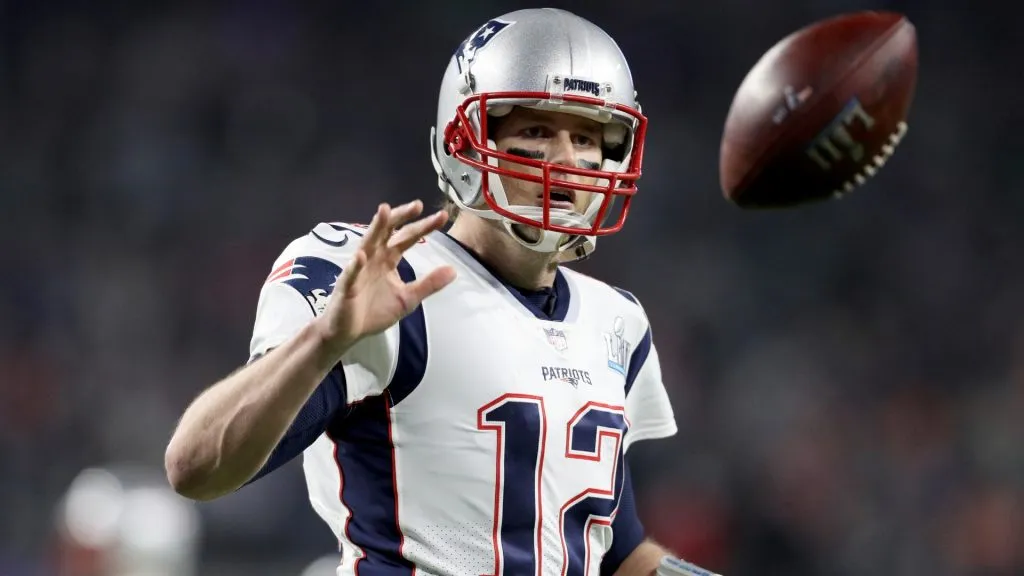
Tom Brady #12 of the New England Patriots (Source: Patrick Smith/Getty Images)
Their deep bomb proved that their technical mastery could translate into field-flipping plays. Later that season, on Christmas Eve, Eli Manning connected with Victor Cruz. This dramatic play was instrumental in the New York Giants’ late-season push to the playoffs, where they ultimately went on to win the Super Bowl, making it one of the most consequential 99-yard touchdowns in history.
The dynamics: Air yards vs. yards after catch
It is crucial to understand that a 99-yard pass play is not necessarily a 99-yard throw. The total distance is a critical combination of two factors: Air Yards (the distance the ball travels in the air) and Yards After Catch (YAC), which is the distance the receiver runs after securing the ball.
In many of the earlier recorded instances, the majority of the 99 yards came from the receiver’s effort and speed, with the pass itself being relatively short. For instance, in 1939, receiver Andy Farkas ran almost 90 yards after the catch.
Conversely, in later examples, such as the Gus Frerotte to Bernard Berrian connection in 2008, the throw was a soaring bomb, covering a significant portion of the total distance in the air.
The 99-yard touchdown pass remains the gold standard for long passing plays, representing a perfect storm of offensive positioning, quarterback execution, and pure receiver speed.