The NHL isn’t short on young stars lighting up the ice—but longevity tells another kind of story. As veterans sign new deals deeper into their 30s, the race for who stays longest becomes its own quiet spectacle.
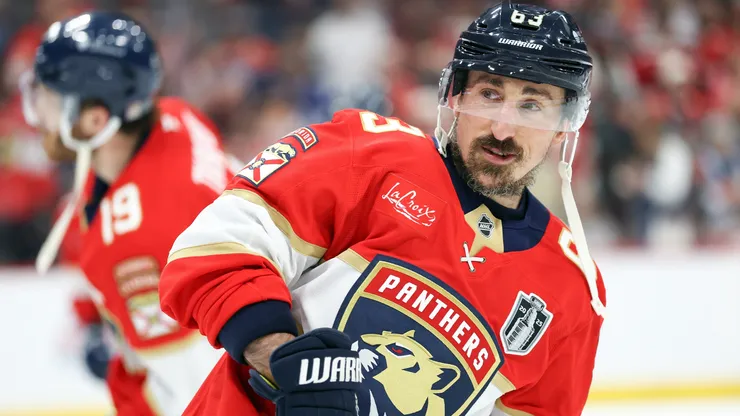
In Florida, a recent extension has raised eyebrows—not for its price tag, but for how far it stretches into the future. Brad Marchand, known for grit and playoff pedigree, could soon be skating into age-defying territory.
With a contract that pushes past conventional limits, one player’s timeline now invites a closer look. As the league evolves, the question of who might end up as the oldest name on the roster grows more compelling.
How old will Brad Marchand be at the end of his contract with the Panthers?
Brad Marchand, now 37, inked a six-year deal with the Panthers worth a total of $31.5 million—anchoring him in Florida through the 2030–31 season. He’ll skate into his 43rd year before that contract expires.
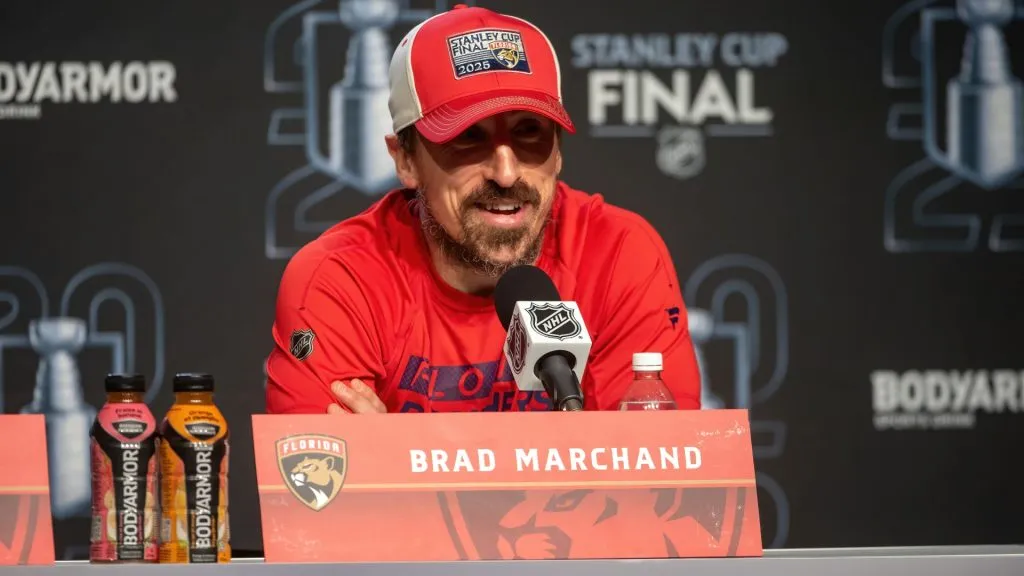
Brad Marchand #63 of the Florida Panthers addresses the media following Game Five of the 2025 Stanley Cup Final against the Edmonton Oilers at Rogers Place on June 14, 2024. (Source: Leila Devlin/Getty Images)
The move isn’t just about keeping a veteran; it’s a strategic nod to Marchand’s playoff pedigree and leadership, as he tallied 20 points in 23 post-season games en route to Florida’s Stanley Cup run in 2025.
Analysts spotlight not only the age milestone, but the rare feat of a top-six forward extending past 40. With a salary-cap friendly structure—$5.25 million AAV—the deal lets Marchand remain a key piece while giving Florida flexibility.
Who is the oldest player in the NHL?
Veteran goaltender Marc-André Fleury, now 40, currently shares top billing with defenseman Ryan Suter, also 40, as the oldest active NHL players. Fleury turned 40 in November 2024, and remains a mentor-laden presence between the pipes for the Wild.
Behind them are iron-men like Brent Burns and Alex Ovechkin (39), along with Corey Perry and Jonathan Quick rounding out the top five oldest skaters. Their continued presence underscores a league-wide trend: the longevity of elite conditioning and evolving training methods.
Historically, players like Gordie Howe skated past 50, but in today’s faster NHL, staying competitive post-40 is rare. Fleury and Suter’s enduring roles lend perspective: hitting 40 now signals more than age—it hints at resilience and a career built on evolution, adaptability and ice-cold determination.