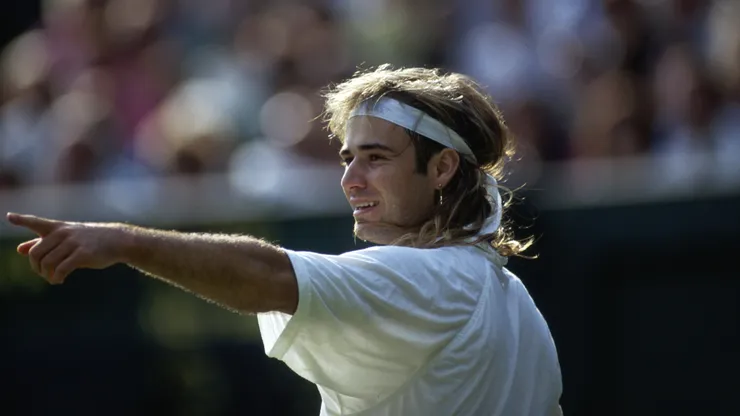
Andre Agassi‘s career was defined by two sides: his public persona and his private reality. The latter came to light in 2009 with the release of Open, widely regarded as one of the best sports autobiographies ever written. In it, Agassi shared deeply personal stories: from playing matches without underwear to wearing wigs, battling fears and anxiety, concealing a doping incident, and harboring a profound hatred for tennis — a feeling rooted in his complicated relationship with his father.
The former World No. 1, winner of eight Grand Slam titles, and a key figure in the iconic rivalry with Pete Sampras symbolized the last great era of American tennis dominance. After retirement, Agassi transitioned into coaching, briefly working with Novak Djokovic before their partnership ended on uneasy terms.
Agassi’s path to tennis greatness was anything but conventional. Born into a family led by his domineering father, Emanoul Aghassian — an Armenian immigrant and former boxer — young Andre grew up under relentless pressure. His father’s obsession with tennis forced Andre into grueling training sessions that included hitting thousands of balls daily from a machine his father dubbed “the dragon“.
“My dad said that if I hit 2,500 balls every day, I’d hit nearly a million a year, and a kid who hits a million balls annually becomes unbeatable,” Agassi recalled. The grueling regimen, however, only deepened his resentment toward the sport: “I didn’t choose tennis. I hated it with all my soul, and I hated it for most of my career”.
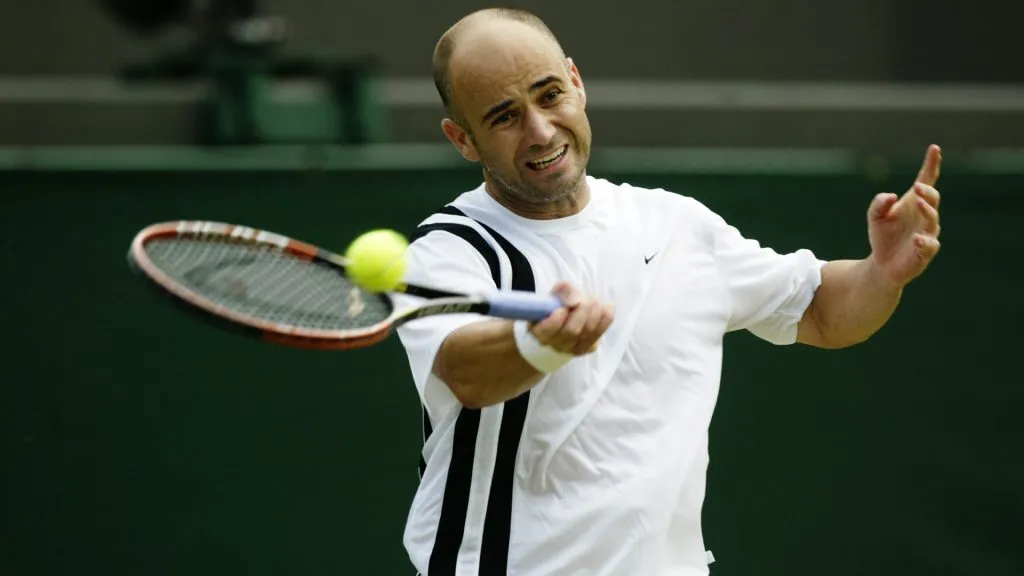
Andre Agassi of the USA plays a forehand during his victory over Lars Burgsmuller of Germany during day four of the Wimbledon Lawn Tennis Championships. (Alex Livesey/Getty Images)
A prodigy under pressure
The intense training paid off, as Agassi emerged as a teenage sensation, earning a spot at Nick Bollettieri’s academy. But Agassi described the academy as more of a military camp than a nurturing environment, likening his teenage years there to imprisonment.

With his long hair, earrings, and rebellious style, Agassi entered the tennis world as the “bad boy” of the sport. Signed by Nike and becoming the youngest player to earn $1 million in prize money, he quickly became a media sensation. In a 1989 ad campaign for a camera company, he delivered the infamous line, “Image is everything,” a phrase that would haunt him as critics accused him of prioritizing style over substance.
Agassi’s struggles with his image extended beyond public perception. He revealed that he wore a wig to hide his thinning hair until 1995, when he finally shaved his head at the encouragement of friends and then-girlfriend Brooke Shields. The move marked a turning point, allowing him to shed the façade he’d maintained for years.
A historic rise to No. 1
By 1995, Agassi had already won Wimbledon in 1992 and the US Open in 1994. That year, he arrived at the Australian Open with a new look and a newfound focus. In the final, he defeated Pete Sampras, the World No. 1, to claim his first title Down Under. A month later, Agassi overtook Sampras to become the top-ranked player in the world.
Reflecting on his ascent years later, Agassi admitted: “I was World No. 1 in something I hated. My life was my father’s dream, not mine”. Despite his inner turmoil, Agassi’s unmatched talent and work ethic propelled him to an extraordinary career. The boy who once dreamed of playing soccer with friends and enjoyed literature classes in school had become the biggest name in tennis.
Retirement and revelations
Agassi’s career came to an emotional close at the 2006 US Open, where he lost to Benjamin Becker at age 36. He retired with 60 career titles, including eight Grand Slams, a Davis Cup championship, and an Olympic gold medal. He earned over $30 million in prize money and left an indelible mark on the sport.
In Open, Agassi laid bare the toll his career took on his mental health. “In tennis, you face your opponent, exchange shots, but never touch or talk to them or anyone else. The rules prohibit even speaking to your coach during a match. Tennis is an island. Of all sports, it’s the most isolating,” he wrote.
He also revealed the extent of his father’s influence: “I never wanted to play tennis. My dad forced me to, believing no one could beat me if I hit a million balls a year. I hated tennis with all my soul for most of my career”.
Coaching Djokovic and parting ways
In 2017, Agassi joined Novak Djokovic’s team as a part-time consultant, aiming to guide the Serbian star’s game. However, their partnership dissolved after just one year due to philosophical differences.
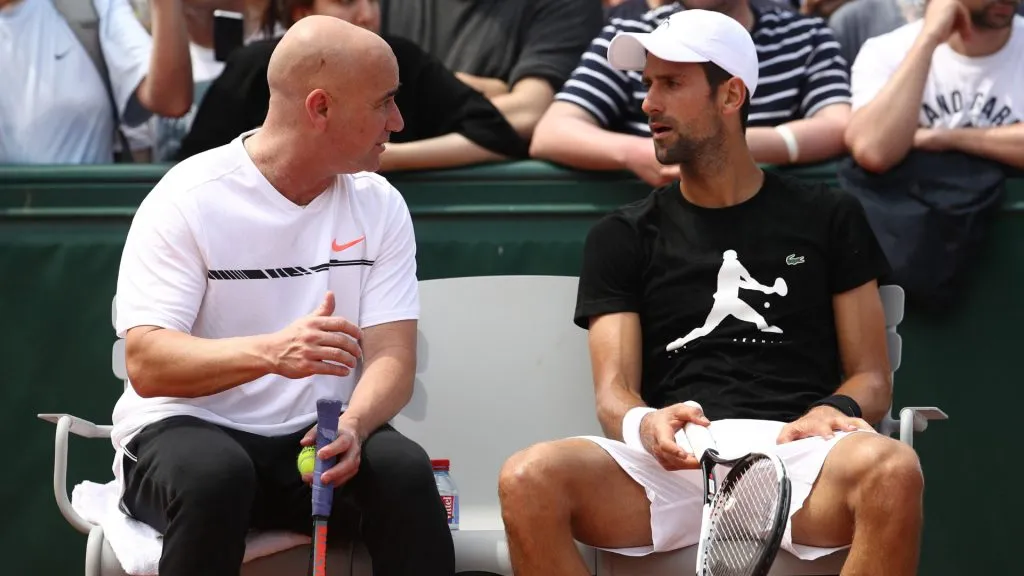
Novak Djokovic of Serbia in discussion with coach Andre Agassi during practice on day one of the 2017 French Open at Roland Garros. (Julian Finney/Getty Images)
“I left because I wasn’t helping,” Agassi later explained. “I wanted to help Novak reach his best, but I couldn’t approve of some of his decisions. If I’m not part of the solution, I’m part of the problem”.
The split reportedly stemmed from disagreements over how to address Djokovic’s elbow injury, with Agassi recommending changes to his training regimen. “I think his learning curve could be faster, but it has to be his own,” Agassi remarked, adding that their conflicting views ultimately made their collaboration untenable.