There are good tennis players, and then there are the greats: those who don’t just excel at the game, but redefine it. Brazilian star Maria Bueno was one of the second group. She emerged in the late 1950s as one of tennis’ most graceful and accomplished champions, becoming one of the first and most beloved South American idols in the sport.
Born in Sao Paulo in 1939, Maria Esther Bueno picked up tennis at the age of six, while going to the club with her family, despite tennis not being a popular sport in the country. “The main thing was football. But I just started playing and I just loved the sport. My father, my entire family played,” she told CNN in 2016.
Bueno said that her family didn’t have any money and no sponsors to support her career, so they gathered money from friends at the club and bought her “a one way ticket” to Europe. “They said ‘come back when you can,’” she told CNN.
She quickly dominated the national circuit and made her international breakthrough in the late 1950s. She broke into the international scene in 1958 when she won the women’s doubles with Althea Gibson at Wimbledon and won the women’s singles at the Italian Open.
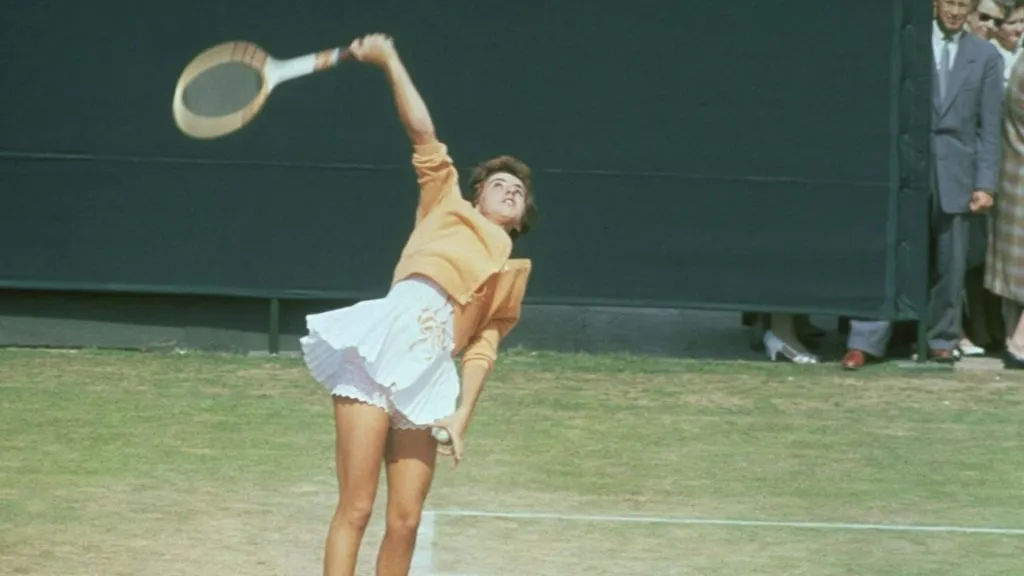
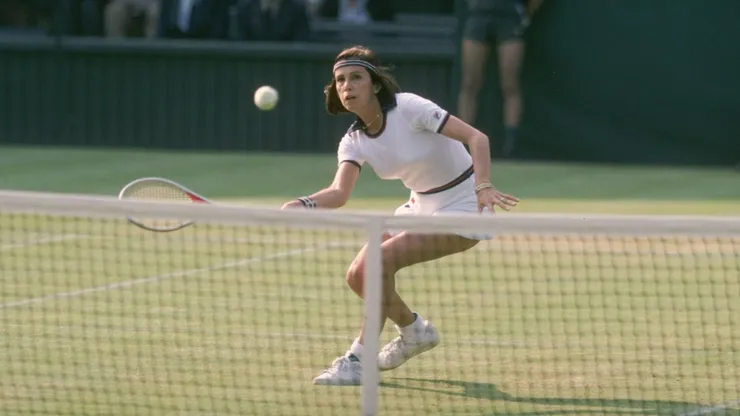
Maria Bueno playing in Wimbledon in the 1960s (Allsport UK)
A year later, she became the first South American woman to win a Wimbledon singles title, defeating Darlene Hard in the final. “My Wimbledon prize money was 50 pounds in a voucher,” she revealed. That same year, she also won the U.S. Nationals (now the U.S. Open) and ended the season ranked World No. 1.

One of the amateur’s eras more elegant players
Her style was known for its fluid motion and effortless strokes, and became one of the great champions of the amateur era (the Open Era started in 1968). “It’s all instinct. I never had coaches or anything like that. I just had it. As you know, you either have it or you don’t,” she said.
“I had a lot of natural talent, but I had to work hard too,” she told The New York Times. Between 1959 and 1966, Bueno won seven Grand Slam singles titles, ten in doubles, and two in mixed doubles. At her peak, she was considered the best female player in the world, topping the rankings in 1959, 1960, 1964, and 1966.

The Wimbledon wardrobe scandal
However, Bueno wasn’t only a tennis player, she was a celebrity, especially in her home country. As one of the early iconic players, she was one of the most fashionable, wearing dresses designed by Ted Tingling. One of his creations caused a stir during the 1962 Championships, as she wore a dress with pink underskirt and matching pink underwear.
The British media dubbed it a “wardrobe scandal,” but Bueno shrugged off the controversy. “There was a gasp from one end of the court,” The Associated Press quoted Bueno as recalling the incident, via The New York Times. “And the people at the other end didn’t know why until I changed ends and served from there. Later I wore panties that resembled the club colors, which outraged the club committee and they brought in the all-white clothing rule.”
In 1963, Wimbledon made it a condition of entry that competitors had to wear clothing that was “predominantly in white throughout” or risk disqualification. The rule was modified in 2023 to allow women players to wear dark undershorts to ease period anxiety.
Battles with injuries and post-retirement work
Injuries and illness hampered Bueno’s career in the late 1960s. She spent eight months bedridden with hepatitis in 1961 and later underwent knee surgery in 1965. From 1969 to 1974, she was sidelined by severe cramps and pain in her right arm, which led to multiple surgeries.
Her last Grand Slam title came in 1968 in doubles in the U.S. Open. Her last tournament win came at the Japan Open in 1974. She effectively retired after the 1977 season but returned briefly to compete in mixed doubles at Wimbledon in 1980 and later took part in a few senior events.
After retiring from competitive play, she remained active in the sport. Bueno became a television commentator in Brazil, offering analysis and serving as an ambassador for tennis in South America. She also founded a tennis clinic and academy, mentoring young Brazilian players and promoting the sport’s growth.
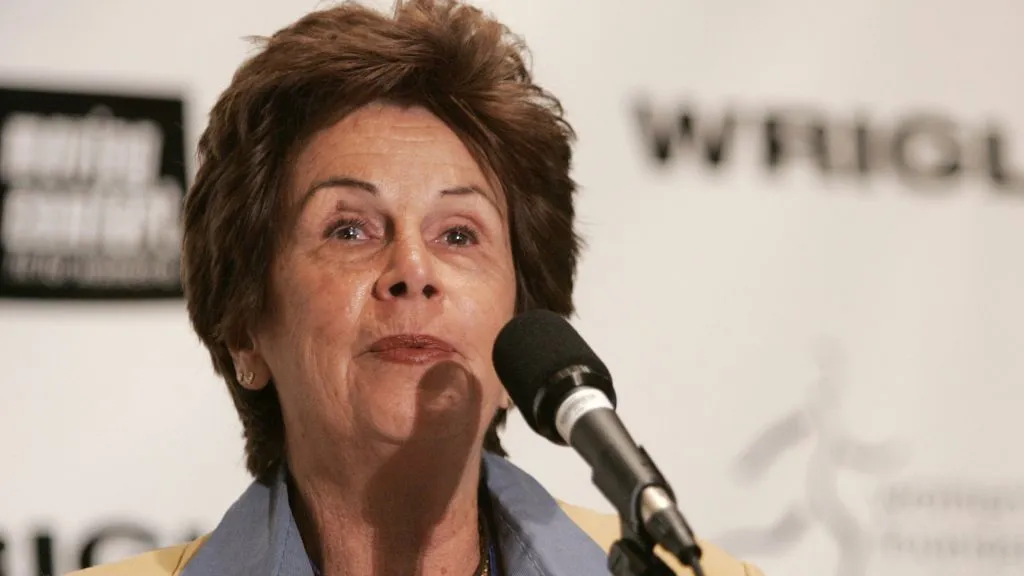
Maria Bueno in 2004 (
Legacy and honors
Maria Bueno passed away in 2018 at the age of 78, after battling with cancer, but her legacy lives on. She remains Brazil’s most decorated tennis player and was inducted into the International Tennis Hall of Fame in 1978. In a sport long dominated by Europeans and Americans, she paved the way for South American talent, particularly women.
In 2016, the Tennis Olympic Stadium for the Rio Games was named after her. She said she was “very proud” of the honor. “First, because I’m a woman. You know, everything, sorry to say, but everything is made for the men. And having my name there while I’m still around, I think that’s fantastic. It’s the best I could possibly get from Brazil. It’s such an honor,” she told CNN.
She is remembered not only for her titles but for the grace with which she played. For many in Brazil, Maria Bueno is a national treasure—a pioneer whose elegance, strength, and charisma forever changed tennis.