
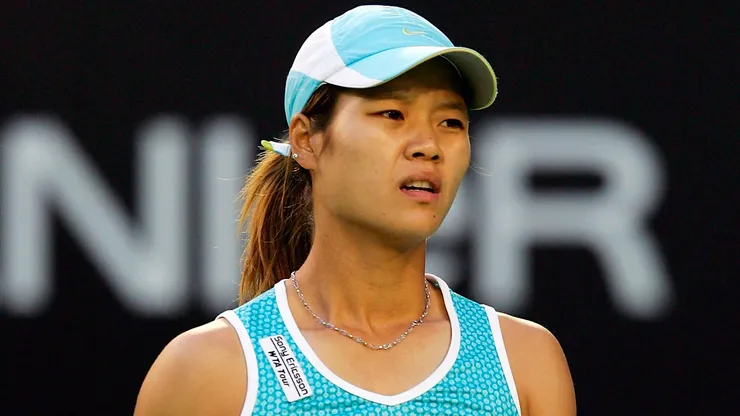
In the WTA circuit, we’ve witnessed the best female tennis talent from all over the world, but one player who truly changed the game in Asia was Chinese standout Li Na. As one of China’s top athletes, Li Na’s remarkable performances and career titles solidified her as one of the best players globally, peaking at World No. 2 in the WTA rankings.
While tennis wasn’t traditionally popular in China, Li Na was the player who put the sport on the map for a new generation of young Asian players. Turning professional in 1999, she had already joined China’s National Team two years earlier and was soon sponsored by Nike.
Known for her natural talent from a young age, Li began her journey on the WTA circuit at just 16 after spending time training in the U.S. However, in 2002, she was forced to retire temporarily due to a chronic illness and issues with her former manager, Yu Liqiao.
Two years later, Li Na made a successful return to tennis, capturing several smaller titles. In 2005, she competed in her first Grand Slam at the Australian Open, advancing to the third round before being eliminated by tennis legend Maria Sharapova. The following year, she reached her first Grand Slam quarterfinal at Wimbledon, marking her breakthrough on the WTA stage.

Maria Sharapova of Russia in action against Na Li of China during day five of the Australian Open Grand Slam at Melbourne Park January 21, 2005 in Melbourne, Australia.
Li vs. Sharapova
In their first matchup in Australia, Li and Sharapova had already built impressive careers, but it was the Russian legend who held the advantage in their head-to-head record with a 10-5 lead. Despite this, Sharapova only managed to win two of their Grand Slam final encounters, both of which were significant title matchups.

One of the most memorable moments in their rivalry came in 2012, when Sharapova eliminated Li in the semifinals of the Beijing Open. Although Li was determined to claim a victory on her home soil, Sharapova had other plans. However, Li got her revenge at the 2013 Australian Open, where she defeated Sharapova in the semifinals, denying the Russian her second Australian title.
Though their meetings were relatively few, their rivalry was one of the most captivating in tennis during the 2010s, as both players were consistently ranked among the top two in the WTA rankings. Their matches were defined by intensity, power, and closely contested victories, cementing their place as two of the era’s most formidable competitors.
Li’s career titles
The 2010s marked the peak of Li Na’s career, with her reaching the world No. 2 ranking and securing her most prestigious titles. In 2011, she made history by winning the French Open, defeating Francesca Schiavone in the final. Three years later, in 2014, she triumphed at the Australian Open, capturing her second Grand Slam title.
Before her Grand Slam successes, Li had already made her mark on the international stage by winning the Olympic Gold Medal at the 2008 Beijing Summer Olympics. That victory, combined with her nine singles titles, solidified her legacy in tennis history. Li Na became the first Asian player to win a Grand Slam title, a milestone that made her a trailblazer for Chinese and Asian tennis. With these accomplishments, she is widely regarded as the most important tennis player in Chinese history, as well as one of the sport’s biggest Asian pioneers.