

Imagine playing a tennis match with a worn-out ball—no longer bouncing the same way, losing speed, lacking that spark that makes it unpredictable and exciting… Many of the most memorable matches wouldn’t have been the same.
In professional tennis, where every shot can determine the fate of a tournament, ball quality is not a minor detail but a matter of millimeter precision. That’s why players change balls with an almost ritualistic frequency.
But what makes a new ball so special? The answer lies in the felt and internal pressure, two factors that determine its performance. In such a strategic sport, the ITF has placed great emphasis on this aspect.
Why do tennis players change balls so often?
Tennis players change balls frequently because, with use, they lose their original properties. With each hit, the felt covering wears down, affecting speed, bounce and the ability to generate spin.
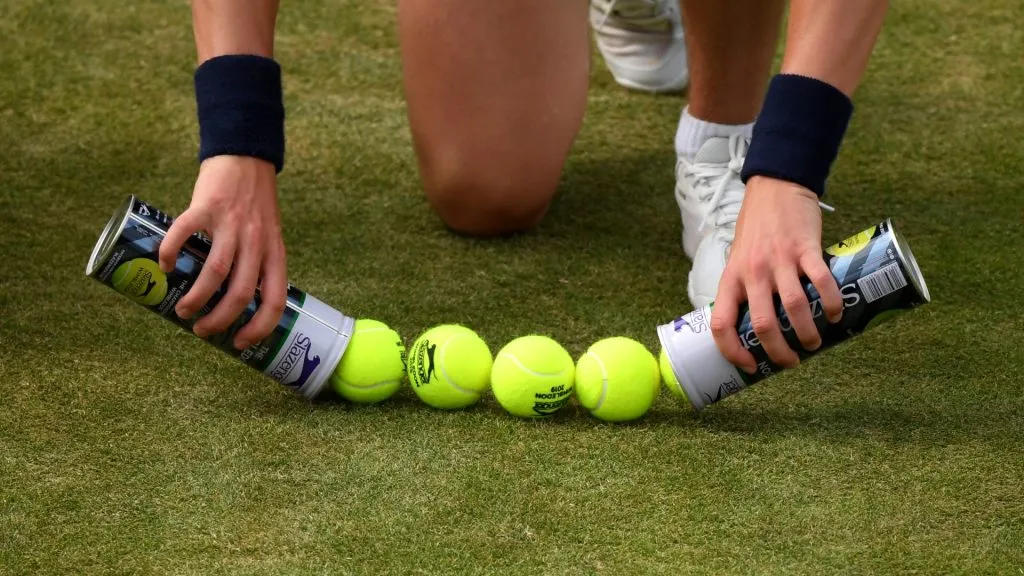
A detailed view as a ball kid lays out tennis balls during a ball change during Day five of The Championships – Wimbledon 2019. (Source: Matthias Hangst/Getty Images)
To ensure that the game remains fair and consistent, the International Tennis Federation’s regulations state that balls are changed for the first time after seven games and then every nine games.
This allows players to compete under optimal conditions, preventing the quality of the match from being affected by worn-out balls. Additionally, factors such as humidity, temperature, and court surface can accelerate deterioration.
Regular ball changes ensure that players’ performance is not impacted by the condition of the equipment. Typically, they have ball kids for this, who provide them with several balls at a time.