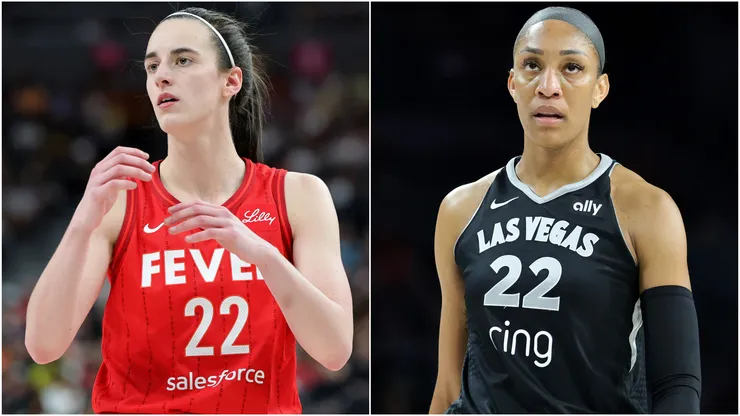
Since joining the league as the No. 1 overall pick in 2024, Caitlin Clark has been at the center of the WNBA’s rapid growth. The rookie sensation brought her spotlight from Iowa to Indiana, but the jump from college dominance to professional competition has been anything but easy — especially when facing superstars like Las Vegas Aces forward A’ja Wilson.
Clark arrived in the WNBA as one of the most decorated players in NCAA history, leaving Iowa as the all-time leading scorer with 3,951 career points. She led the nation in scoring three times over four seasons and racked up a long list of records that made her one of the most recognizable names in basketball.
But her first taste of the pros was a wake-up call. In her debut, Clark scored 20 points on 5-of-15 shooting, including 4-of-11 from three, while recording three assists — and 10 turnovers. Over time, she found her footing, eventually becoming one of the league’s faces and already setting multiple records in her first season.
On the latest episode of the Bird’s Eye View podcast with WNBA legend Sue Bird, Clark spoke candidly about the adjustments she’s had to make in her rookie year. She said that, unlike in college, the WNBA is full of long, athletic players — like Wilson — who make scoring in the paint a far greater challenge.
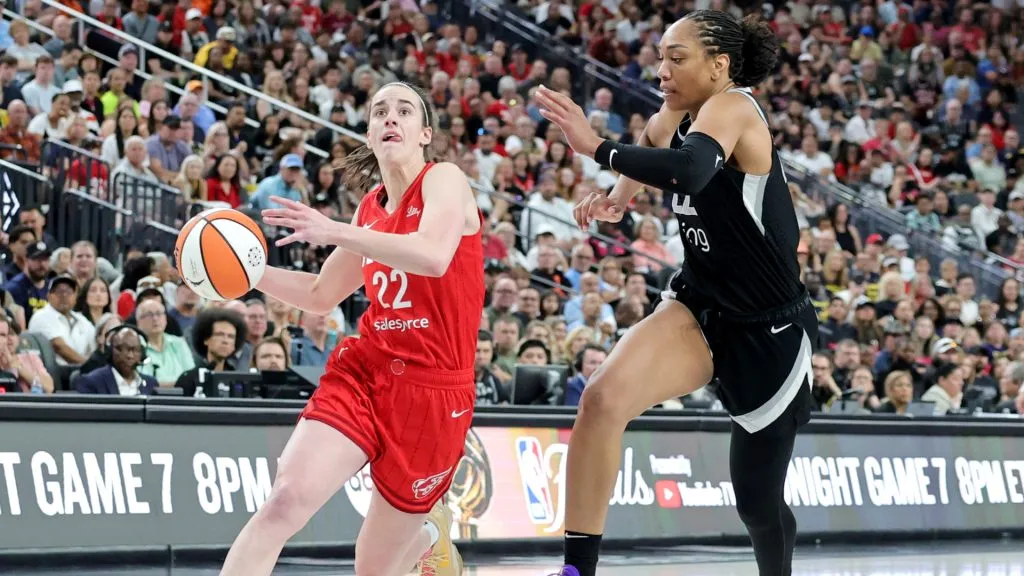
Caitlin Clark #22 of the Indiana Fever drives against A’ja Wilson #22 of the Las Vegas Aces in the third quarter of their game at T-Mobile Arena. (Ethan Miller/Getty Images)
“Early in my WNBA career, I would drive right and I would have a step on the big, but I would go for the layup and I would just get blocked and blocked and blocked,” Clark said. “Like A’ja (Wilson) and Ezi (Magbegor) or like those really long, athletic five players. You think you have a step on them and you do, but they’re just longer and more athletic. Like they’re just going to get there. There are not those players in college”.

Clark on her growth
Clark admitted that two of her biggest weapons in college — layups and three-pointers — weren’t as effective early in her WNBA career. That forced her to expand her offensive arsenal, adding tools like floaters, even if they didn’t feel natural at first.
“I feel like there’s definitely times where I’m like, in there, and it’s like, ‘Argh!’, I can go back and watch the film and be like ‘I’ve worked on that so much, why don’t I just shoot it?’ But it’s not natural. It’s not natural to you yet,” Clark explained.
Still, the Fever point guard believes she’s made significant strides in key areas of her game. “I think I’ve gotten good at stopping just enough for a floater at the right side, just becoming comfortable everywhere else. But also, at the same time, you have to remember, you can still get to whatever you want if you’re that good at it,” she added.