
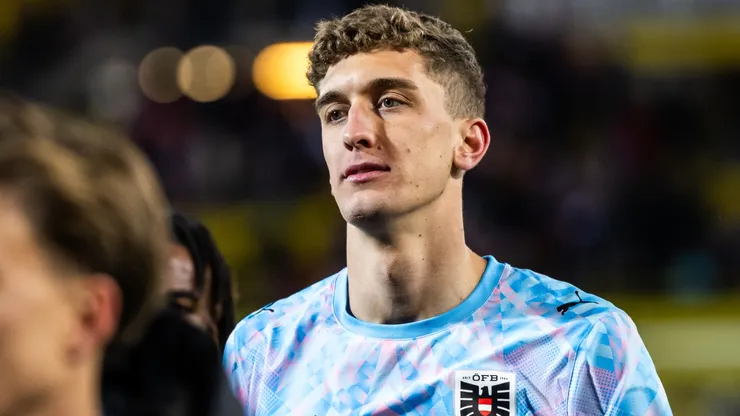
The tallest player at the FIFA World Cup 2026 is goalkeeper Florian Wiegele, standing at 2.05 meters (6 ft 9 in), making him the most imposing physical presence. His height directly impacts how Austria defends.
Several of the tallest players are concentrated in key defensive roles. England’s Dan Burn (2.01 m) brings Premier League experience, while Bosnia and Herzegovina’s Stjepan Radeljic (2.00 m) is known for winning duels in both boxes.
What makes this group particularly interesting is how their height changes match dynamics, being different from shorter players: teams with these players often defend deeper and gain a hidden attacking threat on set pieces.
Top 5 tallest players at the 2026 World Cup
| Rank | Player | Country | Height | Position |
| 1 | Florian Wiegele | Austria | 6 ft 9 in (2.05 m) | Goalkeeper |
| 2 | Stjepan Radeljić | Bosnia and Herzegovina | 6 ft 7 in (2.01 m) | Defender |
| 3 | Álvaro Montero | Colombia | 6 ft 7 in (2.01 m) | Defender |
| 4 | Mike Penders | Belgium | 6 ft 7 in (2.01 m) | Goalkeeper |
| 5 | Thibaut Courtois | Belgium | 6 ft 7 in (2.01 m) | Goalkeeper |
Which positions are usually the tallest players at the World Cup?
Goalkeepers and centre-backs are consistently the tallest players at the FIFA World Cup, with most squads concentrating their biggest physical profiles in these defensive roles. This is a long-standing trend in elite soccer.
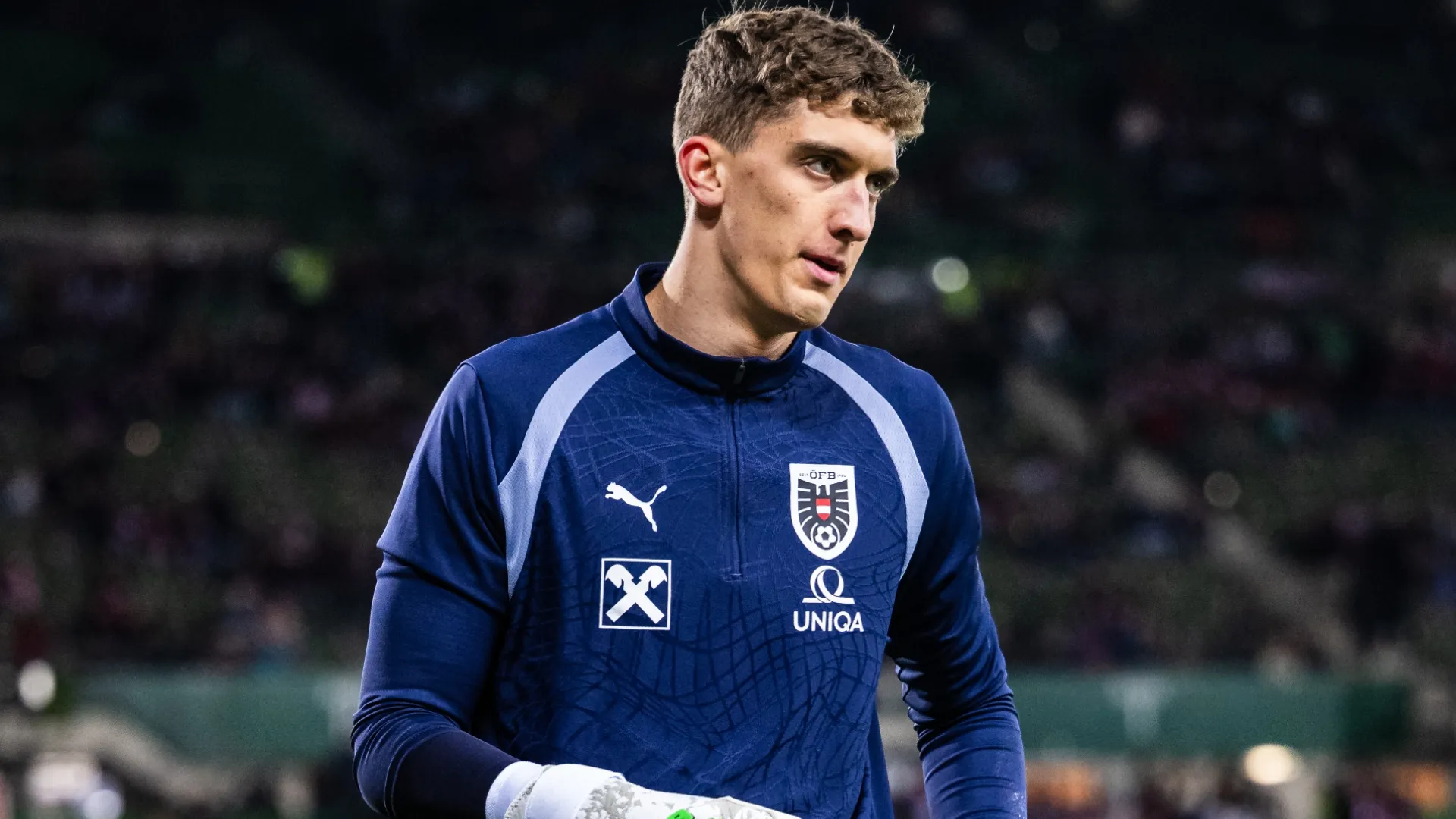
Florian Wiegele of Austria during warm up ahead of an international friendly match (Source: Christian Bruna/Getty Images)
This pattern is once again very clear. Most players above 1.98m are either goalkeepers or central defenders, positions that demand control of the penalty area, especially in crosses, corners and second-ball situations.
Goalkeepers in particular benefit from extra reach to cover high shots and dominate crowded boxes, while centre-backs use their frame to win duels against opposing strikers. However, soccer also shows that height alone is not enough.
Which countries have the tallest players in the 2026 World Cup?
Bosnia and Herzegovina and Norway have the tallest overall rosters at the 2026 FIFA World Cup, tied for the highest average squad height at 187.2 cm (6 ft 1.7 in), making them the most physically imposing teams in the tournament.
Both teams build their identity around physical dominance, especially in central defense and aerial duels, where most players exceed 1.85 meters. Bosnia combine that size with experienced forwards and strong set-piece execution.
Norway’s spine features tall, athletic profiles across defense and attack. Just behind them, Sweden and Belgium (185.8 cm) sit in the next tier of tallest squads, followed closely by Germany and Czechia (185.7 cm).
Very few nations match this physical profile at squad level, which reinforces a broader trend: the tallest teams are overwhelmingly European, while other regions rely more on technical ability and agility rather than aerial dominance.