A 162-game MLB regular season is one of the most grueling grinds in all of professional sports. To manage that physical toll, the league has instituted several measures to mitigate fatigue and protect players from injury over the course of six months.
Yet unlike many amateur levels, MLB does not feature a mercy rule—commonly known as a “run rule”—which halts play if a team builds a commanding lead, such as 15 runs after five innings or 10 runs after seven.
Every MLB contest must go the distance—at least nine full innings, or 8½ if the home team is ahead—no matter how lopsided the final score becomes, but there are some exceptions listed along this article.
While run rules are standard across Little League, high school, select college conferences, and international competitions like the World Baseball Classic (WBC), Major League Baseball has never adopted the practice for regular-season or postseason play.
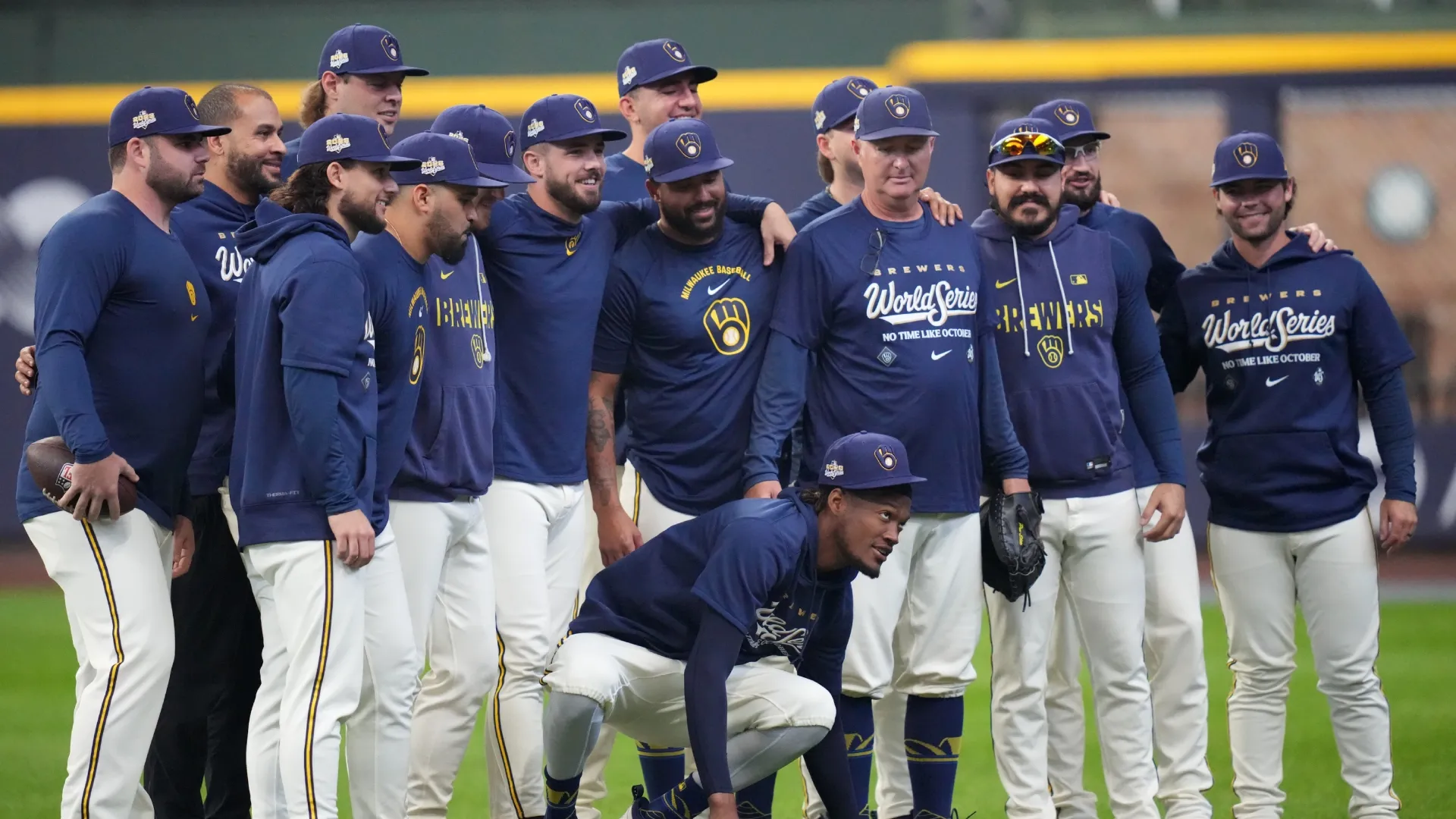
The Milwaukee Brewers pose for a group photo.
When an MLB game can end early
Instead of halting a blowout, MLB relies on roster accommodations to limit wear and tear. Trailing clubs down by eight or more runs—or leading clubs ahead by at least 10 in the ninth inning—are permitted to put position players on the mound to conserve valuable bullpen arms.
A game can also be called early if severe weather halts play after five innings (or 4½ if the home team is leading) and conditions make it impossible to resume. However, that decision rests solely on weather and field safety, never on a run differential.
Why MLB won’t adopt a Mercy Rule
Like the NFL, NBA, and NHL, MLB steers clear of shortening games due to scorelines. That stance comes down to three major commercial and institutional factors:
- Broadcast and commercial commitments: Regional sports networks and national broadcasters pay billions for live programming windows, and advertising inventory relies on guaranteed airtime.
- Ticket and fan value: Paying fans through the turnstiles expect a full nine-inning experience, regardless of whether the contest turns into a rout.
- Professional contracts and milestones: Contract incentives, personal milestones, and development opportunities for bench players rely on every out and plate appearance playing out across 27 outs.
Rather than ending games prematurely, pro sports rely on unwritten rules and informal pacing to wind down blowouts, whether it is MLB managers resting regulars and turning to position-player pitchers, or NFL teams leaning on conservative run calls and victory formations to bleed the final minutes off the clock.
Key takeaways
- Major League Baseball does not feature a mercy rule for blowouts.
- Trailing clubs down eight or more runs may pitch position players.
- Severe weather can halt an MLB game early after five innings.