
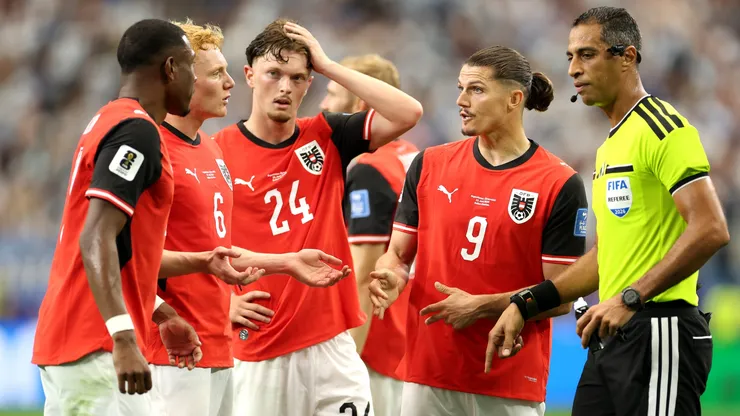
The 2026 FIFA World Cup has already produced dramatic qualification battles, but not every group will be decided by goals and victories alone. When teams finish level on points and other traditional tiebreakers fail to separate them, FIFA turns to a lesser-known but potentially decisive metric: Fair Play points.
Fair Play points are based on a team’s disciplinary record during the group stage. FIFA assigns deductions for yellow cards, indirect red cards resulting from a second booking, direct red cards and combinations of a yellow card followed by a direct red.
The team with the fewest deductions holds the advantage if all previous tiebreakers have been exhausted, making every caution and dismissal potentially significant in the race to advance. A single yellow card may seem minor in the moment, but it could ultimately influence a team’s fate.
How are FIFA Fair Play points calculated?
FIFA Fair Play points are calculated through deductions for yellow and red cards received during the group stage. The team with the fewest disciplinary deductions earns the better Fair Play score if a tiebreaker is required.
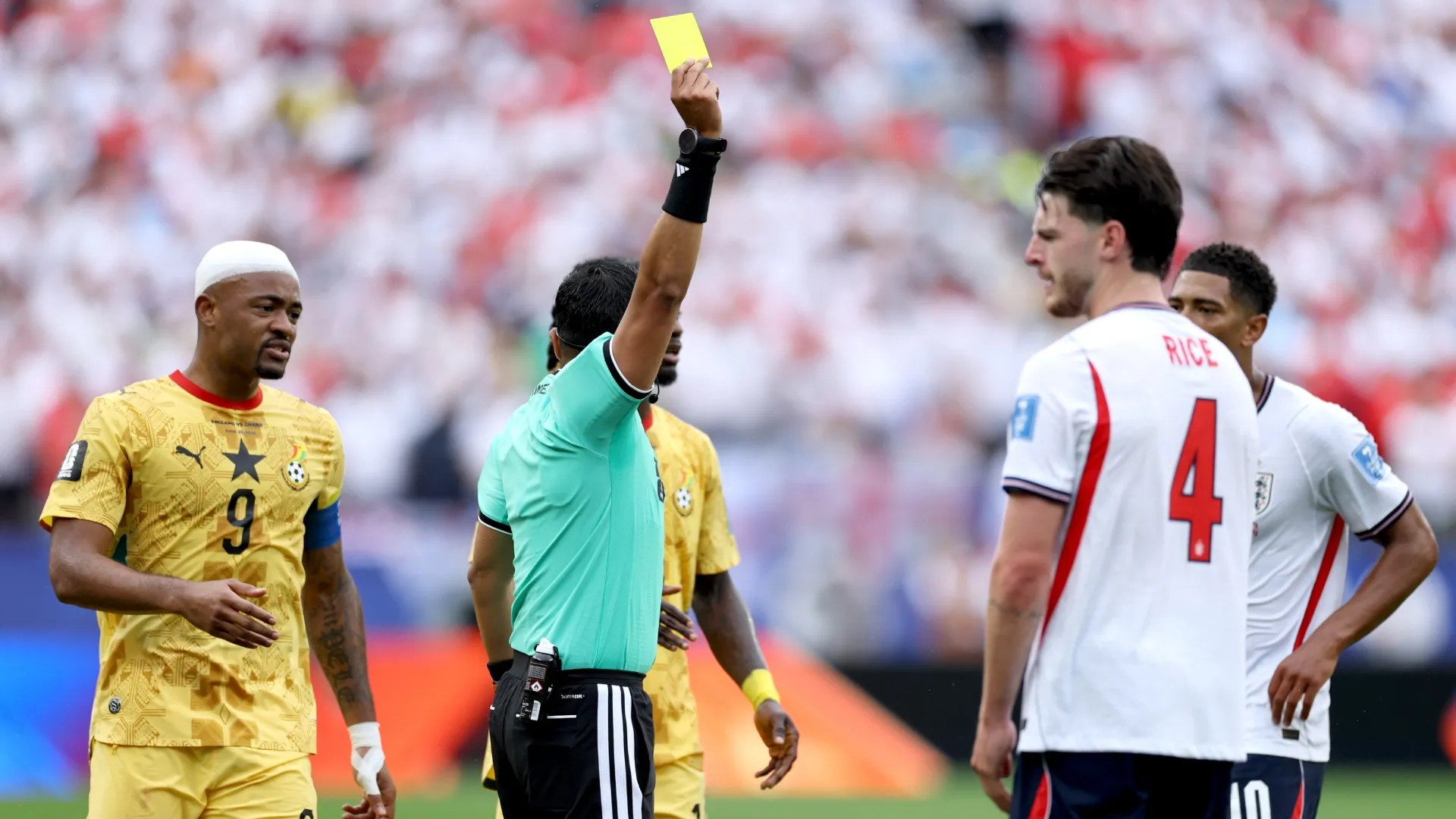
Said Martinez shows a yellow card to Declan Rice during the FIFA World Cup 2026 Group L match (Source: Buda Mendes/Getty Images)
FIFA uses the following scale:
- Yellow card: -1 point
- Indirect red card (second yellow in the same match): -3 points
- Direct red card: -4 points
- Yellow card followed by a direct red card: -5 points
Only one deduction can be applied to a player in a single match. The system is designed to reward teams that maintain discipline throughout the tournament and discourage unnecessary cautions or dismissals.
While Fair Play points are rarely the first thing fans look at in the standings, they can become extremely important when teams are level on every major sporting criterion. A single yellow card could end up affecting a nation’s position in the table.
When are Fair Play points used at the 2026 World Cup?
Fair Play points are used after all primary sporting tiebreakers have failed to separate teams. They are not the first criterion FIFA applies when teams finish level on points. For teams tied within the same group, FIFA first examines:
- Head-to-head points among the tied teams.
- Head-to-head goal difference.
- Head-to-head goals scored.
- Overall goal difference.
- Overall goals scored.
- Fair Play points.
This means disciplinary records only become relevant when teams cannot be separated through results or goals. The same principle applies when FIFA ranks third-place teams across different groups.
Points, goal difference and goals scored are considered before Fair Play points enter the equation. Only if teams remain level after those criteria does discipline become a deciding factor.
Can Fair Play points determine which third-place teams qualify?
Fair Play points can determine which third-place teams qualify for the Round of 32. Under the expanded 48-team format, the top two teams from each group advance automatically, while the eight best third-place teams also move on.
Because only eight of the 12 third-place teams advance, every detail matters. A team could finish level with another nation on points, goal difference and goals scored, leaving Fair Play points as the factor that decides who reaches the KO stage.
The format increases the importance of discipline compared to previous World Cups because more teams remain alive in the race for qualification deep into the group stage. A seemingly harmless yellow card could become significant when FIFA compares third-place teams from different groups.
Have Fair Play points ever decided a World Cup qualification spot?
Fair Play points famously decided a World Cup qualification spot in 2018. During the group stage of the FIFA World Cup in Russia, both Japan and Senegal finished level on points, goal difference, and goals scored.
With every major tiebreaker exhausted, FIFA turned to Fair Play points. Japan had accumulated fewer yellow cards than Senegal throughout the group stage and therefore advanced to the Round of 16, while Senegal was eliminated.
The result made Japan the first team in World Cup history to qualify for the knockout stage through the Fair Play rule. The scenario demonstrated that disciplinary records are not just a theoretical tiebreaker but can have real consequences on the sport’s biggest stage.
What happens if teams are still tied after Fair Play points?
If teams remain tied after Fair Play points, FIFA uses the latest FIFA World Ranking as the next tiebreaker. This is one of the notable changes in the 2026 tournament regulations.
For both group standings and the ranking of third-place teams, FIFA’s final criterion is the most recently published FIFA/Coca-Cola Men’s World Ranking. The higher-ranked team receives the advantage if all other tiebreakers fail to separate the sides.
Such scenarios are extremely rare because teams would need to finish level on points, goals, head-to-head criteria (when applicable), and disciplinary records. However, FIFA includes the ranking criterion to guarantee that every tie can be resolved without uncertainty.
Which cards count toward FIFA Fair Play points?
Yellow cards and red cards both count toward FIFA Fair Play points. FIFA tracks all disciplinary sanctions issued during the group stage and converts them into deductions. The cards that affect the calculation are:
- Single yellow card.
- Second yellow card resulting in an indirect red card.
- Direct red card.
- Yellow card followed by a direct red card.
Not all punishments carry the same weight. A direct red card is penalized more heavily than a yellow card because FIFA considers it a more serious offense. Likewise, a player who receives a yellow card and then a direct red card receives the largest deduction available under the system.
Because every card is recorded throughout the group stage, teams must balance aggression and discipline. While tactical fouls and physical play can sometimes help secure results, accumulating too many cards may create problems later if qualification comes down to Fair Play points.