
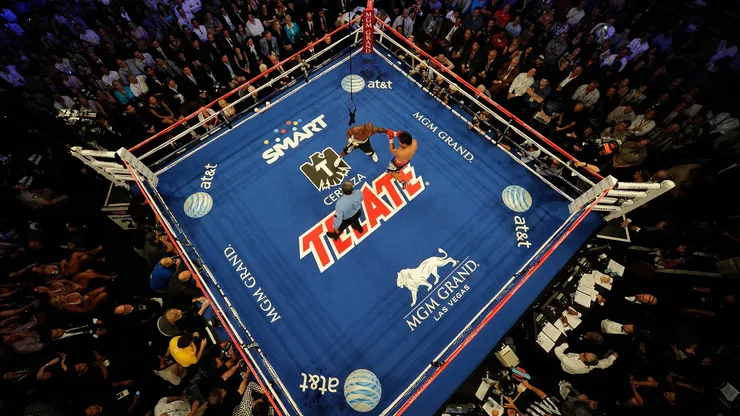
Beneath the glare of arena lights, the boxing ring becomes more than a simple square. It’s a stage where every inch whispers secrets of strategy—even before the opening bell sounds its call.
The distance between ropes isn’t trivial. It crafts the dance of offense and defense, subtly shaping fighter tactics long before the fists fly. That extra foot can be the twist in the tale of the bout.
As promoters and ring architects refine these dimensions, a quiet debate simmers behind the scenes. What truly makes a ring “standard”? This measured mystery sets the backdrop for every breathtaking moment in the sweet science.
Regulation sizes
Regulatory bodies define boxing ring dimensions to balance the demands of safety, fairness and competitive drama. Professional bouts usually take place in rings ranging from 16 to 24 feet per side.
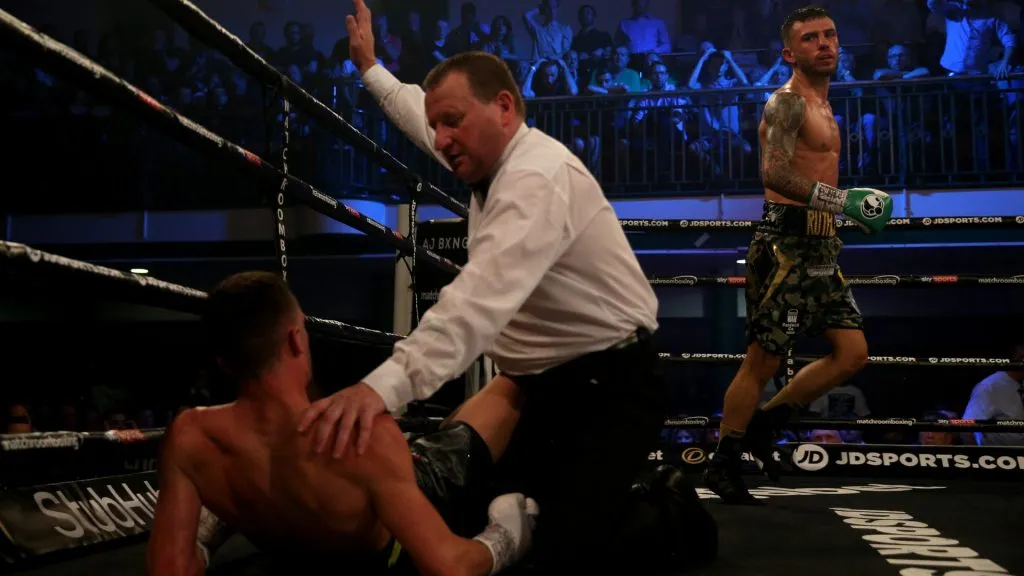
Ryan Doyle runs to the corner as the referee checks on Reece Belloti after being knocked down during the Commonwealth Featherweight Championship contest between Reece Bellotti and Ryan Doyle in 2018. (Source: James Chance/Getty Images)
In many jurisdictions, an 18- to 22-foot measurement—often centered around the common 20-foot standard—prevails as the ideal compromise. Such specifications ensure that fighters enjoy enough space to maneuver while keeping the contest intimate enough for high-intensity exchanges.
Standardization through governing bodies also extends to amateur competition, where a consistent 20-foot square ring is frequently employed, particularly in Olympic settings.
This uniformity contributes to the comparability of bouts and aids in maintaining a level playing field across international competitions. These regulations reflect a long history of adapting the sport to meet contemporary safety and spectator expectations while preserving its raw energy.
Promoter preferences
Beyond regulations, promoters have a distinct influence over ring dimensions, often adapting the space to craft a particular narrative or strategy for a high-stakes contest.
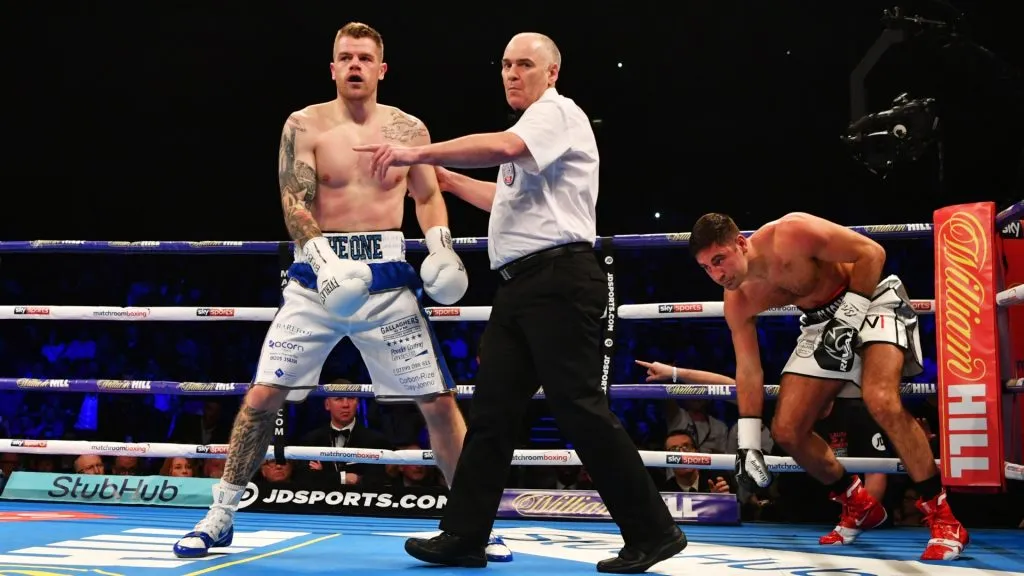
Callum Johnson is ushered to a neutral corner by referee Victor Loughlin as he knocks down Frank Buglioni during their British and Commonwealth Light-Heavyweight Championship in 2018. (Source: Dan Mullan/Getty Images)
Historical examples reveal instances where negotiations over the ring size became part of the pre-fight buzz, reflecting both economic considerations and tactical deliberations. Such adjustments can serve to highlight a fighter’s agility or, conversely, emphasize the claustrophobic intensity of in-fight pressure.
In several marquee matchups, promoters have leveraged ring dimensions as a subtle strategic tool. For instance, a larger ring might be selected to allow a more mobile fighter to showcase evasive maneuvers, whereas a smaller ring could favor an aggressive, close-combat style.
These modifications not only set the stage for unique combat dynamics but also generate a layered storyline that enhances the spectacle and commercial appeal of the event.
Impact on style
The spatial confines of a boxing ring contribute significantly to the formulation of a fighter’s strategy. An expansive ring can benefit boxers who rely on footwork and distance management, enabling a fluid, hit-and-run style that reduces exposure to sustained close-quarters exchanges.
In contrast, a more confined ring forces competitors into immediate proximity, favoring those who excel in pressure fighting and rapid-fire exchanges, according to sources like Boxing Scene.
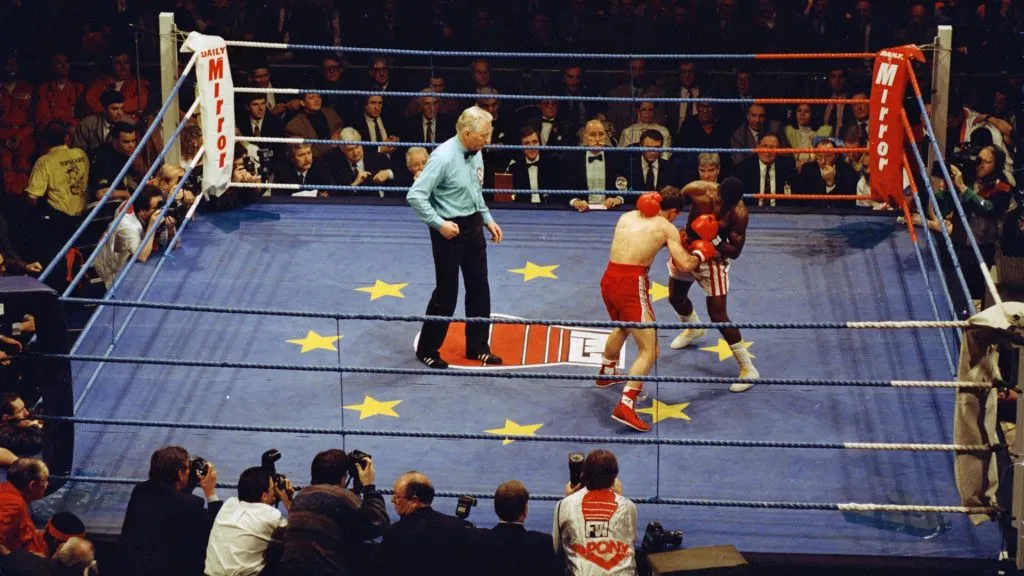
English featherweight boxer Paul Hodkinson (aka Hoko) wins a match against Ricardo Cepeda at London’s Olympia, 3rd February 1993. (Source: Gary M. Prior/Getty Images)
By dictating the available maneuvering room, the ring size indirectly shapes the pacing and rhythm of a bout. Coaches and fighters routinely adjust their training and tactical plans based on these spatial parameters.
The deliberate orchestration of movement within these bounds demonstrates how a seemingly mundane detail can serve as a crucial determinant of a fighter’s approach and ultimately, the outcome of the match.
Famous fights
Certain bouts in boxing history have achieved legendary status not only for the skills displayed but also for the unique conditions set by the ring dimensions. In the storied clash between Marvin Hagler and Sugar Ray Leonard, for instance, the decision to stage the contest in a 22-foot ring became a notable point of discussion.
The spacious arena underscored Leonard’s fluid, evasive style, while subtly influencing Hagler’s more measured approach, thereby adding another layer of intrigue to the match.
Historic encounters such as these illustrate that the arena is more than mere scenery; it is an active participant in the storytelling of boxing. The careful manipulation of ring dimensions has, on occasion, amplified the drama of a fight to the point where the space itself becomes a character in the narrative.