Between the roaring crowds of Sanford Stadium and the red-and-black pride that runs deep in Athens, Georgia football has forged legends that transcend generations. Each era brought its own heroes—gifted and loyal to the Bulldogs.
From record-breaking rushers to fearless defenders, their names echo through SEC history like a southern anthem. They didn’t just play the game; they defined what it means to wear the “G” on their helmets.
These icons built more than victories, they carved the soul of college football. Their grit turned the triumphs into tradition. Even now, their spirit hums through the hedges, alive in every cheer that shakes Athens each fall.
Herschel Walker
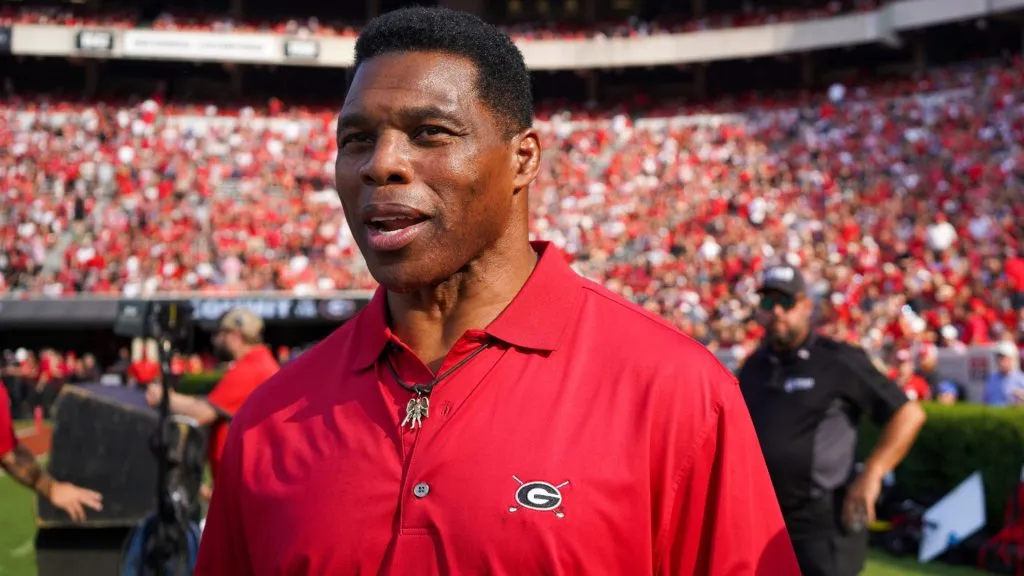
Herschel Walker (Source: Brett Davis/Getty Images)
When talking about Georgia football, you must start with Herschel Walker, a once-in-a-generation talent who was less a player and more a seismic event. His arrival in Athens in 1980 immediately propelled the Bulldogs to a National Championship, a feat unmatched by a freshman.
A consensus All-American in all three seasons, his punishing speed and unmatched power made him an unstoppable force, culminating in the 1982 Heisman Trophy.
When he departed for the professional ranks, he left behind a trail of broken records: 41 school marks, 16 SEC records, and 11 NCAA records, including a phenomenal 5,259 rushing yards, establishing the untouchable gold standard for all future Georgia running backs.
Champ Bailey

Champ Bailey (Source: Vincent Laforet /Allsport)
In a sport increasingly defined by specialization, Champ Bailey stands out as one of college football’s last great all-purpose athletes, a true “Iron Man” who redefined two-way play in the SEC.
While he was an elite defensive back destined for the Pro Football Hall of Fame, his 1998 season remains legendary, logging over 1,000 snaps across offense, defense, and special teams, even moonlighting as a wide receiver.
His athleticism and game-changing play earned him the Bronko Nagurski Trophy as the nation’s best defensive player and consensus All-American honors, cementing his legacy not just as a shutdown cornerback but as a versatile threat who commanded respect wherever he lined up.
Nick Chubb
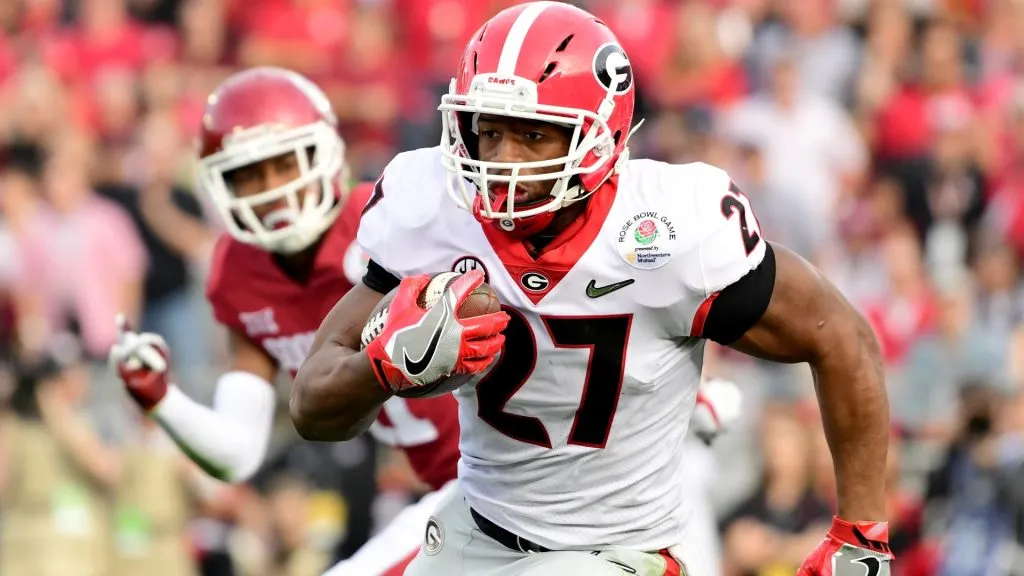
Nick Chubb (Source: Harry How/Getty Images)
The story of Nick Chubb is one of quiet, punishing dominance and profound resilience in a lineage of legendary Georgia running backs. He ran with a lower-body strength and efficiency that made him a nightmare for SEC defenses, consistently grinding out tough yardage.
Yet, his legacy is perhaps most defined by his unwavering comeback after a devastating knee injury in 2015; defying the odds, he returned to form, ultimately finishing his collegiate career as the second-leading rusher in Georgia history with 4,769 yards. His powerful, no-nonsense style ensured that the proud tradition of the Bulldog ground game remained fiercely intact during his tenure.
Frank Sinkwich
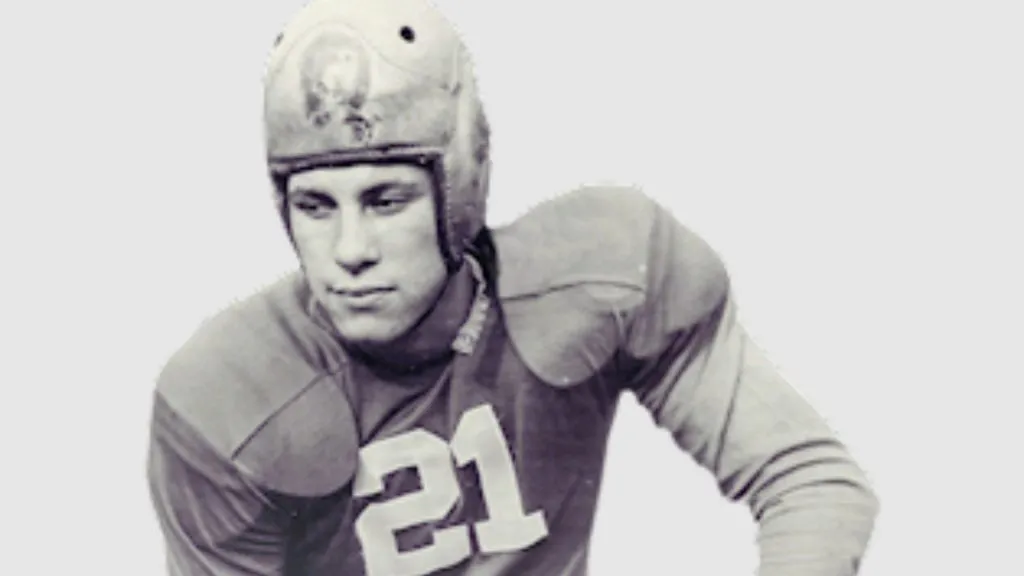
Frank Sinkwich (Source: College Football Hall of Fame)
As Georgia’s first-ever Heisman Trophy winner in 1942, Frank Sinkwich is the foundational icon who thrust the Bulldogs into the national spotlight during the tumultuous World War II era. Known as “Flatfoot”, he was the epitome of gridiron toughness and a true football innovator, serving as a triple-threat back who excelled at running, passing, and kicking.
His toughness was cemented when he played through a broken jaw, leading Georgia to the 1942 SEC Championship and a Rose Bowl victory. In his three years, he accumulated over 2,200 rushing and 2,300 passing yards, setting the original standard for offensive brilliance in Athens and in the entire Southeastern Conference.
Stetson Bennett IV
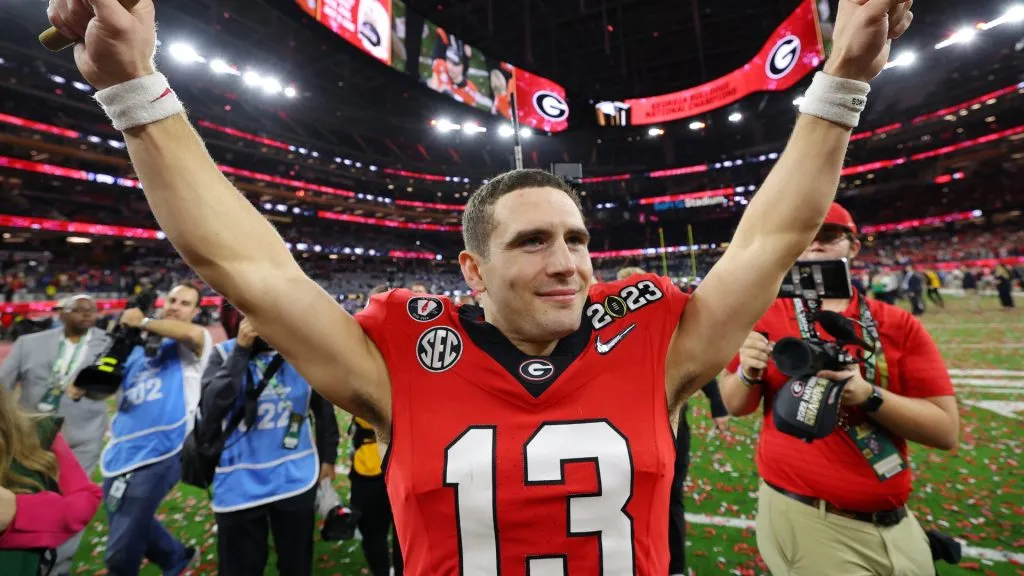
Stetson Bennett (Source: Kevin C. Cox/Getty Images)
The story of Stetson Bennett IV (2017-2022) is a Hollywood underdog tale that culminated in football history. Beginning his career as a walk-on, he overcame relentless skepticism to become the ultimate clutch performer and the undisputed leader of a modern dynasty.
He delivered the two greatest years in program history, quarterbacking the Bulldogs to back-to-back National Championships in 2021 and 2022, a feat only accomplished by a handful of college QBs.
His narrative, capped by two consecutive Offensive MVP awards in the CFP title games and a Heisman finalist nod, cemented him as the most important and improbable quarterback of Georgia’s golden ag.
Matthew Stafford
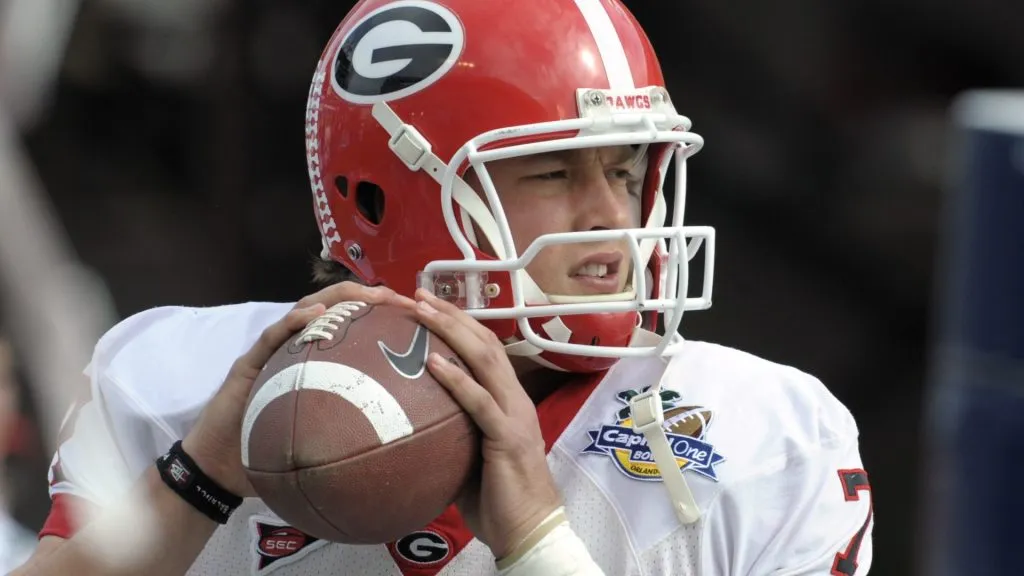
Matthew Stafford (Source: Al Messerschmidt/Getty Images)
Before becoming a Super Bowl champion, Matthew Stafford brought a level of raw, powerful talent to the quarterback position at Georgia seldom seen before. Heralded as a generational prospect, his cannon arm and innate ability to drive the ball downfield were unmistakable.
Although his time in Athens predated the National Championship success of his successors, his sheer physical gifts and stellar 2008 campaign—where he threw for nearly 3,500 yards and 25 touchdowns—showed the program’s ascending potential. His inevitable selection as the No. 1 overall pick in the 2009 NFL Draft solidified him as the blue-chip passer who set the stage for Georgia’s future offensive firepower.
Fran Tarkenton

Fran Tarkenton (Source: Georgia Bulldogs)
An Athens native, Fran Tarkenton was the revolutionary scrambler who laid the groundwork for the modern mobile quarterback. In an era when most passers stood stiffly in the pocket, he was electric, using his agility and improvisation to extend plays and lead the Bulldogs to the 1959 SEC Championship.
Although known primarily for his 18-year, Hall of Fame NFL career, where he retired holding all major passing records, his college legacy is defined by his innovation. He was a two-time All-SEC selection who demonstrated the boundless possibilities of an athletic quarterback, a vision that was decades ahead of its time.
David Pollack
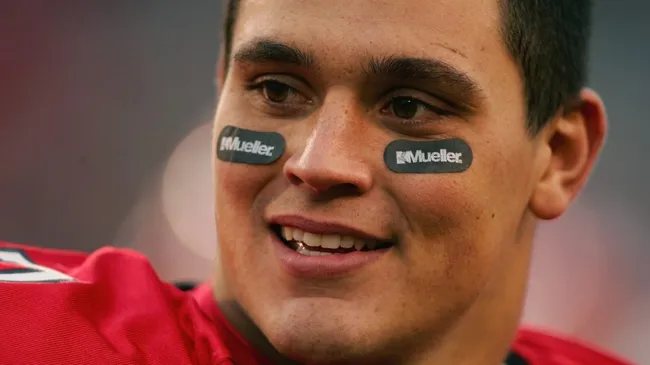
David Pollack (Source: Scott Halleran/Getty Images)
When opposing offenses faced the Bulldogs, David Pollack was the dominant force who single-handedly wrecked their game plan. This ferocious defensive end holds the distinction of being the only player other than Herschel Walker to earn First-Team All-American honors in three different seasons, demonstrating his relentless consistency.
His senior year was a legendary sweep of major defensive awards, capturing the Bednarik Award, Lombardi Award, and Lott Trophy. As Georgia’s all-time leader with 36 sacks and 58.5 tackles for loss, he was the unparalleled defensive anchor who led the program back to national prominence and the 2002 SEC Championship.
Hines Ward

Hines Ward (Source: Getty Images)
The definition of a multifaceted athlete, Hines Ward was the original “Slash” before the NFL even knew what to call him. While his Hall of Fame-level pro career as a bruising wide receiver is legendary, his time at Georgia showcased his unmatched utility: he lined up at wide receiver, tailback, and even took snaps at quarterback during his sophomore year.
He still holds Georgia bowl records for passing attempts and yards, but ultimately found a home catching passes. His career total of 3,870 all-purpose yards ranks second in Bulldogs history only to Herschel Walker, a staggering testament to his versatility and high-impact production across all phases of the offense.
Jake Scott
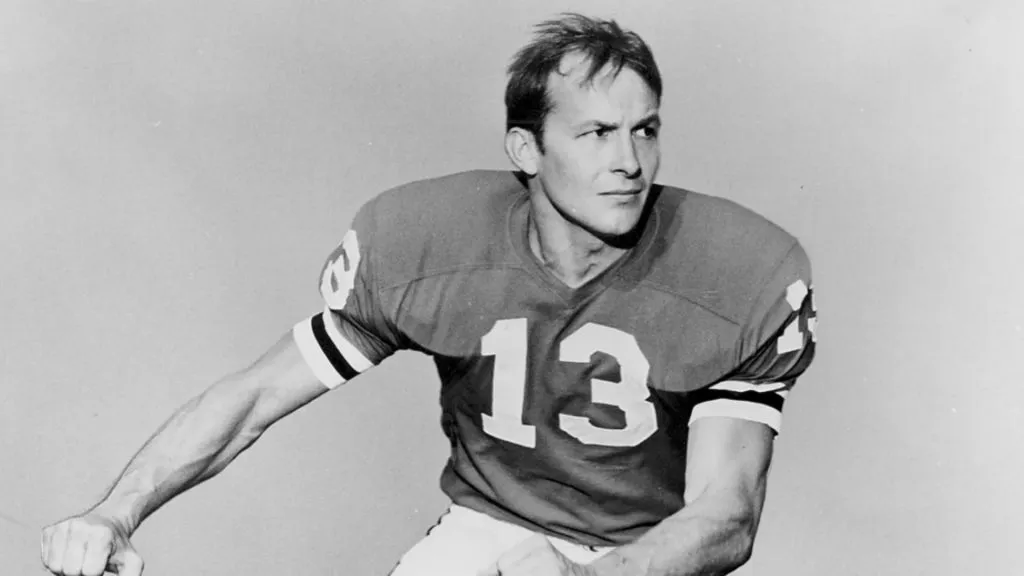
Jake Scott (Source: National Football Foundation)
When opposing quarterbacks dared to challenge the deep secondary, they ran the risk of encountering Jake Scott, a ferocious safety whose ball-hawking skills were second to none. He was a playmaker in the truest sense, leading the Bulldogs to the 1968 SEC Championship.
His career remains etched in the record books as he is still tied for the Georgia record for career interceptions with 16. A Consensus All-American in 1968, his knack for creating turnovers and his excellence as a punt returner provided both a rock-solid last line of defense and an electrifying special teams threat, foreshadowing a brilliant NFL career that included a Super Bowl MVP award.
Terrell Davis

Terrell Davis (Source: The Atlanta Journal-Constitution)
While his NFL dominance is legendary, the Georgia years of Terrell Davis served as the crucial development phase for one of the hardest-running backs in football history. Transferring to the Bulldogs, he became the team’s featured runner in 1993, accumulating 824 yards, showcasing the power and vision that would later define his professional career.
Although his college career was shorter than others on this list, it provided the foundation for a spectacular rise to greatness in the NFL. Despite being a sixth-round draft pick, his eventual status as a two-time Super Bowl champion and NFL MVP speaks to the incredible talent that matured on the turf of Sanford Stadium.
Richard Seymour
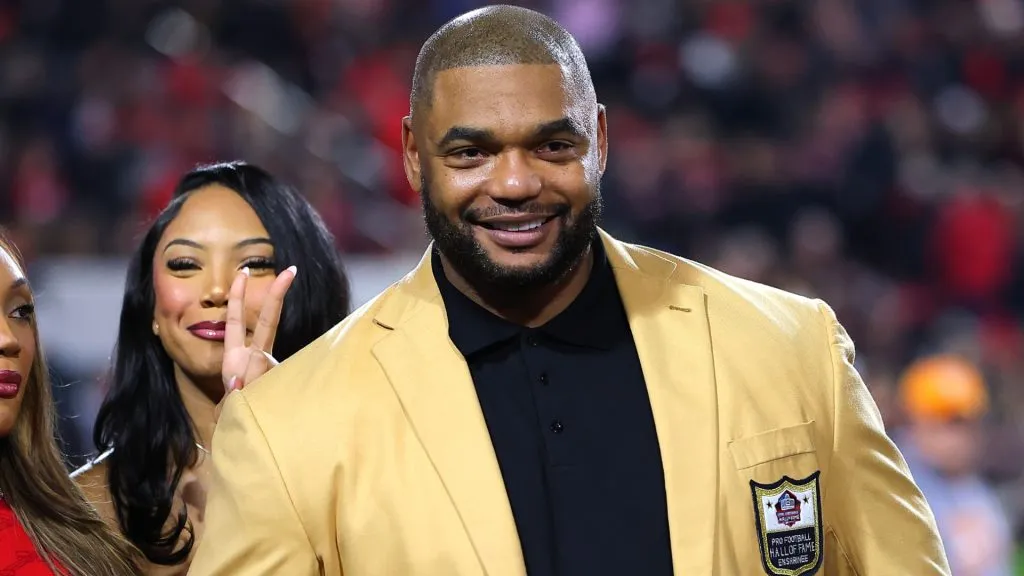
Richard Seymour (Source: Kevin C. Cox/Getty Images)
A cornerstone of the dominant defenses that emerged in the late 1990s, Richard Seymour was an immovable object on the defensive line, capable of collapsing the pocket from any position. Playing alongside three other future first-round picks on the defensive front, his exceptional size and athleticism stood out.
He capped his Bulldogs career as a First-team All-American in 2000 and a two-time First-team All-SEC selection, compiling 223 tackles, 9.5 sacks, and 25.5 tackles for loss. His stellar college performance led to him being the sixth overall selection in the 2001 NFL Draft, establishing the physical, disruptive mold for future Georgia defensive linemen who would go on to achieve NFL immortality.
Todd Gurley
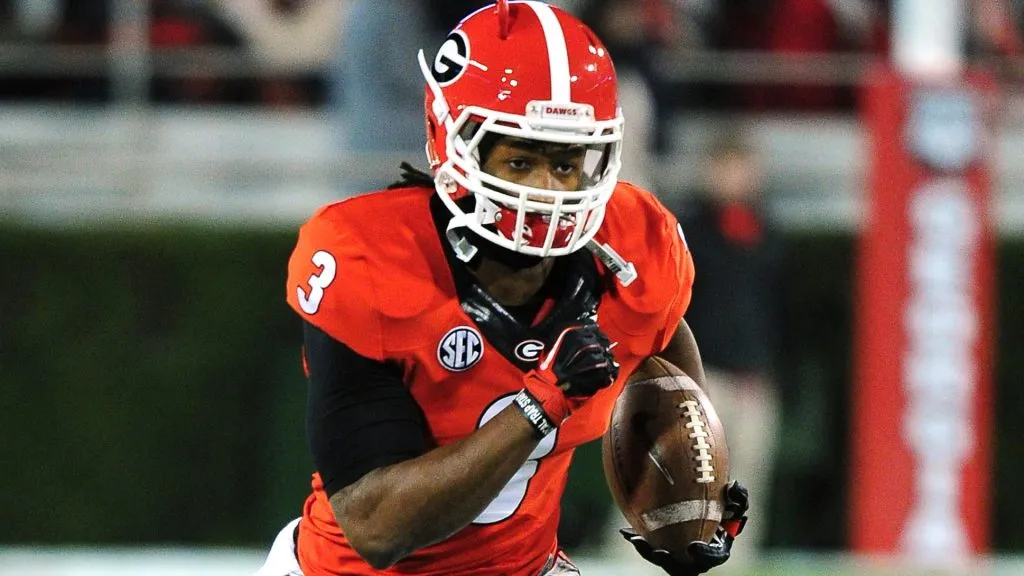
Todd Gurley (Source: Scott Cunningham/Getty Images)
A rare blend of brute force and breakaway speed, Todd Gurley arrived in Athens as an immediate offensive star and a dazzling threat from scrimmage. His three seasons were a masterclass in versatility, showcasing his ability to run over, around, and away from defenders, totaling 3,285 rushing yards and 36 rushing touchdowns on just 510 carries, maintaining a staggering 6.4 yards per carry average.
Beyond his rushing prowess, he excelled as a receiver and kick returner, accumulating 4,322 career all-purpose yards. While injuries and an NCAA suspension limited his time, his peak performance—a perfect storm of power and electricity—remains one of the most exciting and dominant offensive displays in program history.
Thomas Davis

Thomas Davis (Source: Scott Halleran/Getty Images)
Thomas Davis was a dynamic defensive force whose positional versatility made him a nightmare for offensive coordinators. Playing both rush linebacker and free safety, his ability to cover ground, deliver crushing hits, and provide effective pass coverage made him the embodiment of the modern hybrid defender.
In just 39 career games, he racked up 272 tackles, 10.5 sacks, and was recognized as a two-time First-team All-SEC selection and a 2004 Consensus All-American. His immense potential was recognized early, leading to a first-round selection in the 2005 NFL Draft, where he would continue his reputation as one of the game’s toughest and most respected players.
AJ Green
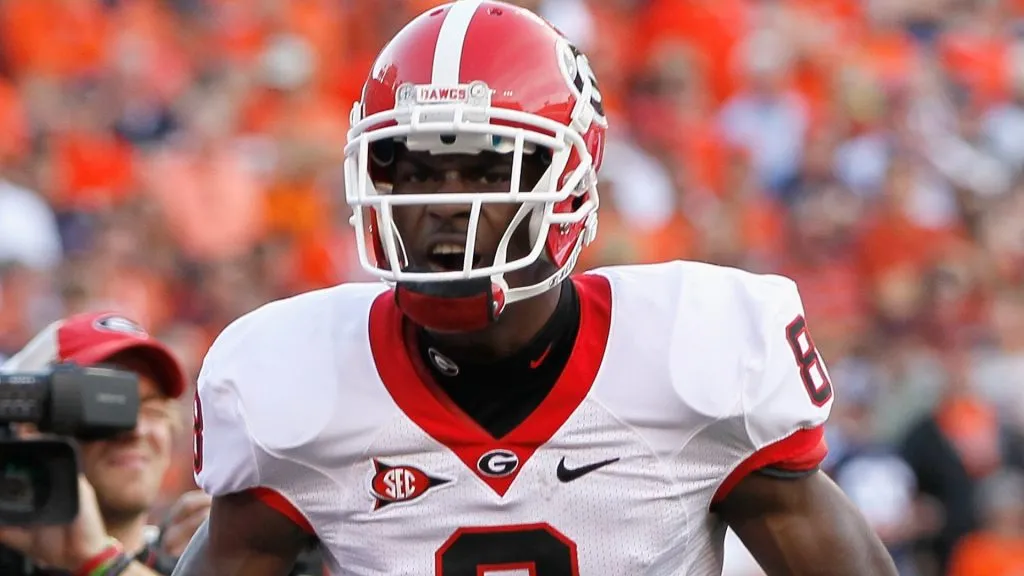
A.J. Green (Source: Kevin C. Cox/Getty Images)
AJ Green brought a level of athletic grace and physical dominance to the wide receiver position that fundamentally shifted Georgia’s offensive identity. At 6’4″, his ability to elevate and contort his body for spectacular contested catches made him a perennial highlight reel and an unstoppable deep threat.
In just three seasons, he amassed 166 catches for 2,619 yards and 23 touchdowns. His consistent production, despite drawing double teams and attention from top SEC defenses, demonstrated his elite talent. His immediate success and electric play established him as one of the most gifted pass-catchers in Bulldogs history, leading to his selection as the fourth overall pick in the 2011 NFL Draft.
Garrison Hearst

Garrison Hearst (Source: Pro Football History)
Following the path forged by Herschel Walker, Garrison Hearst emerged as a back whose explosive 1992 season stands as one of the best in program history. That year, he was virtually unstoppable, leading the nation in touchdowns and scoring while winning the prestigious Doak Walker Award as the country’s top running back.
Finishing third in the Heisman Trophy voting, he left Georgia second only to Walker in career rushing yards (3,232) and all-purpose yardage, cementing the Bulldogs’ reputation as “RBU.” His three years were a powerful combination of speed, vision, and touchdown production, making him the third overall pick in the 1993 NFL Draft.
Terry Hoage

Terry Hoage (Source: Atlanta Journal-Constitution)
Terry Hoage personifies the intelligence and intensity of the Georgia defense during its legendary run under Vince Dooley. The two-time Consensus All-American and two-time SEC Defensive Player of the Year was a genius on the field, capable of playing both cornerback and safety and possessing an uncanny nose for the ball.
As a junior in 1982, he led the nation with 12 interceptions, a school record that highlights his ball-hawking mastery. He finished fifth in the Heisman Trophy voting in 1983—remarkably high for a defensive player—and balanced his gridiron ferocity with academic excellence, graduating with a degree in Genetics and a 3.85 GPA.
Roquan Smith
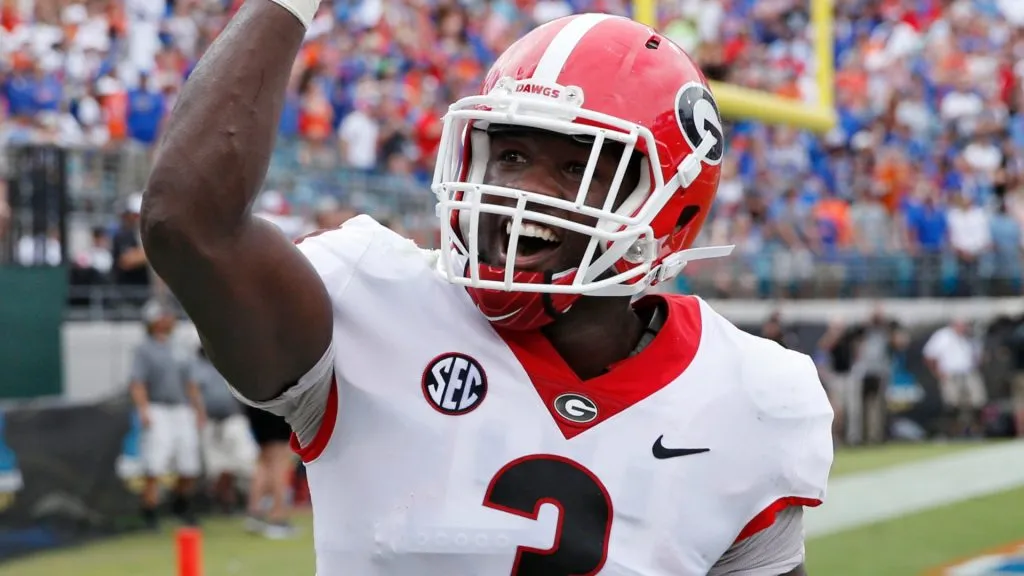
Roquan Smith (Source: Joe Robbins/Getty Images)
The modern archetype of the sideline-to-sideline middle linebacker, Roquan Smith (2015-2017) became a defensive sensation whose speed and hitting power were pivotal in returning Georgia to the national title stage.
He was recognized as the most dominant linebacker in the country in his final year, winning the Butkus Award—becoming the first Bulldog ever to do so—and earning Unanimous All-American honors.
His masterpiece came in the 2017 SEC Championship Game, where his game-MVP performance guided Georgia to its first SEC title in 12 years. His ability to cover and tackle at an elite level made him an instant top-ten NFL draft pick and a defensive icon of the program’s resurgence.
Bill Stanfill

Bill Stanfill (Source: The Atlanta Journal-Constitution)
A true Georgia legend, Bill Stanfill dominated the defensive line with a blend of raw power and athletic versatility that was rare for his era. As a defensive tackle, he earned First-team All-SEC honors for three consecutive years and achieved his highest collegiate recognition in 1968 by winning the Outland Trophy as the nation’s most outstanding interior lineman, a first for the Bulldogs.
He anchored two SEC Championship teams (1966, 1968) and demonstrated his all-around excellence by also earning Academic All-American status. His ferocious play style and decorated college career launched him into the NFL, where he became a key player for the undefeated 1972 Miami Dolphins.
Matt Stinchcomb

Matt Stinchcomb (Source: Scott Halleran /Allsport)
Matt Stinchcomb was the cornerstone of the Georgia offensive line, renowned not only for his stellar blocking but also for his exemplary leadership and academic achievements. The offensive tackle was a two-time First-team All-American, earning consensus honors in 1998, and secured the Jacobs Blocking Trophy as the SEC’s most outstanding blocker that year.
Beyond the trenches, he set a standard for the scholar-athlete, winning the prestigious William V. Campbell Trophy and being named Academic All-American of the Year. His excellence ensured the protection for quarterbacks like Mike Bobo and paved the way for running backs, earning him a first-round selection in 1999.
Terrence Edwards
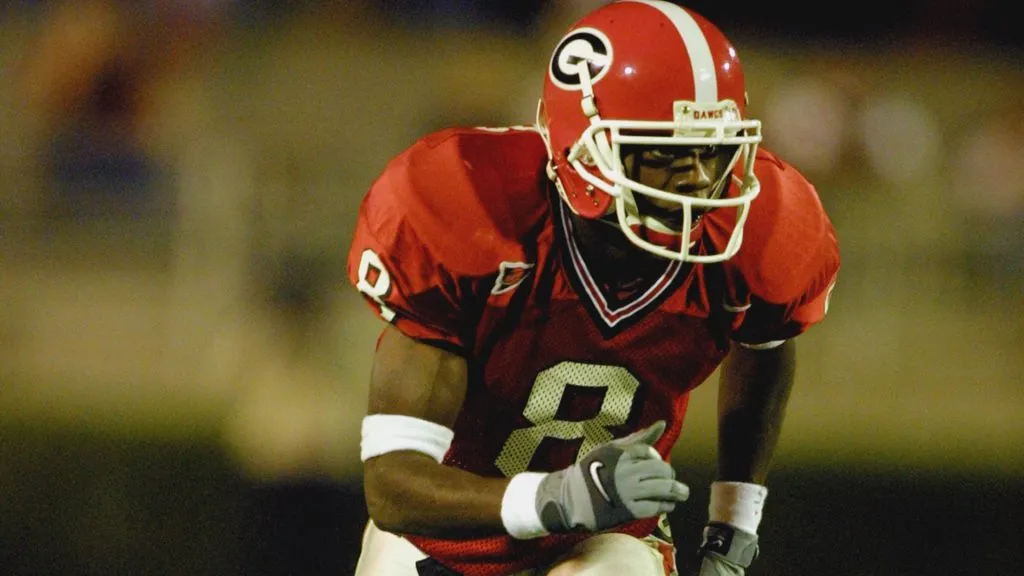
Terrence Edwards (Source: Scott Halleran/Getty Images)
A cornerstone of the Georgia passing attack in the early 2000s, Terrence Edwards was a high-volume receiver who set the standard for production in the SEC. Known for his reliable hands and ability to generate yardage after the catch, he closed his career with a remarkable 204 receptions for 3,093 yards and 30 touchdowns.
Upon his departure, he held the SEC record for career receiving yards and finished second in career receptions. His prolific senior season, which saw him break the 1,000-yard mark, underscored his reputation as the premier deep threat and a foundational piece of the passing offense for a new generation of Georgia football.
Eric Zeier
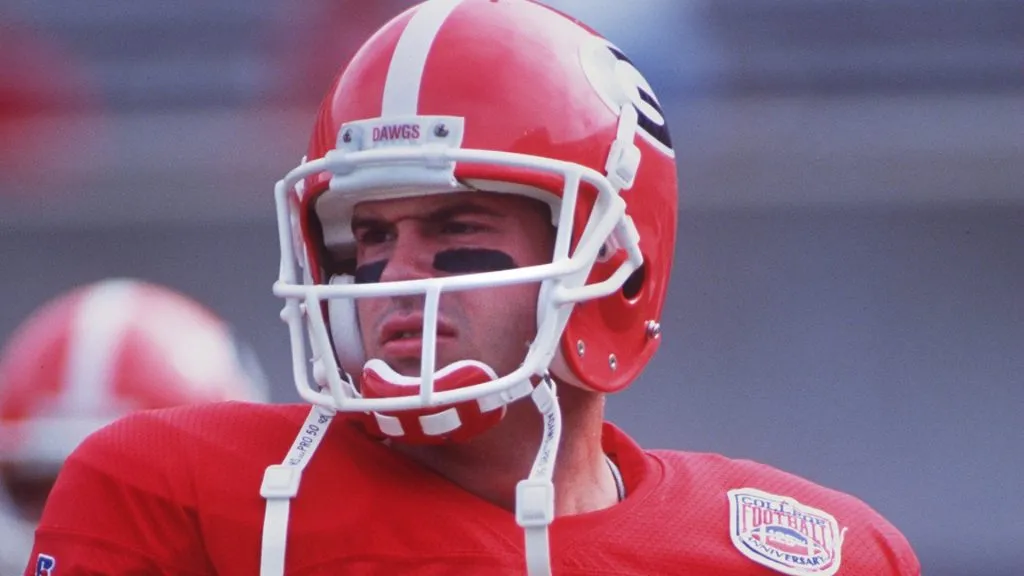
Eric Zeier (Source: Doug Pensinger/ALLSPORT)
Before Matthew Stafford or Aaron Murray, there was Eric Zeier, the prolific quarterback who redefined the Georgia passing game and rewrote the SEC record books during his tenure. He held a remarkable 67 school records and 18 SEC records when he graduated, becoming only the third player in NCAA Division I history to eclipse the 11,000-yard career passing mark.
Over his four years, he accumulated 11,153 yards and 67 touchdowns. His production was explosive, highlighted by a 544-yard passing performance against Southern Miss in 1993, cementing his legacy as the aerial pioneer who brought high-octane passing offense to Athens.
Theron Sapp
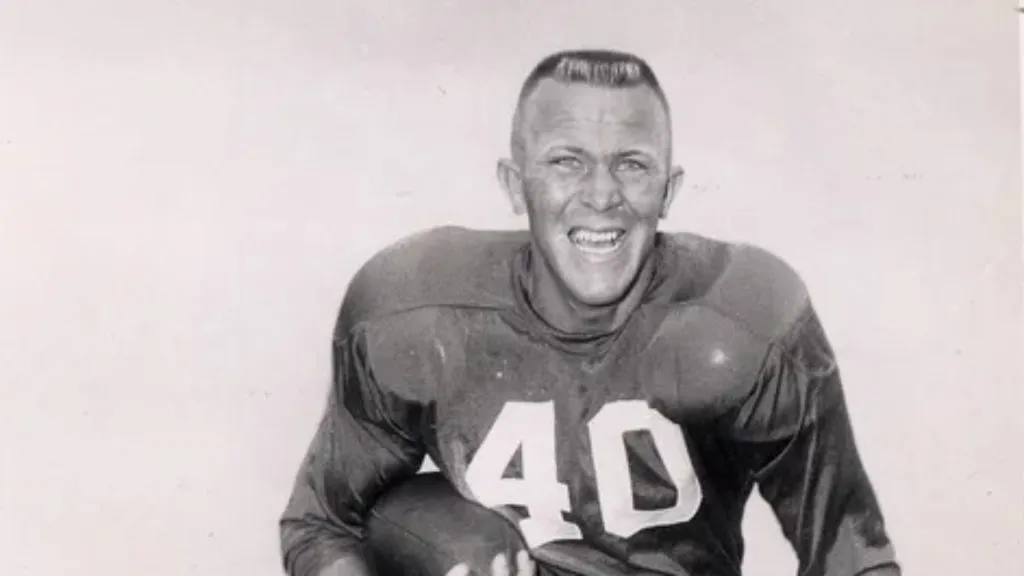
Theron Sapp (Source: The Augusta Chronicle)
The nickname says it all: Theron Sapp is forever known as the “Drought-Breaker.” His most famous moment came in 1957 when, playing both offense and defense, he recovered a fumble and scored the lone touchdown in a 7-0 victory over rival Georgia Tech, snapping an agonizing eight-game losing streak to the Yellow Jackets that had lasted the entire decade.
A First-team All-SEC fullback in 1958, his blue-collar toughness and singular play cemented his place in Bulldog lore, leading to the retirement of his No. 40 jersey alongside legends like Frank Sinkwich and Herschel Walker. His legacy is less about overall statistics and more about that one drought-ending moment that delivered immense pride to the Dawg Nation.
Aaron Murray

Aaron Murray (Source: Mike Zarrilli/Getty Images)
A model of consistency and longevity at the quarterback position, Aaron Murray remains the most statistically dominant passer in Georgia and SEC history. Leading the Bulldogs to a 36-18 record as a starter, he amassed astounding career totals that still stand as conference records: 13,166 passing yards and 121 passing touchdowns.
A two-time All-SEC selection, his four consecutive seasons of elite-level production provided the firepower for Georgia to contend year after year, establishing a modern benchmark for quarterback excellence that future Bulldogs will forever chase.
Rodrigo Blankenship
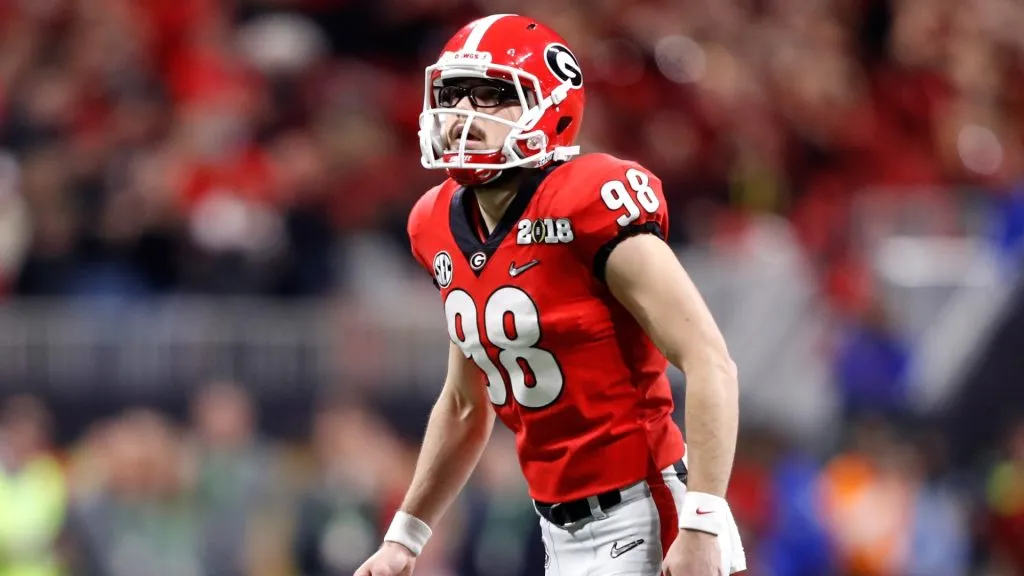
Rodrigo Blankenship (Source: Jamie Squire/Getty Images)
No specialist has ever captured the imagination of the Georgia fanbase quite like Rodrigo Blankenship, affectionately nicknamed “Hot Rod.” Originally a walk-on, he became one of the most reliable and decorated kickers in college football, culminating in the 2019 Lou Groza Award as the nation’s best placekicker.
He was perfect on extra points, making a school-record 200 consecutive PATs, and finished his career as Georgia’s all-time scoring leader with 440 points. Known for his iconic spectacle look and powerful leg, his clutch performance, including kicking the longest field goal in Rose Bowl history, made him a beloved legend and an integral part of the program’s championship foundation.