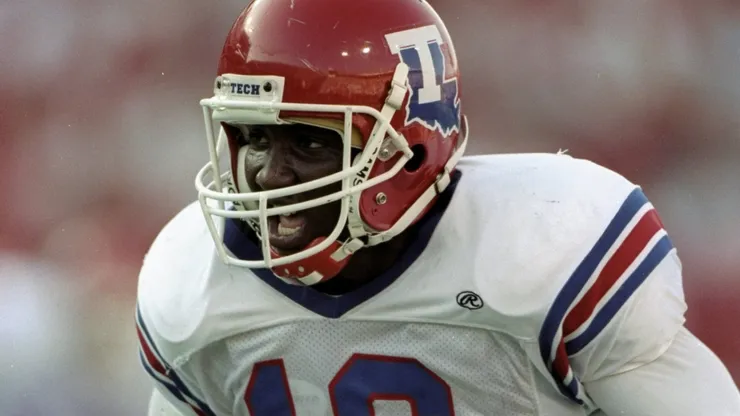
In college football, records often fall quietly. Touchdown records rarely do. When a single receiver turns the red zone into familiar territory, the season stops being ordinary and starts drifting into historical territory.
The NCAA has produced countless elite pass-catchers, but only a handful have delivered seasons so productive they forced defenses to adjust weekly. Scheme, chemistry and opportunity all played a role, but execution made the difference.
One campaign still stands apart, not just for its numbers, but for how relentlessly they came. Every score added pressure, every game raised stakes and by season’s end, the standard for receiving dominance had been permanently altered.
Troy Edwards – 27 receiving touchdowns (1998)
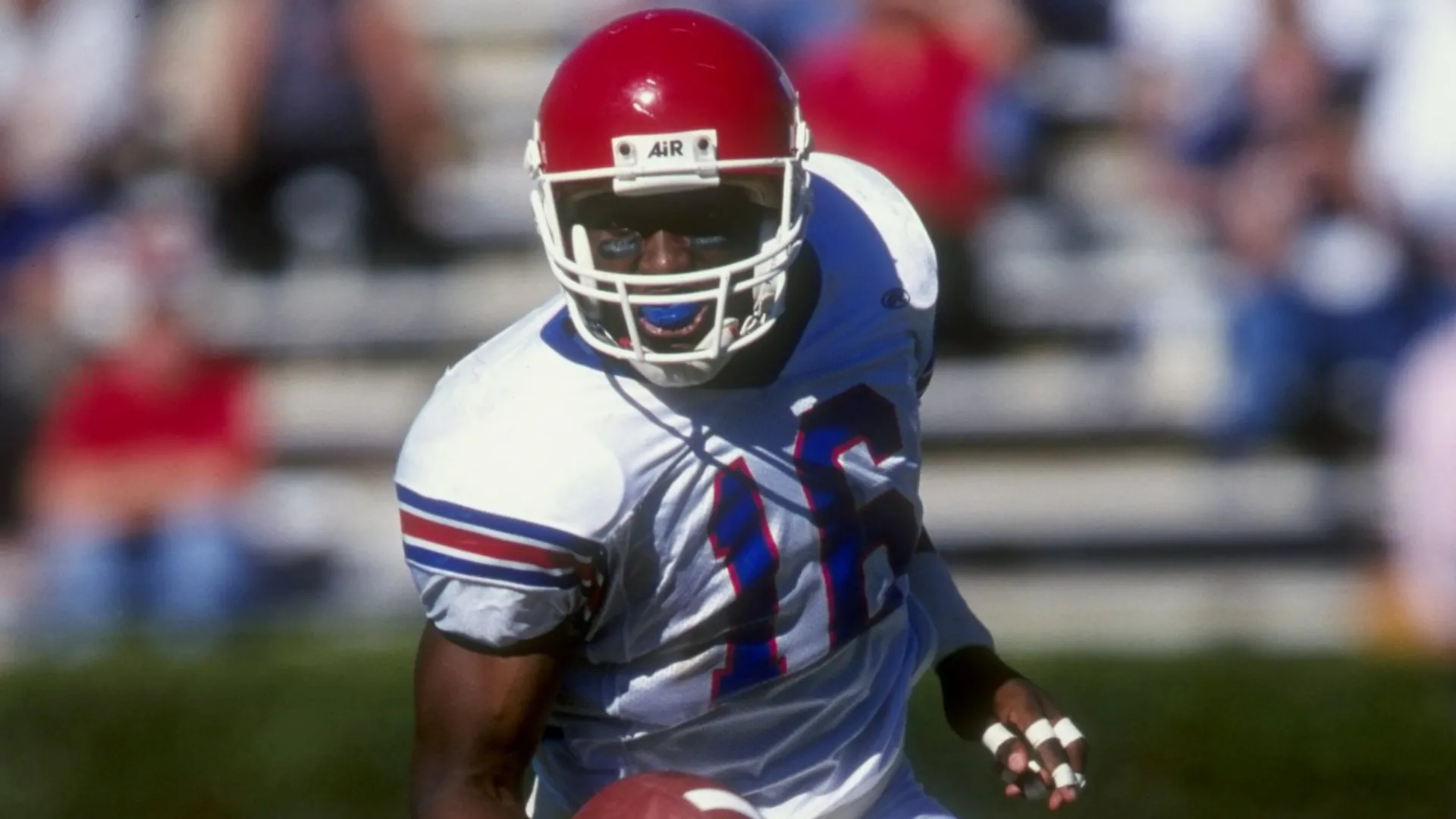
Troy Edwards (Source: Getty Images)
In 1998, Troy Edwards didn’t just lead college football receivers—he overwhelmed the record books. Playing for Louisiana Tech, he turned every game into an aerial exhibition, finishing the season with 27 receiving touchdowns, the highest total ever recorded in a single FBS season.
His production wasn’t built on gimmicks, but on sharp route-running, durability, and relentless usage. Week after week, defenses knew where the ball was going and still couldn’t stop it, a testament to a season that remains unmatched in NCAA history.
Randy Moss – 25 receiving touchdowns (1997)
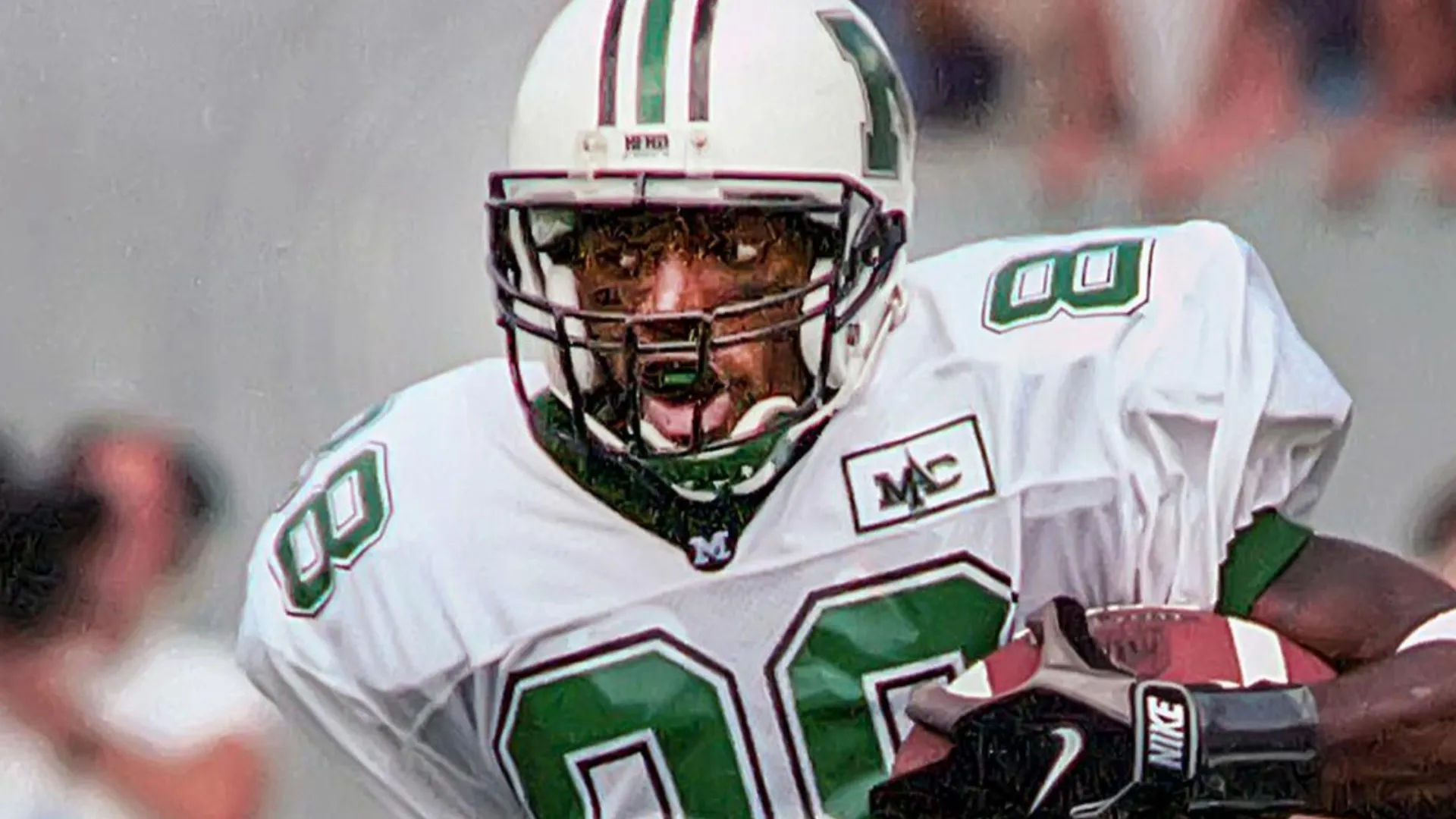
Randy Moss (Source: Marshall University Athletics)
Before Sundays made him famous, Saturdays belonged to Randy Moss. In 1997 at Marshall, he was a mismatch that bordered on unfair, combining elite speed with rare ball skills to score 25 times through the air.
His touchdowns came in bunches and often from distance, turning routine snaps into instant highlights. That season didn’t just elevate Marshall—it reshaped how scouts and fans viewed the ceiling of a college wide receiver. Moss wasn’t merely productive; he was transformational.
Stedman Bailey – 25 receiving touchdowns (2012)
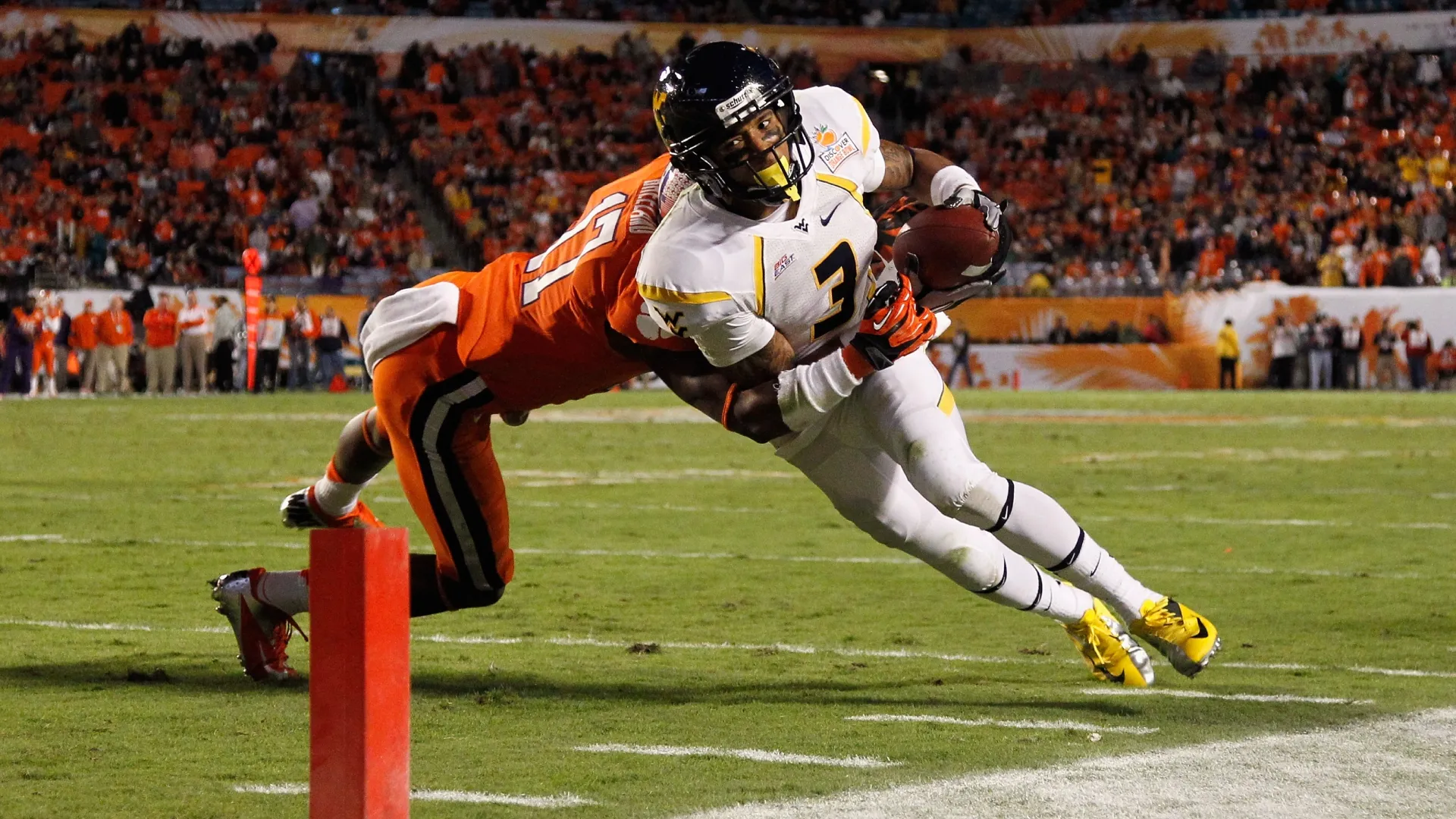
Stedman Bailey (Source: Mike Ehrmann/Getty Images)
Stedman Bailey’s 2012 campaign at West Virginia was defined by precision and persistence. Sharing the spotlight in a pass-heavy offense, he consistently emerged as the most reliable red-zone option, finishing with 25 receiving touchdowns.
His success came from timing, clean routes, and an instinctive feel for coverage gaps. While flashier names grabbed headlines, he quietly delivered one of the most efficient scoring seasons a receiver has ever produced in modern college football.
Davante Adams – 24 receiving touchdowns (2013)
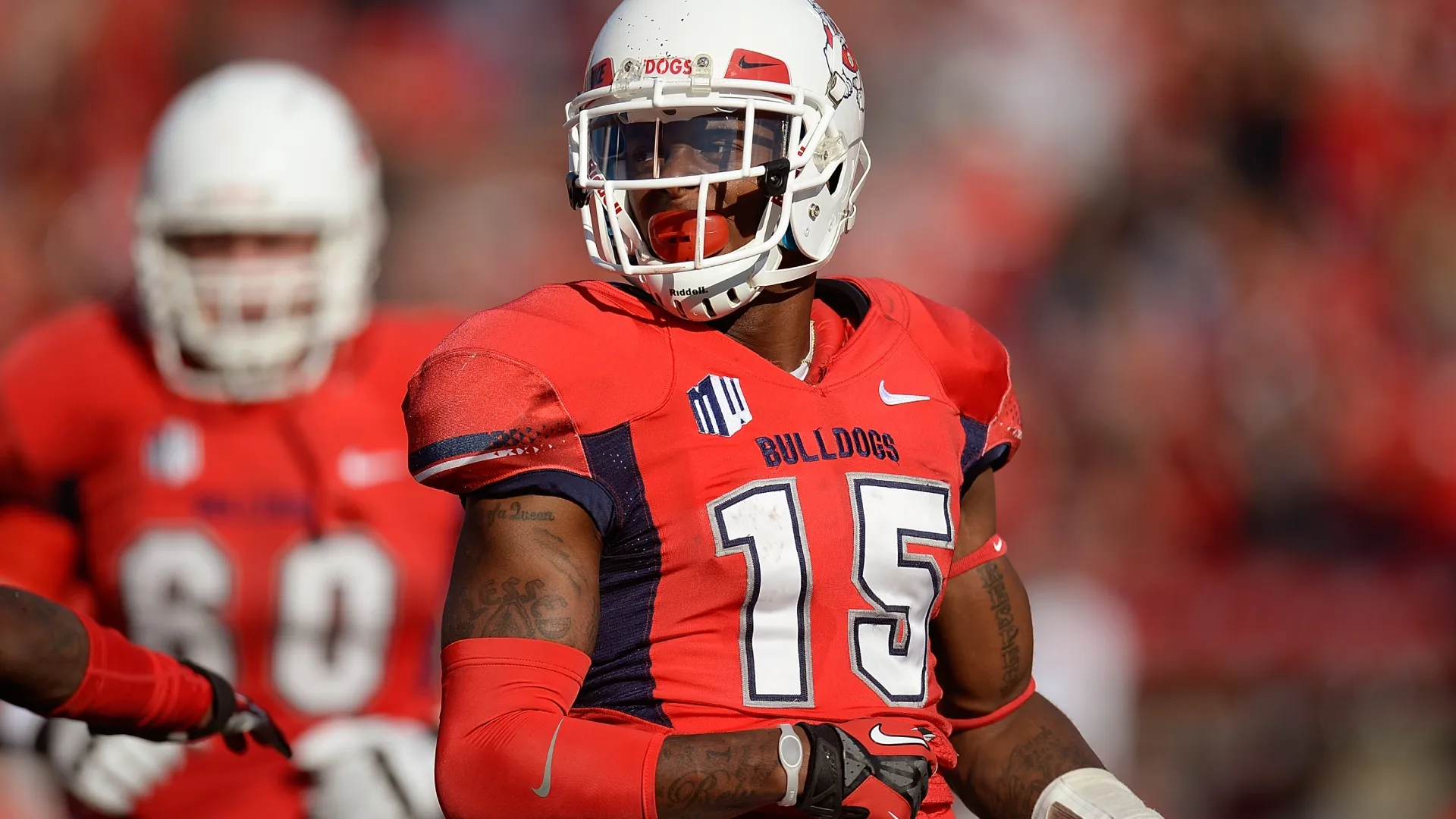
Davante Adams (Source: Thearon W. Henderson/Getty Images)
Davante Adams’ breakout season at Fresno State in 2013 announced the arrival of a receiver built for scoring situations. With 24 touchdown receptions, he became the centerpiece of an offense that leaned heavily on his physicality and body control near the goal line.
His chemistry with quarterback Derek Carr turned the Bulldogs into one of the nation’s most dangerous passing teams. The numbers told the story, but the film revealed something more: a receiver already operating with pro-level instincts.
DeVonta Smith – 23 receiving touchdowns (2020)
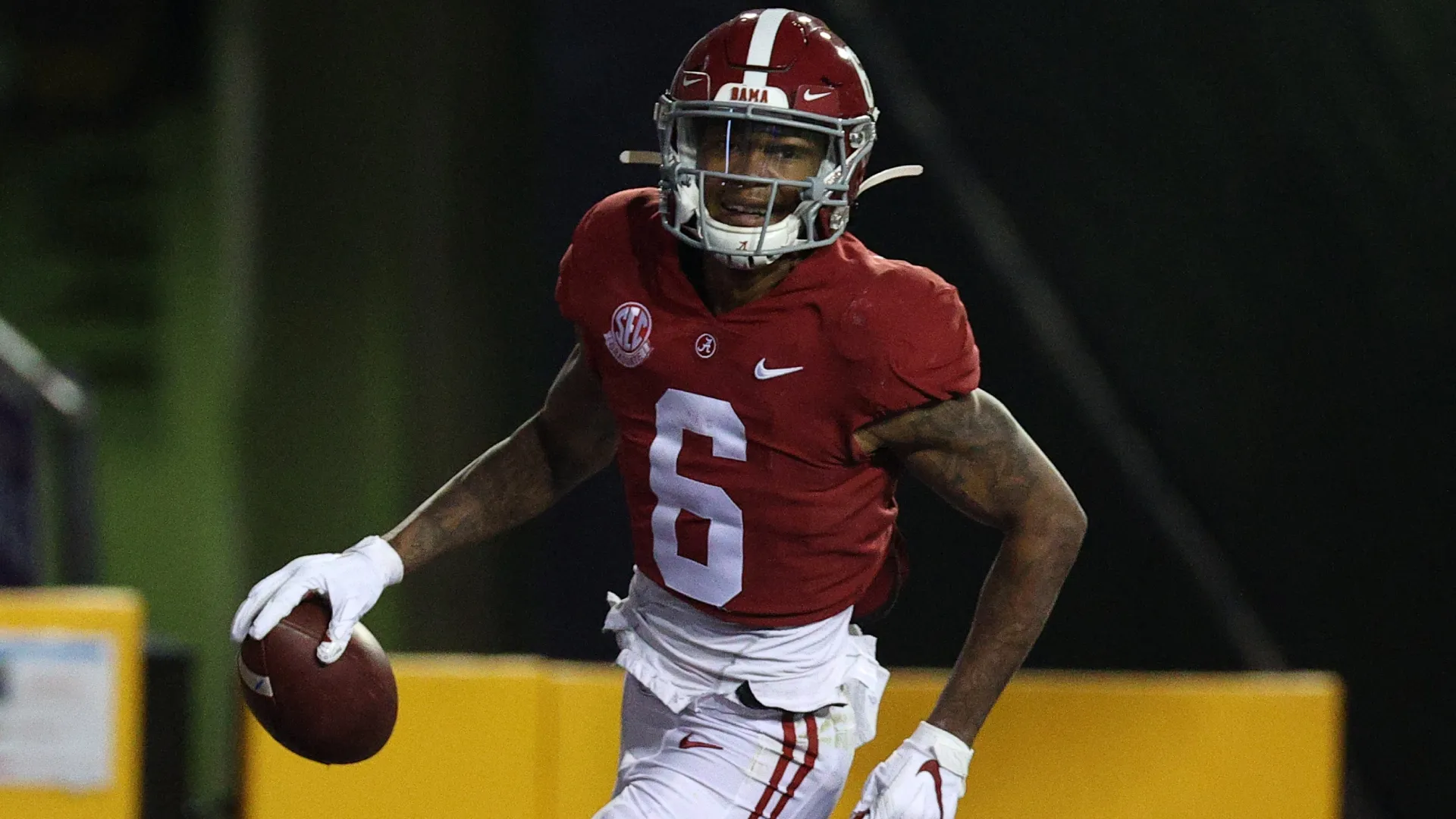
DeVonta Smith (Source: Chris Graythen/Getty Images)
In a season filled with elite talent, DeVonta Smith still managed to separate himself. Alabama’s 2020 offense revolved around his ability to create space instantly, and he responded with 23 receiving touchdowns against the toughest competition in college football.
His scoring wasn’t limited to broken plays or blown coverages—it was the result of technical mastery and consistency. His season became a benchmark for modern receivers operating at the highest level.
Michael Crabtree – 22 receiving touchdowns (2007)
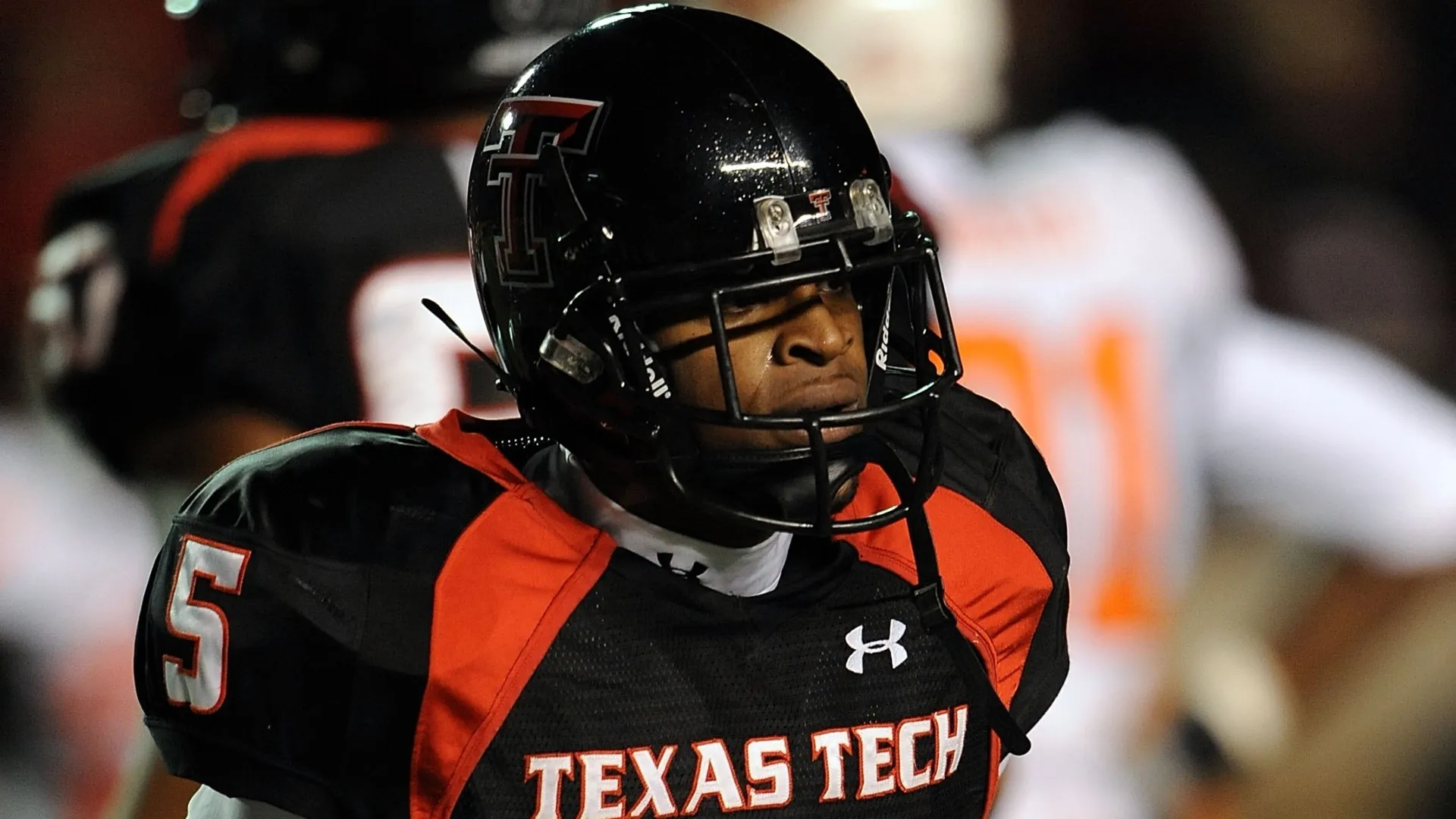
Michael Crabtree (Source: Ronald Martinez/Getty Images)
Michael Crabtree’s 2007 season at Texas Tech announced a new star almost overnight. As a redshirt freshman, he dominated defenses with strength, awareness, and exceptional hands, finishing with 22 receiving touchdowns.
He thrived in high-pressure moments, routinely delivering scores when defenses tightened. That season didn’t just earn him national recognition—it laid the foundation for one of the most memorable starts to a collegiate receiving career.
Larry Fitzgerald – 22 receiving touchdowns (2003)
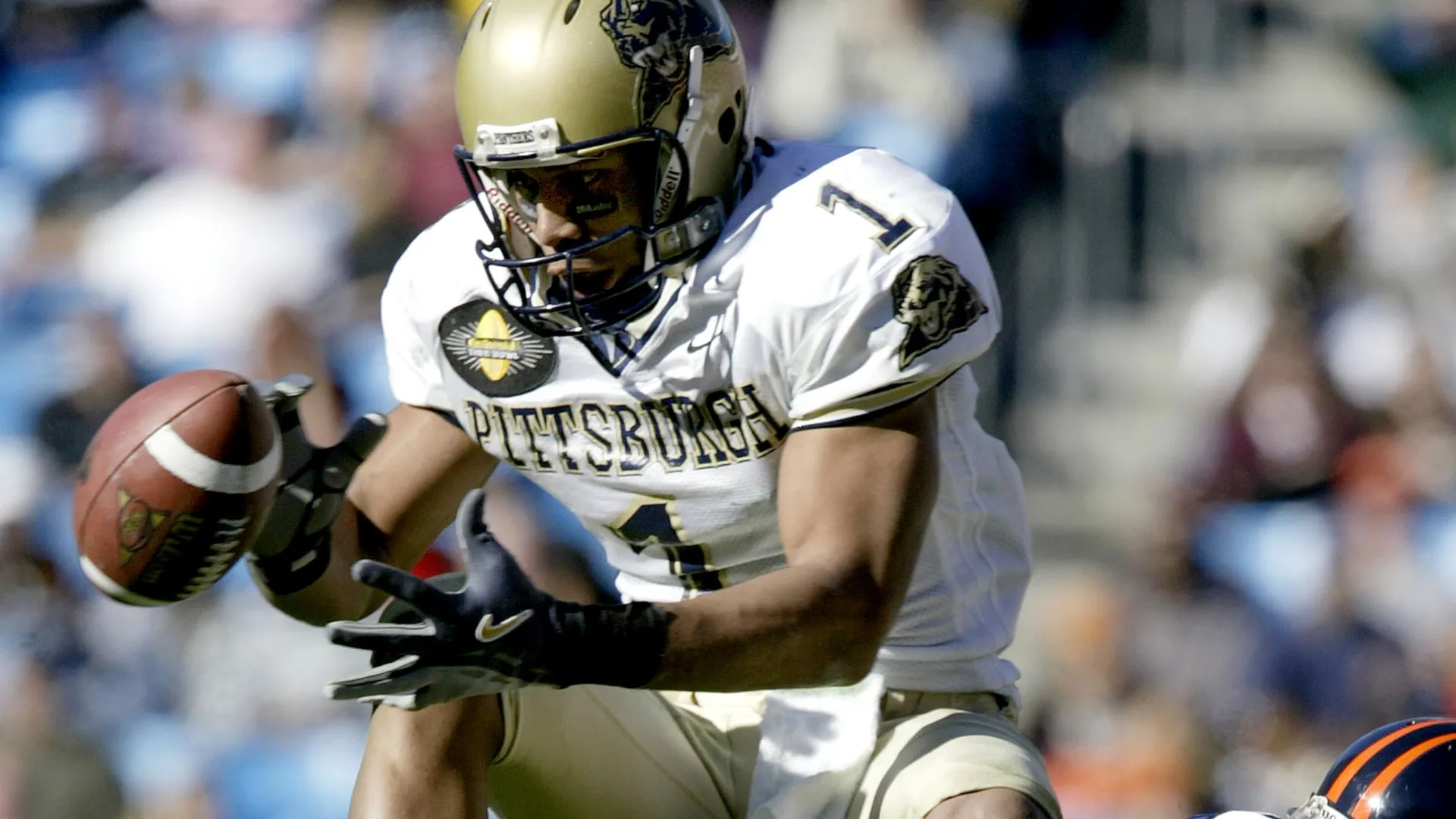
Larry Fitzgerald (Source: Craig Jones/Getty Images)
Larry Fitzgerald’s 2003 season at Pittsburgh remains one of the most decorated campaigns in college football lore. Amid a torrent of chains-moving yardage, he hauled in 22 receiving touchdowns, ranking among the best single-season scoring marks ever recorded in NCAA history.
His blend of size, hands, and route precision earned him unanimous All-America honors, the Biletnikoff Award, and a near-Heisman finish, cementing a season where defenses had few answers for his résumé-building performances.
His 18 consecutive games with a touchdown reception that year not only showcased consistency but set an NCAA benchmark that still reverberates through the record books.
Manny Hazard – 22 receiving touchdowns (1989)
Long before modern spread offenses dominated statistical conversations, Manny Hazard torched defenses in 1989 with the Houston Cougars. Operating within the vaunted “Run and Shoot” attack, he turned every target into a threat, finishing the season with 22 touchdown catches that put him at the forefront of NCAA scoring.
Paired with Heisman-winning quarterback Andre Ware, his relentless efficiency and separation ability made Houston’s aerial attack one of the most feared in the country — a unit that also produced a 4,000-yard passer, a 1,000-yard rusher, and a 1,000-yard receiver in the same season. His production helped redefine how prolific passing offenses could be at the collegiate level.
Jarett Dillard – 21 receiving touchdowns (2006)
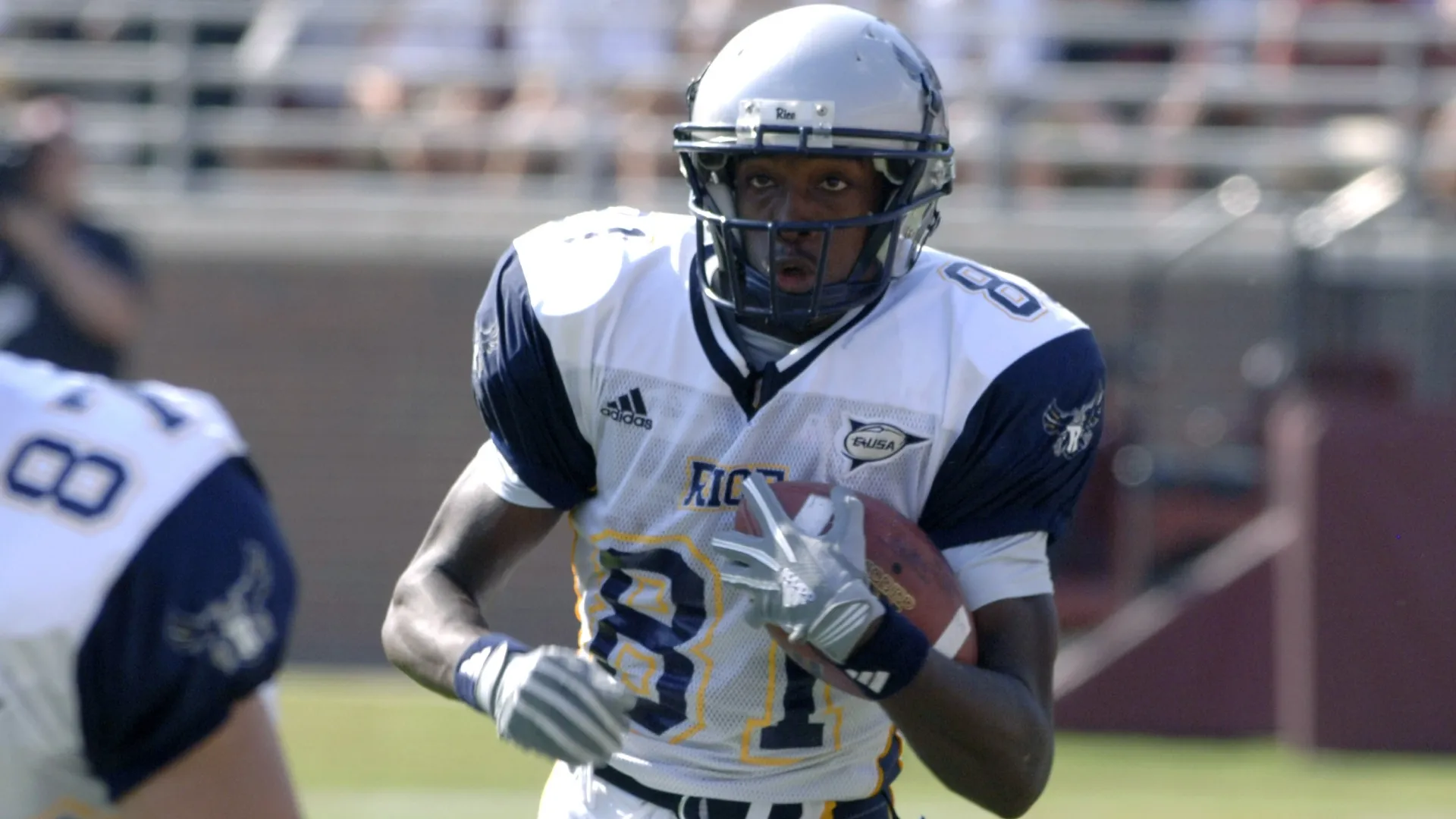
Jarett Dillard (Source: A. Messerschmidt/Getty Images)
Jarett Dillard’s 2006 campaign at Rice was more than a statistical outlier — it was a testament to elite timing, rhythm, and reliability. With 21 touchdown receptions, he led the nation while simultaneously breaking school and Conference USA single-season touchdown records.
His knack for finding the end zone was not sporadic but sustained: he routinely put up multiple touchdown games and became a pivotal reason Rice reached its first bowl in 45 years.
His season embodied the art of precision route running married to opportunistic finishing, creating a body of work that few receivers at smaller programs have matched on the national stage.
Ja’Marr Chase – 20 receiving touchdowns (2019)
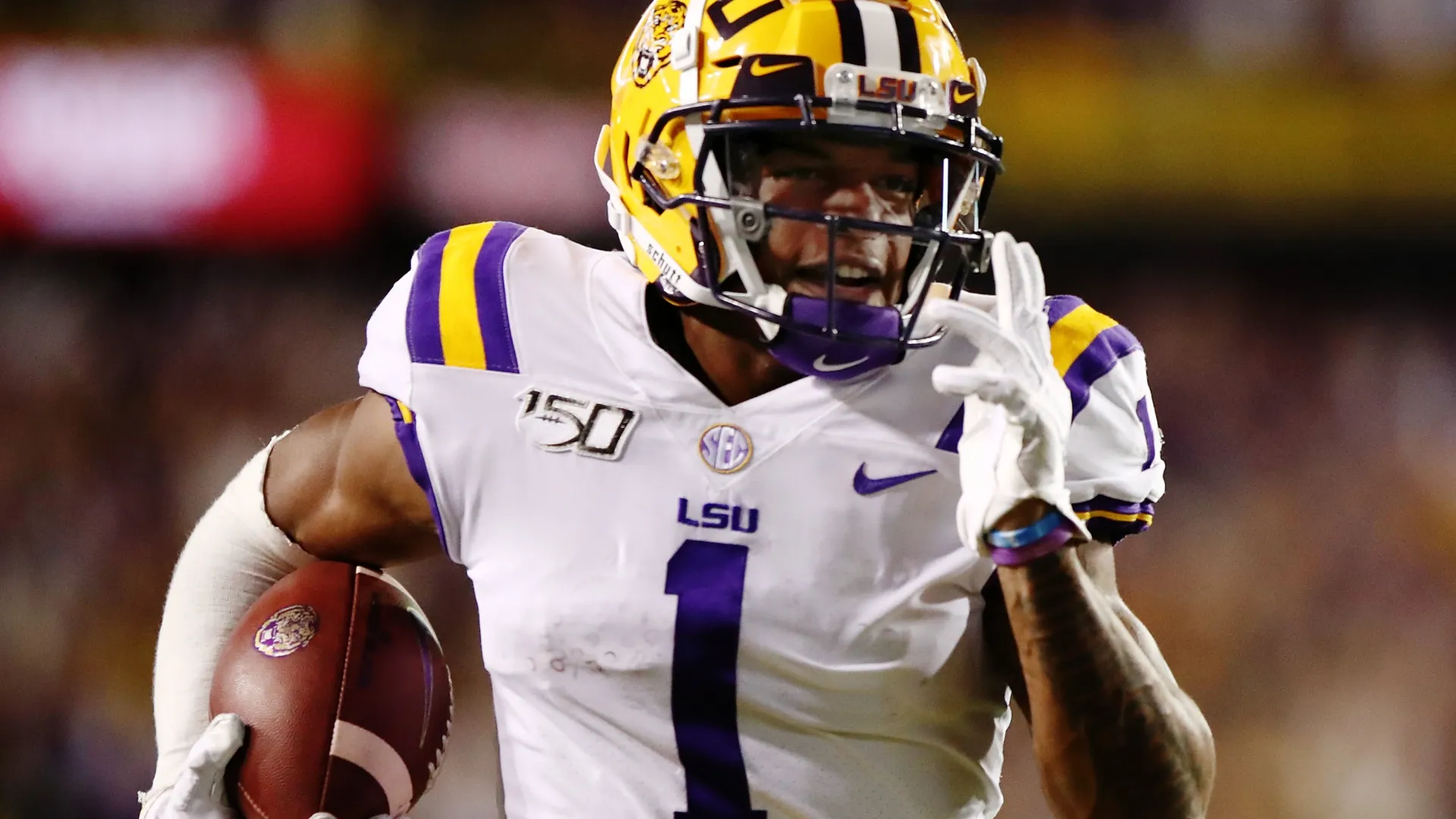
Ja’Marr Chase (Source: Marianna Massey/Getty Images)
Ja’Marr Chase exploded onto the national scene in 2019 as LSU’s go-to scoring threat, weaving past defenders with explosive athleticism and a nose for the end zone. His 20 receiving touchdowns that season not only led his team but also set a then-SEC standard for scoring prowess.
In a championship-caliber offense engineered by Joe Burrow’s precision passing, he turned contested catches into momentum swing plays and helped LSU navigate a memorable undefeated campaign.
His 2019 output was a blend of elite route mastery and sheer athletic domination, traits that carried him into the NFL as one of the most coveted prospects of his class.
Corey Coleman – 20 receiving touchdowns (2015)
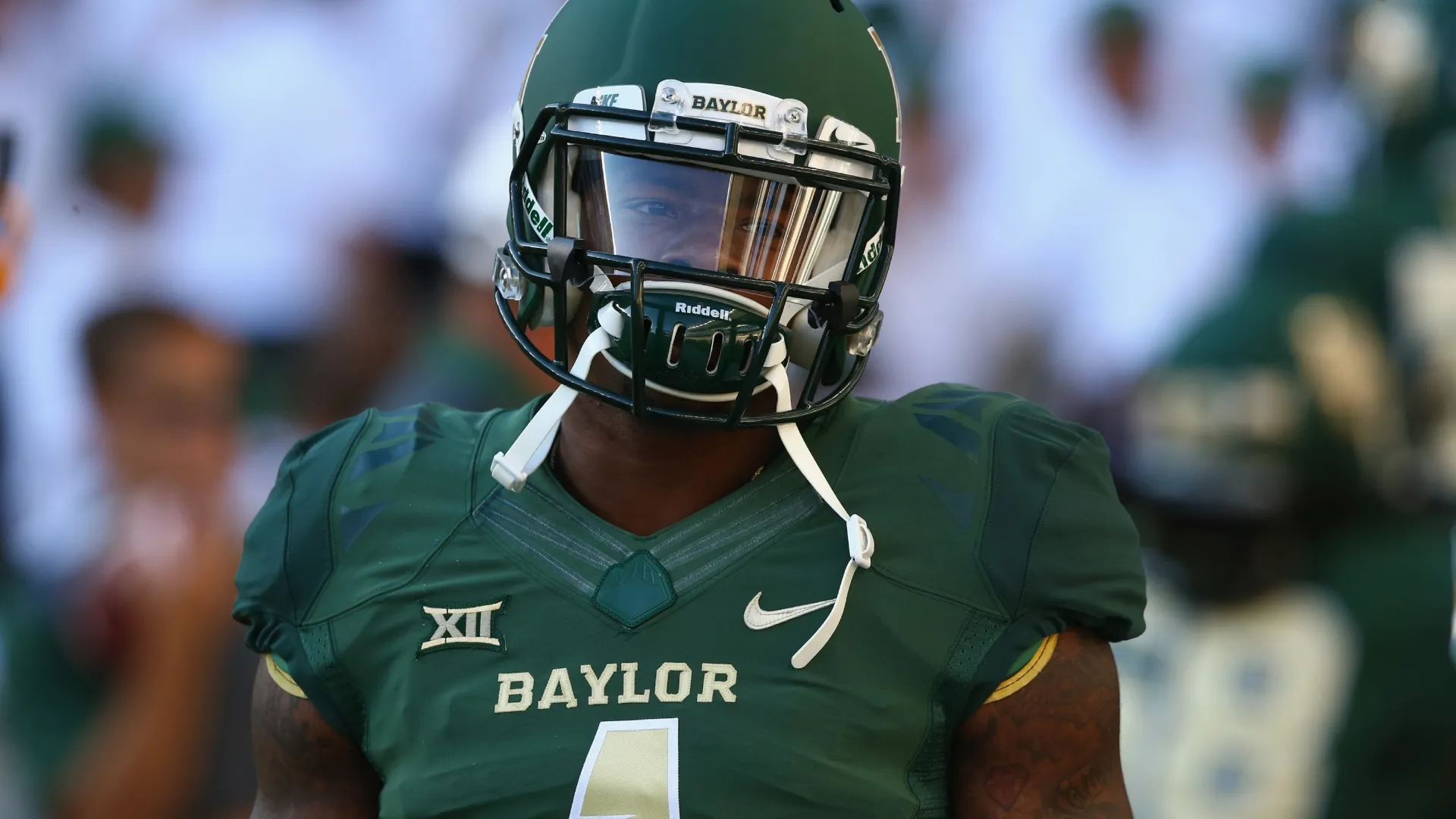
Corey Coleman (Source: Ronald Martinez/Getty Images)
Corey Coleman’s 2015 season at Baylor unfolded at breakneck speed. As the focal point of one of college football’s fastest offenses, he piled up 20 receiving touchdowns while routinely stretching defenses beyond their limits.
His ability to score from anywhere on the field — whether through vertical routes or quick strikes — made him nearly impossible to game-plan against. By season’s end, he had not only claimed the Biletnikoff Award but also solidified his place among the most lethal scoring receivers of the modern era.
Patrick Edwards – 20 receiving touchdowns (2011)
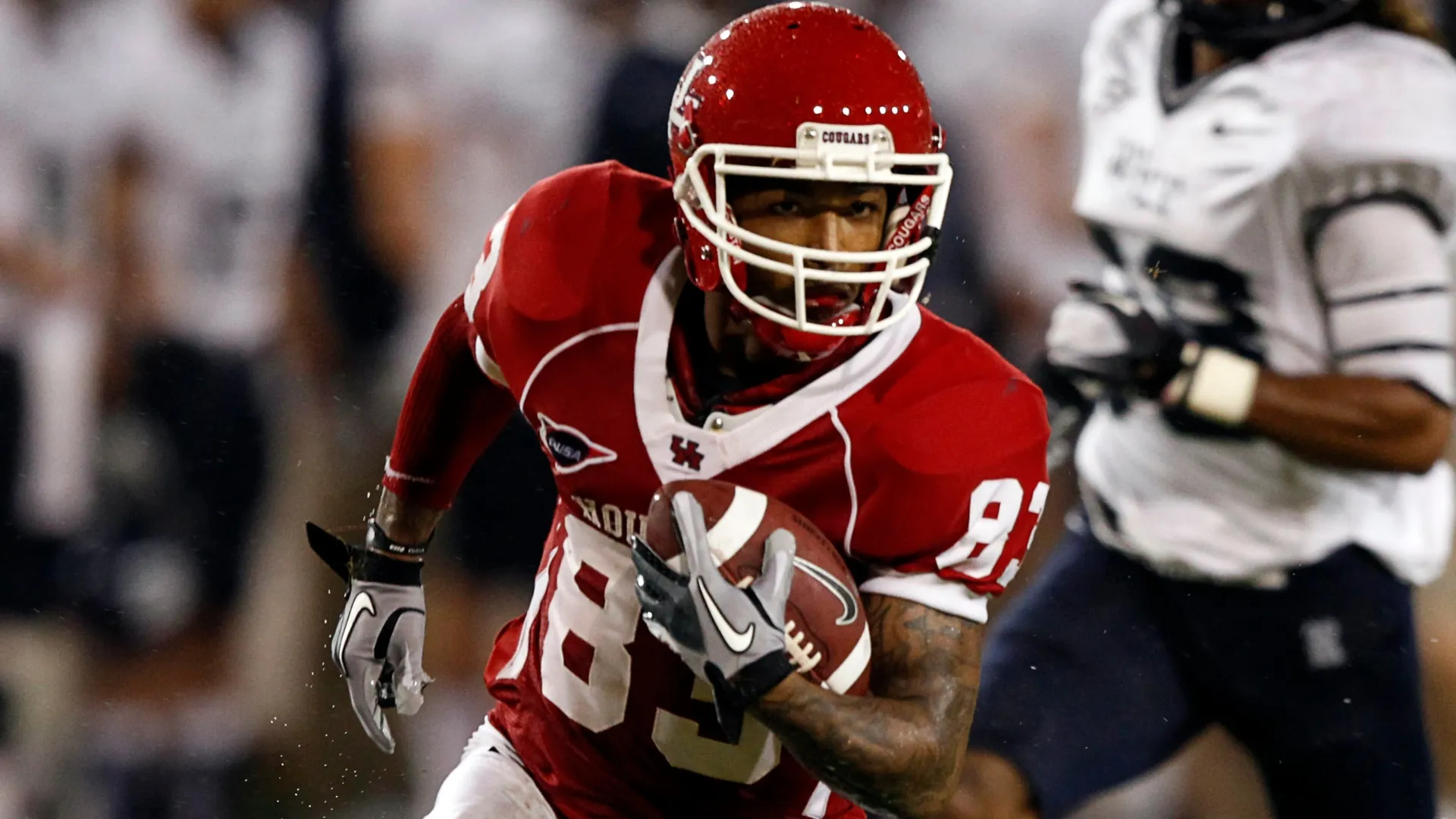
Patrick Edwards (Source: Bob Levey/Getty Images)
Patrick Edwards’ 2011 campaign with Western Michigan was built on reliability and volume. In an offense that leaned heavily on timing and repetition, he emerged as the preferred target in scoring situations, finishing with 20 touchdown receptions.
His season stood out not because of flash, but because of consistency — week after week, he converted opportunities into points. His production remains one of the most prolific single-season scoring performances ever recorded outside the Power Five, underscoring how elite efficiency can transcend program size.
Justin Blackmon – 20 receiving touchdowns (2010)
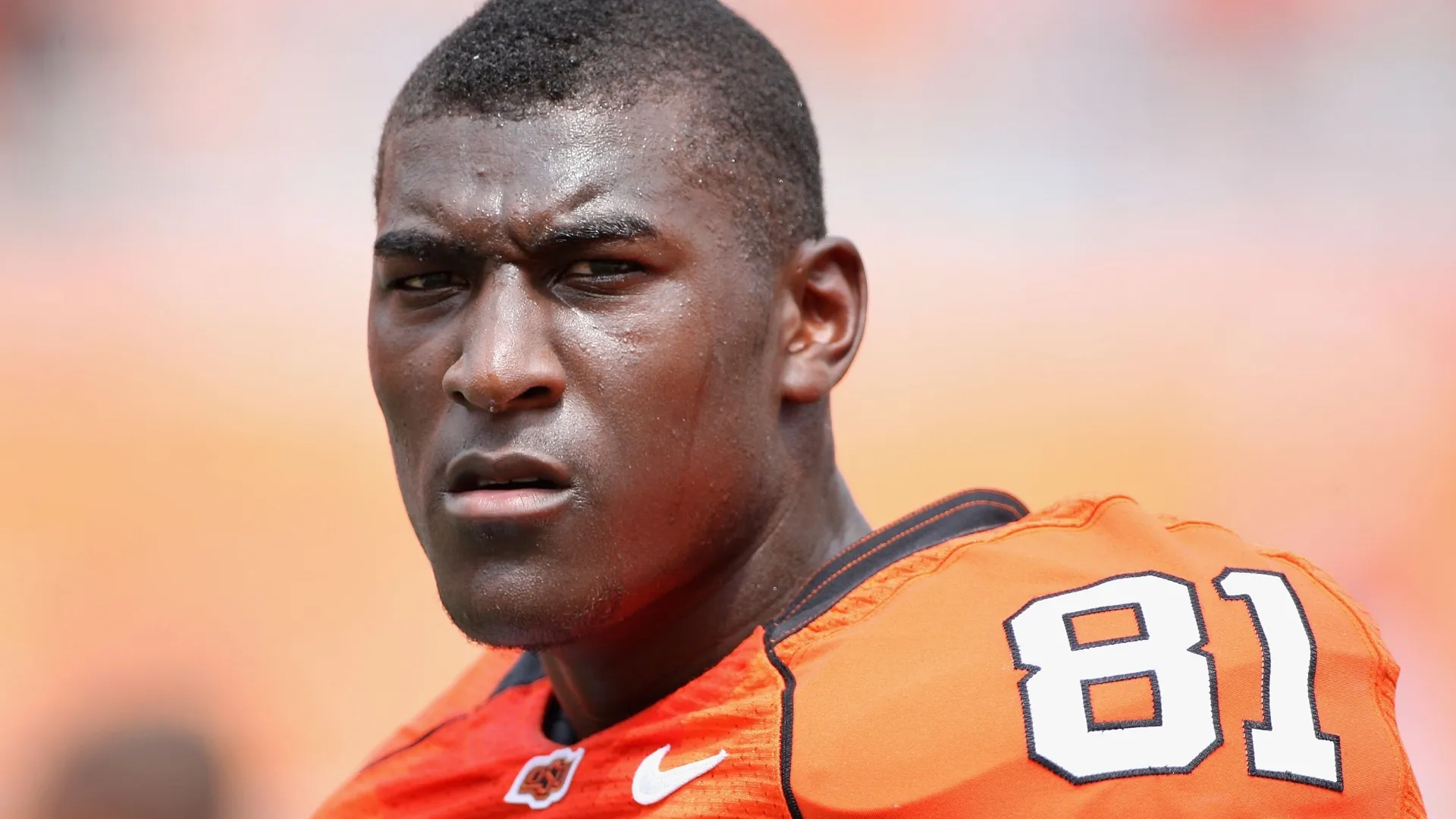
Justin Blackmon (Source: Christian Petersen/Getty Images)
Justin Blackmon’s dominance at Oklahoma State in 2010 went beyond raw numbers, though the 20 receiving touchdowns spoke loudly on their own. He combined physical strength with refined route running, making him a nightmare matchup in both open field and tight coverage.
His scoring output helped propel the Cowboys into national relevance and earned him the Biletnikoff Award. That season marked the beginning of his reputation as one of the most complete wide receivers college football had seen in years.
Jarett Dillard – 20 receiving touchdowns (2008)
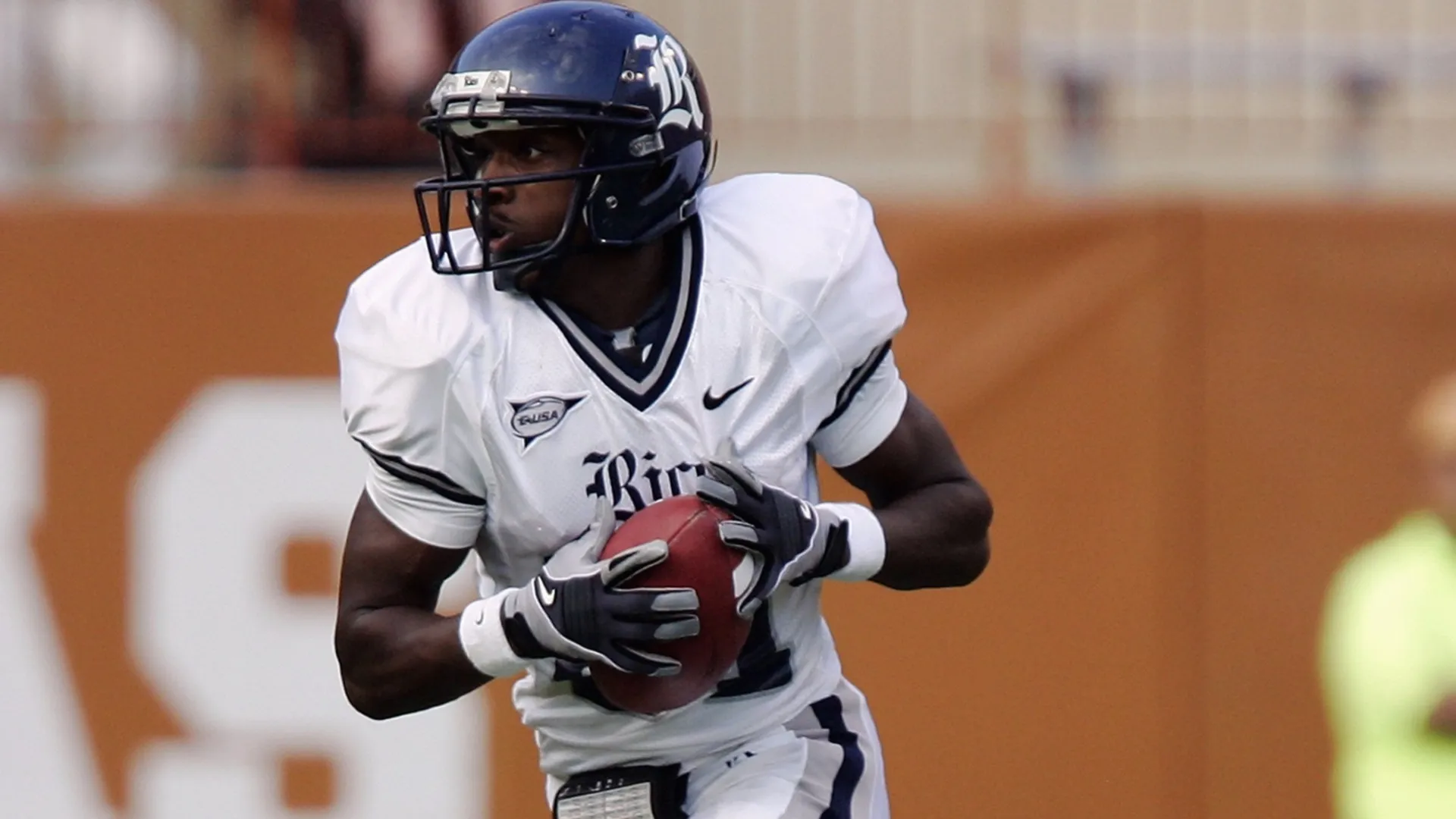
Jarett Dillard (Source: Brian Bahr/Getty Images)
Two years after leading the nation, Jarett Dillard returned to the top tier of scoring receivers in 2008, once again showcasing his uncanny feel for the end zone. With 20 touchdown catches, he reaffirmed that his earlier success was no anomaly.
His chemistry with Rice’s quarterback and his sharp instincts near the goal line allowed him to remain a national scoring force, rare longevity in a category often defined by single-season spikes. Few receivers have managed multiple elite touchdown seasons at the collegiate level — He remains a notable exception.
| Player | Receiving touchdowns | Season | Team / School |
| Troy Edwards | 27 | 1998 | Louisiana Tech |
| Randy Moss | 25 | 1997 | Marshall |
| Stedman Bailey | 25 | 2012 | West Virginia |
| Davante Adams | 24 | 2013 | Fresno State |
| DeVonta Smith | 23 | 2020 | Alabama |
| Michael Crabtree | 22 | 2007 | Texas Tech |
| Larry Fitzgerald | 22 | 2003 | Pittsburgh |
| Manny Hazard | 22 | 1989 | Houston |
| Jarett Dillard | 21 | 2006 | Rice |
| Ja’Marr Chase | 20 | 2019 | LSU |
| Corey Coleman | 20 | 2015 | Baylor |
| Patrick Edwards | 20 | 2011 | Western Michigan |
| Justin Blackmon | 20 | 2010 | Oklahoma State |
| Jarett Dillard | 20 | 2008 | Rice |