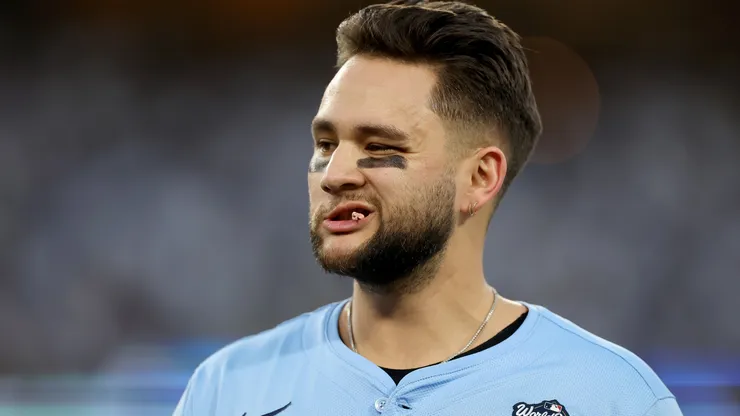
The New York Mets moved quickly to reshape their roster after falling short in the Kyle Tucker sweepstakes, pivoting to one of the most impactful bats still available on the market. By landing Bo Bichette on a three-year, $126 million deal, the Mets not only addressed a major offensive need but also introduced immediate questions about defensive alignment across the infield.
Bichette arrives in Queens as a proven All-Star shortstop, yet his fit was never going to be straightforward. Offensively, Bichette remains the constant. Coming off a season in which he slashed .254/.313/.435 with 18 home runs, the Mets are betting that his production will translate regardless of position.
According to The Athletic’s Will Sammon, that decision has now been made. “Bichette, a two-time All-Star at shortstop, is expected to play third base for the Mets, a league source said,” Sammon reported, signaling a notable positional shift as New York finalizes its new-look lineup.
Why the Mets are moving Bichette to third base
With Marcus Semien set at second base following his offseason arrival, and the Mets reluctant to disrupt other internal plans, third base emerged as the clearest path to getting Bichette’s bat into the lineup every day.

Bo Bichette #11 of the Toronto Blue Jays plays second base. Emilee Chinn/Getty Images
Ripple effects across the Mets’ lineup
Bichette’s move has a cascading impact throughout the roster. Brett Baty is expected to see increased time in left field, creating flexibility for Mark Vientos and Jorge Polanco to share responsibilities across the remaining infield spots. With Brandon Nimmo no longer in the picture, Baty’s transition could become a critical storyline for New York’s outfield depth.
SurveyWhere do you expect Bo Bichette to have the biggest impact with the Mets in 2026?
Where do you expect Bo Bichette to have the biggest impact with the Mets in 2026?
ALREADY VOTED 0 PEOPLE