Winning the Champions League secures a place among Europe’s elite. But reaching the summit of the World Cup requires a different kind of genius, one that balances tactics, character, and the weight of national expectation.
Only a select group of coaches have managed to lift both trophies. Their journeys reveal contrasting challenges—navigating club soccer’s marathon of matches and thriving in the short, high-stakes burst of a global tournament.
From legendary tacticians to unexpected innovators, these managers bridged two demanding worlds. Their success offers a rare glimpse into how adaptability and vision can shape the most enduring legacies.
Who are the coaches who won the Champions League and the World Cup?
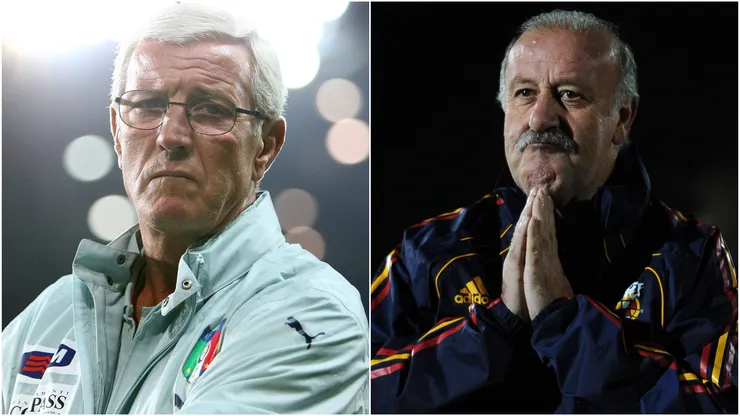
Only two managers in history have achieved the spectacular feat of winning both the UEFA Champions League (or the European Cup) at the club level and the FIFA World Cup with a national team. These two legendary figures are the Italian Marcello Lippi and the Spaniard Vicente del Bosque.
Marcello Lippi
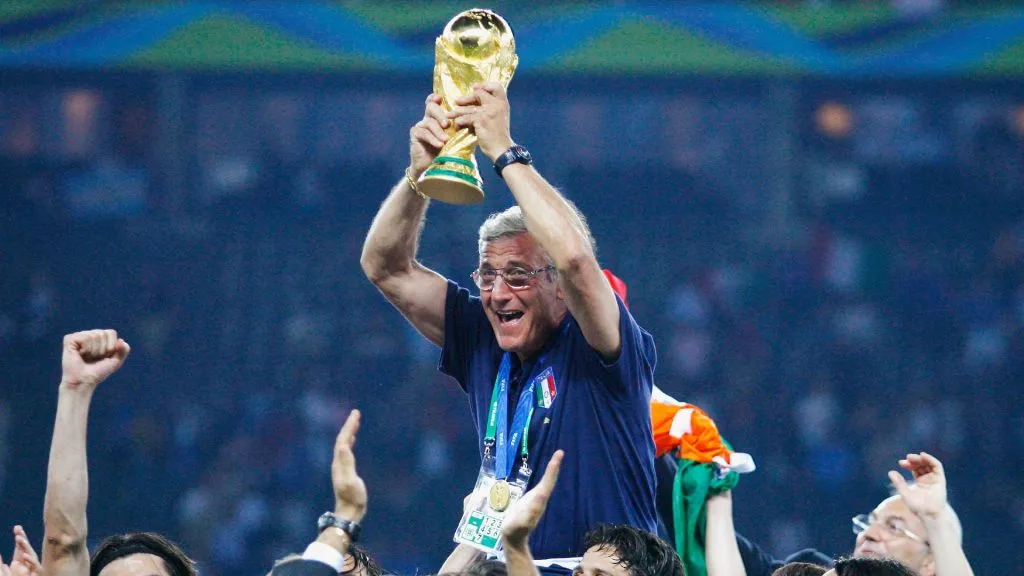
Marcello Lippi during the FIFA World Cup Germany 2006 Final match. (Source: Shaun Botterill/Getty Images)
Marcello Lippi was the first manager to complete this prestigious double, accomplishing the wins a decade apart. His European triumph came during a dominant period for Italian soccer in the mid-1990s. He led Juventus to victory in the 1996 Champions League final, defeating Ajax in a penalty shootout in Rome.
His Juventus team was a powerhouse, though he also suffered three subsequent consecutive final defeats (1997, 1998, 2003). His greatest moment, however, arrived when he took charge of the national team.
In the 2006 FIFA World Cup in Germany, he guided the Italy national team through a tournament defined by resilience and unity, culminating in a dramatic final victory over France, again decided by penalties. This victory secured his place as a national hero and the first coach to claim both major trophies.
Vicente del Bosque
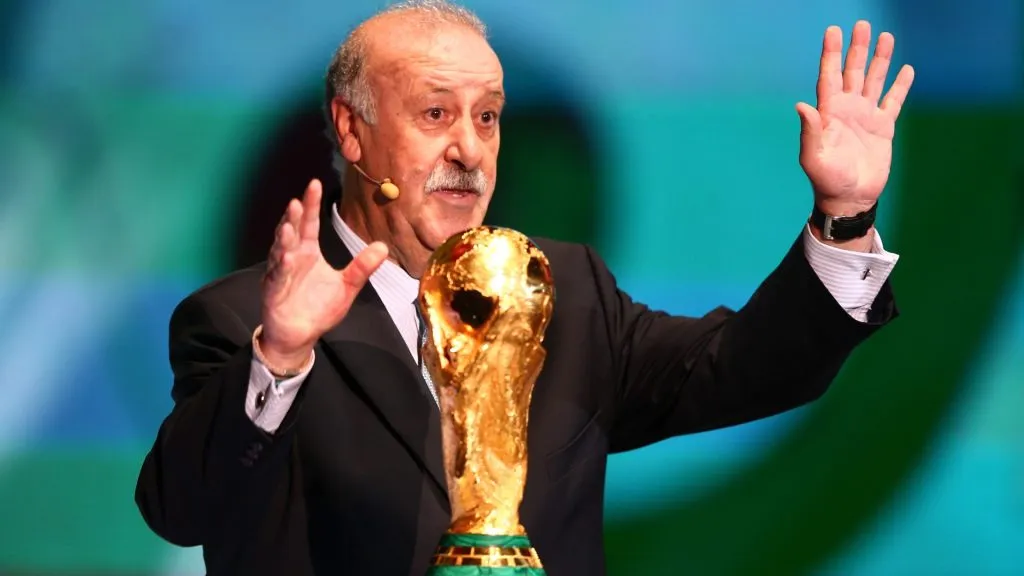
Vicente del Bosque speaks to the audience behind the World Cup trophy in 2014. (Source: Clive Mason/Getty Images)
Vicente del Bosque joined Lippi in this exclusive club four years later, achieving a remarkable run of success for both club and country. His initial European glory came during his tenure at Real Madrid at the beginning of the Galácticos era.
He won the Champions League twice with the club, first in 2000 against Valencia and again in 2002 against Bayer Leverkusen, a final famously decided by Zinedine Zidane’s spectacular volley.
His second major title came when he managed the Spain national team. Inheriting a talented squad from Luis Aragones, he led Spain to victory in the 2010 FIFA World Cup in South Africa, defeating the Netherlands in the final.
This win cemented Spain’s “Golden Generation” and helped him achieve a unique status: he is currently the only coach in history to have won the World Cup, the European Championship (2012), the Champions League and the Intercontinental Cup/Club World Cup.
Why only Lippi and Del Bosque conquered both titles?
The fact that only two men have successfully managed to win both the Champions League and the World Cup highlights the extreme difficulty of mastering two fundamentally different managerial disciplines in soccer.
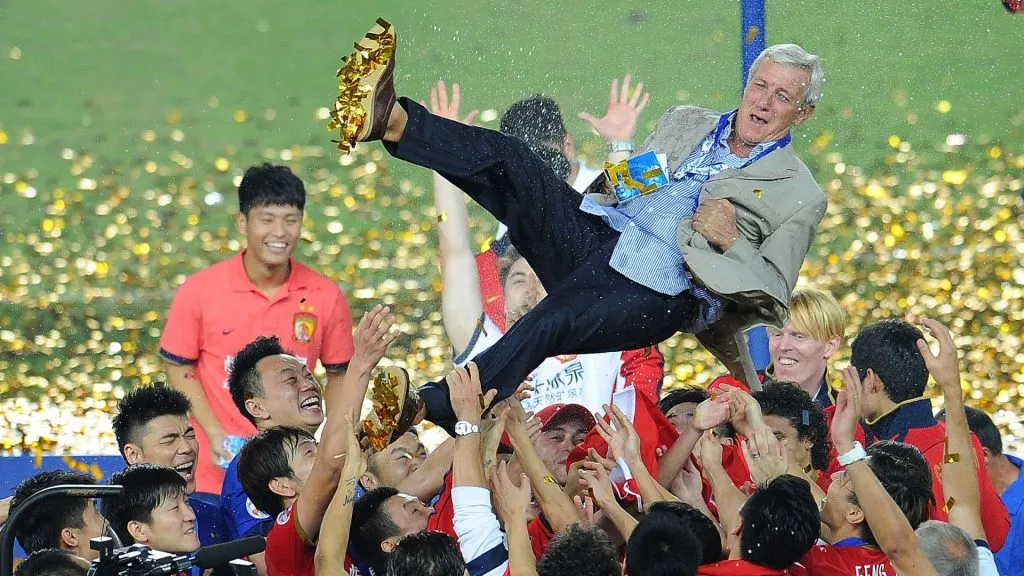
Marcello Lippi during the AFC Champions League Final 2nd leg match in 2013. (Source: Thananuwat Srirasant/Getty Images)
This exclusivity stems from the inherent contradiction between the demands of the club game and the international tournament format. The Champions League demands a manager to be a master long-term project leader.
Success requires sustained high performance across a grueling nine-month schedule, the ability to command a squad built from players across the globe, and the constant tactical evolution needed to outsmart the world’s richest and best-organized club teams.
A club coach has continuous access to his players, facilitating the implementation of complex systems, but must also manage massive transfer budgets and player turnover. Lippi’s success with Juventus and Del Bosque’s wins with Real Madrid were achieved through multi-year projects of dominance.
The FIFA World Cup, conversely, requires a manager to be a brilliant short-term specialist and motivational leader. The competition is a ruthless, single-elimination sprint over four weeks.
The coach has minimal preparation time—gathering players who spend most of the year as rivals—and must simplify tactics for immediate effectiveness. There is no transfer market to fix weaknesses, and one bad match is often terminal.
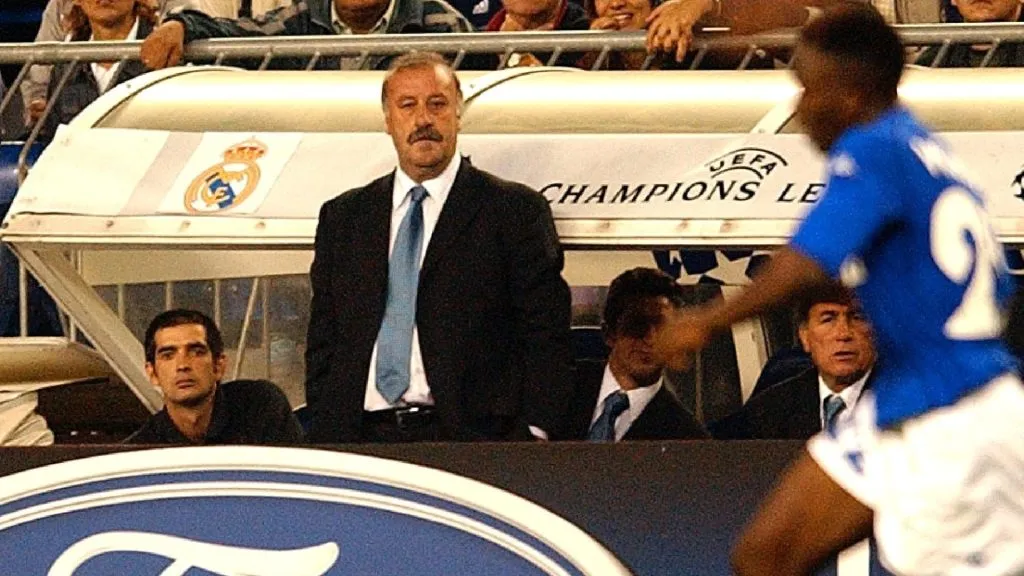
Vicente Del Bosque during a Champions League game. (Source: Tim De Waele/Getty Images)
The challenge here is less about sustained technical complexity and more about generating intense emotional unity and momentum. Del Bosque excelled at this, stepping in to manage the existing talent and philosophy of the Spanish team’s “Golden Generation” to win in 2010.
Furthermore, the opportunity itself is incredibly scarce. To win the UCL, a coach needs to be at one of a dozen mega-rich European clubs, a job that is annual. To win the World Cup, a coach must be appointed to one of the eight nations historically capable of lifting the trophy—a job that only comes around every four years.
Lippi (Italy) and Del Bosque (Spain) had the perfect, yet highly rare, career trajectory: they achieved continental club dominance, which then earned them the opportunity to lead their respective elite national teams at precisely the moment a world-class generation of players peaked. This convergence of elite timing, tactical duality and managerial stature is why the list of winners remains so short.