
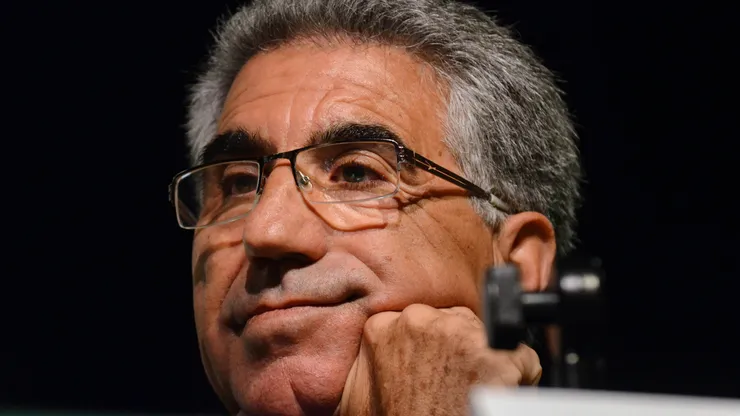
Long before Carlos Alcaraz and Rafael Nadal dominated the global stage, Spain boasted tennis trailblazers like Carlos Moyá, Juan Carlos Ferrero, and Sergi Bruguera. But even earlier, pioneers such as Andrés Gimeno, Manuel Santana, and Manuel Orantes laid the groundwork for Spain’s rich tennis tradition.
Manuel Orantes, born in 1949 on the outskirts of Barcelona, is one of those foundational figures. Growing up in humble surroundings, his tennis journey began as a ball boy at Club de Tenis de la Salut, where coach Pedro Mora discovered and guided him through his junior career. By 1966, Orantes was making waves, capturing junior titles at Wimbledon and the Orange Bowl.
Orantes turned professional in 1968 during the dawn of the Open Era, an era that transformed tennis into the professional and globally organized sport it is today. Early on, Orantes showcased his talent, earning notable victories over legends like Jimmy Connors and Guillermo Vilas.
With 34 career titles, Orantes is the second most decorated Spanish player in the Open Era, trailing only Rafael Nadal’s 92 titles. He achieved his first professional victory in 1969, defeating Manuel Santana in Barcelona. His career-high ATP ranking of World No. 2 came during a dominant stretch in the early 1970s, highlighted by his eight titles in 1972 and 1973.

Former players Stan Smith, Manuel Orantes and Ile Nastase pose during the ATP Finals Club presentation. (Clive Brunskill/Getty Images)
Orantes’ crowning moment came at the 1975 US Open when he defeated top-seeded Jimmy Connors in straight sets to claim the title. This victory followed an unforgettable semifinal against Guillermo Vilas, where Orantes staged an epic comeback, rallying from two sets to one down and saving three match points in the fourth set.

A complicated rivalry with Guillermo Vilas
Orantes and Vilas shared a love-hate relationship. The duo started as doubles partners, achieving early success together in tournaments like Buenos Aires and Sweden. However, their friendship soured over time.
In a 2024 interview with La Vanguardia, Orantes reflected on the rivalry. “There’s a story with Vilas… We had become friends. I usually played doubles with Antonio Muñoz, but he didn’t have a high enough singles ranking to qualify for Wimbledon. In 1974, I partnered with Guillermo. We played in Sweden and Buenos Aires, and we started winning matches,” he recalled.
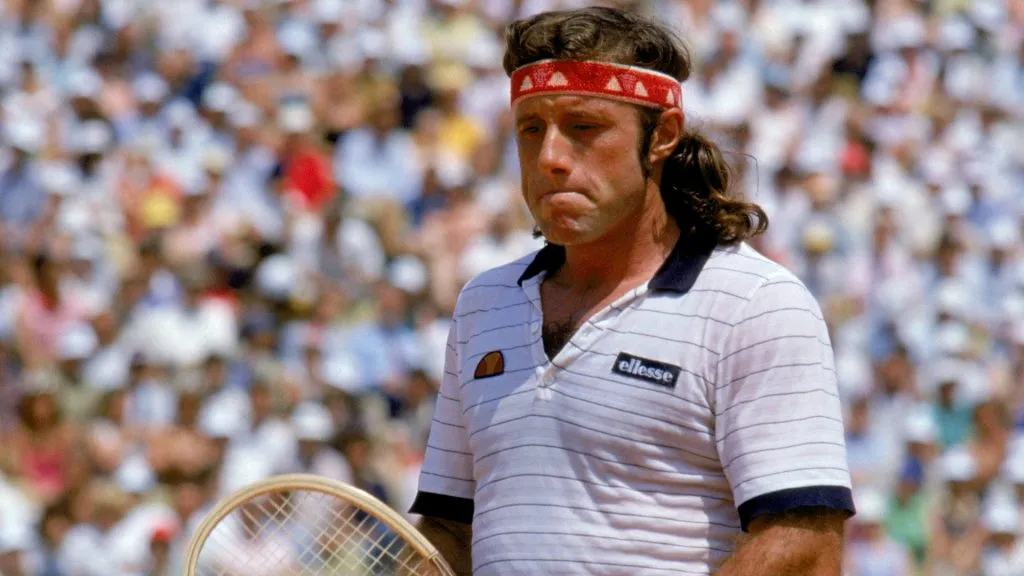
Guillermo Vilas of Argentina stands on the tennis court during a match in the 1982 French Open. (Steve Powell/Getty Images)
But tensions rose during an Australian tournament, which Vilas won while Orantes reached the semifinals. “Fame went to his head. From that point on, whenever we played, I didn’t just want to beat him—I wanted to go all out,” Orantes continued.
The rivalry reached its peak at the 1975 US Open semifinal, where Orantes delivered one of the most dramatic victories of his career. “I was losing two sets to one against Guillermo Vilas. In the fourth set, I was down 0-5 and 0-40. I turned it around to win the set and eventually took the fifth, 6-4. That year, I won nine tournaments,” he added.
Legacy and life after tennis
Orantes retired in the mid-1980s and briefly served as captain of Spain’s Davis Cup team. His tenure ended in the early 1990s following disputes with Emilio Sánchez Vicario. Despite stepping away from formal coaching roles, Orantes has remained deeply connected to the sport.

Manuel Orantes receives his blue blazer after being inducted into the International Tennis Hall Of Fame. (Darren McCollester/Getty Images)
In 2012, Orantes was inducted into the International Tennis Hall of Fame, cementing his place among the game’s all-time greats. Today, he continues to inspire the next generation of Spanish players and is revered as a national icon.