In the NFL, timeouts are tactical pauses, moments when the clock stops and coaches reshuffle personnel and adjust strategy. But in the Super Bowl, those pauses also interact with television scheduling and commercial rhythms.
The organization rules generally set timeouts at about two minutes long, though many are shortened to 30 seconds under specific conditions, such as when a team has already used its allotted commercials for the quarter.
These tactical breaks, on their own, don’t fully explain why the biggest game of the year stretches far beyond its minutes of play clock. The answer lies in how timeouts work in concert with other stoppages, broadcasting demands and more.
When does the Super Bowl start and how long does it go?
The Super Bowl traditionally kicks off at 6:30 PM ET, just like most NFL championship games, and runs far longer than its official 60 minutes of play clock would suggest. A typical broadcast, from kickoff to final whistle, stretches to around 3 hours 45 minutes, thanks to stoppages, reviews, commercials and more.
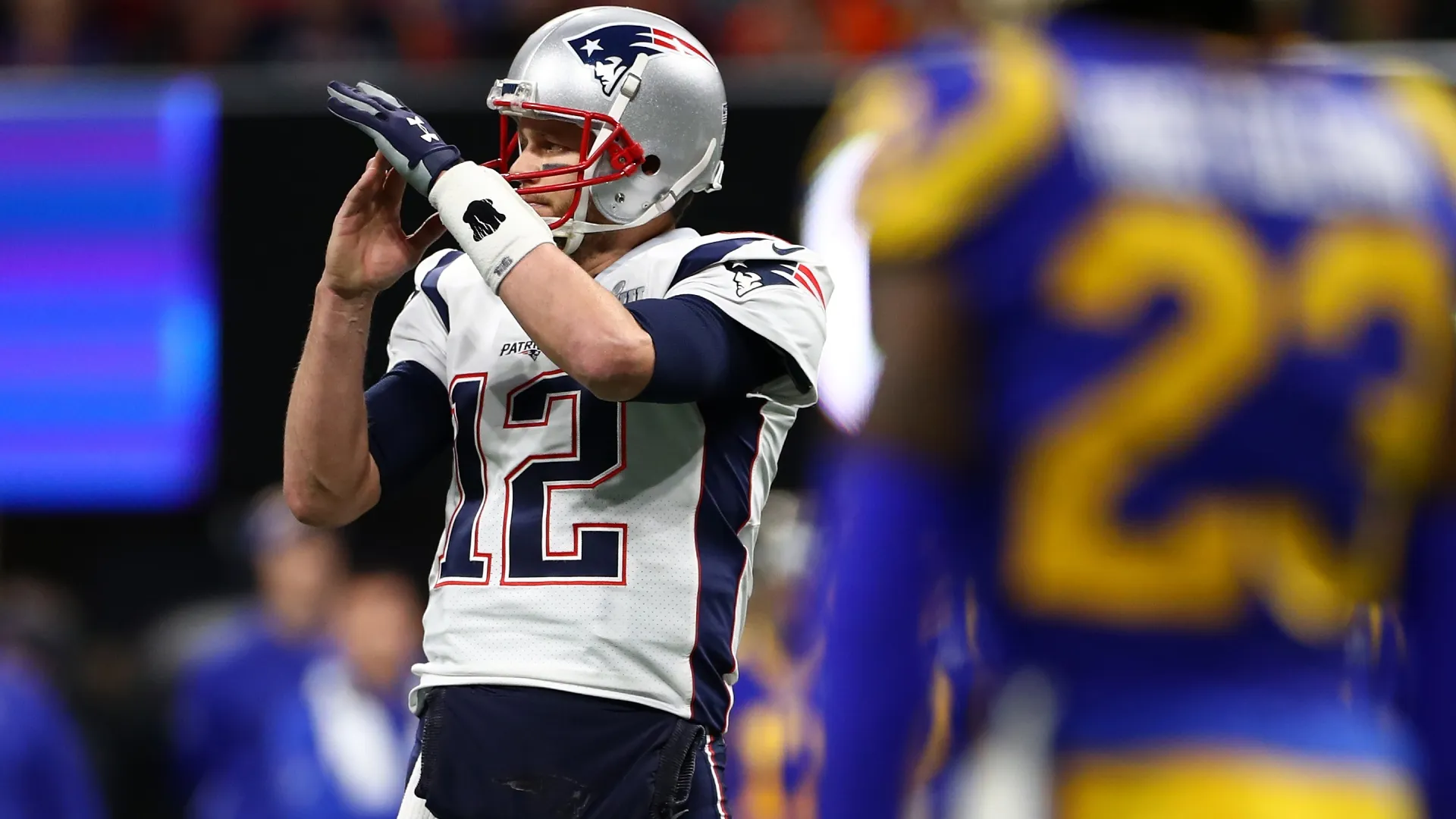
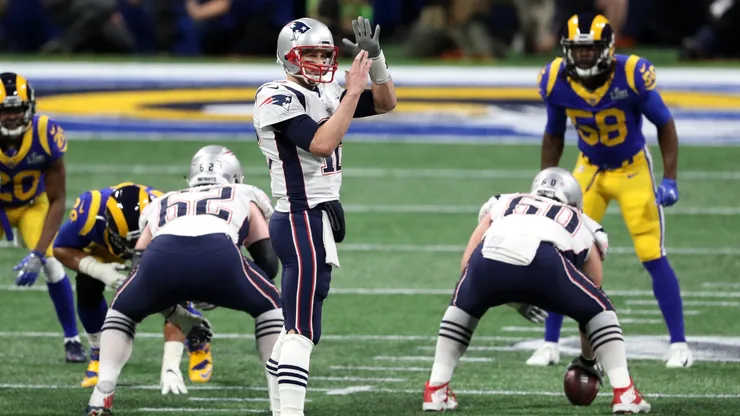
Tom Brady of the Patriots calls a time-out during Super Bowl LIII (Source: Maddie Meyer/Getty Images)
Networks also begin coverage well before the first snap, often up to 2–3 hours earlier, with pregame analysis and features. Add post‑game interviews and the trophy presentation, and the full viewing experience can occupy much of an evening — even before accounting for overtime, if it occurs.
Timeouts in the Super Bowl: How long do they actually last?
In NFL rules, a standard timeout called by a team typically lasts about two minutes, but not all timeouts are equal. Near the end of a half, timeouts tied to clock management can be as short as 30 seconds if broadcast advertising or game conditions dictate.
In the Super Bowl timeouts are still governed by league rules, yet they fill a different function. Referees and broadcast teams often align these pauses with commercial breaks, replay reviews and commentary windows, extending the viewer perception of stoppage time. The formal clock stoppage is one thing; the broadcast choreography around it is another.
Breaking down every part of a Super Bowl broadcast
Pregame show: The Super Bowl broadcast begins 2–3 hours before kickoff, featuring expert analysis, player interviews, and ceremonial music. This segment sets the stage for the event, providing context, storylines, and anticipation for fans nationwide.
Actual game: The game itself is officially 60 minutes of play, divided into four 15‑minute quarters. However, stoppages for incomplete passes, plays out of bounds, penalties, injuries, and replay reviews extend the live experience to roughly 3 hours 30–45 minutes.
Halftime show: Unlike a regular NFL game, the Super Bowl halftime typically lasts 25–30 minutes, accommodating elaborate performances, stage setup, and teardown. This segment also includes commentary and transitions that blend entertainment with sport.
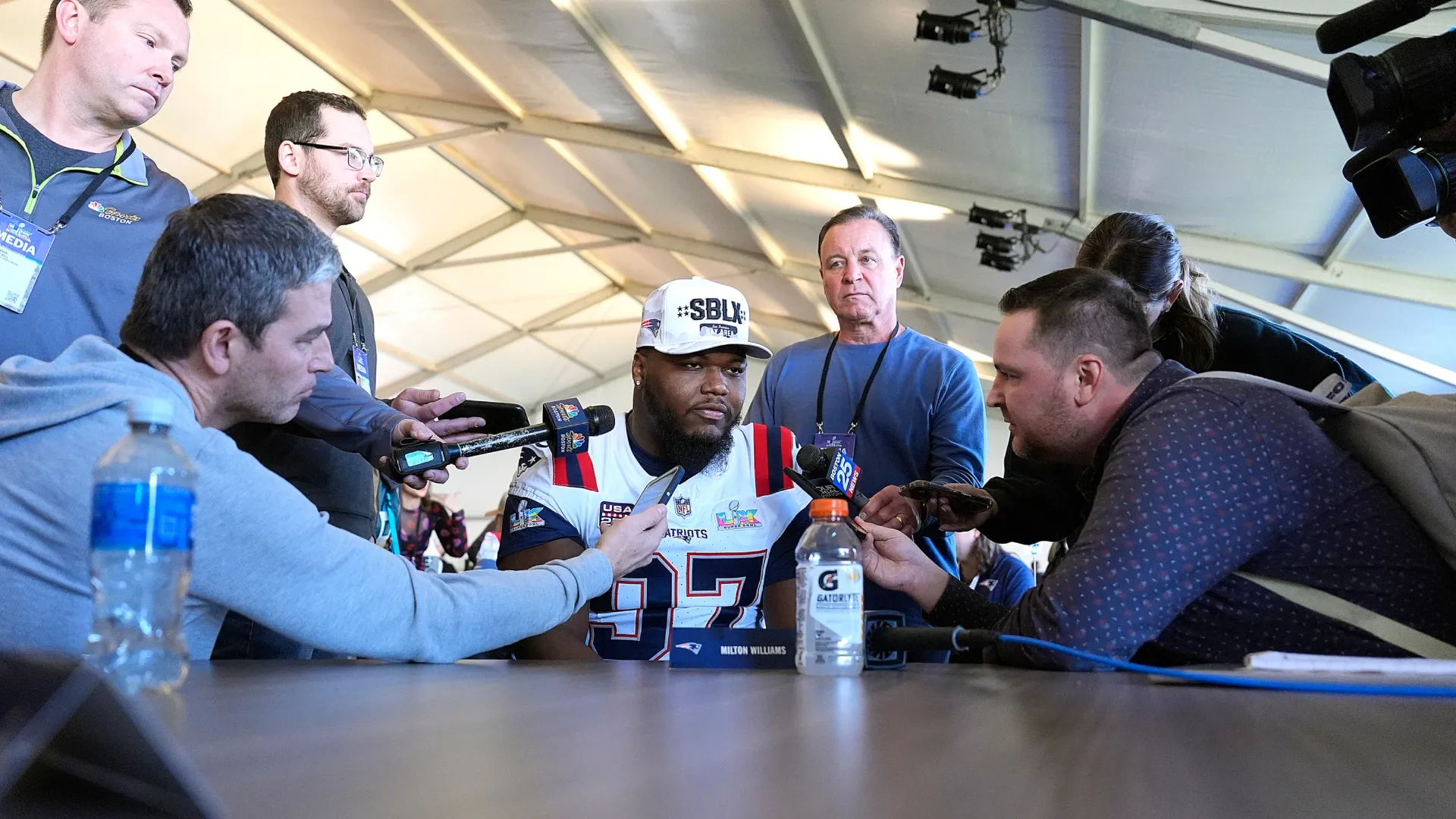
Milton Williams #97 of the New England Patriots in 2026 (Source: Thearon W. Henderson/Getty Images)
Commercials: Super Bowl telecasts feature far more commercials than a standard game — often totaling 40–60 minutes throughout the broadcast. These ads occur during quarter breaks, timeouts, and special moments, contributing significantly to the extended viewing time.
Overtime (if necessary): If the score is tied at the end of regulation, the NFL overtime rules apply, adding extra game time. Overtime has contributed to longer broadcasts in past Super Bowls, including notable editions like Super Bowl LI in 2017.
Post‑game coverage: After the final whistle, networks broadcast trophy presentations, MVP interviews, and fan celebrations. This typically adds 20–30 minutes, wrapping up the event and extending the viewer experience well beyond the last play.
What is the average duration of a Super Bowl?
While the game itself is only 60 minutes of official play, the average broadcast length of a Super Bowl settles around 3 hours 40–45 minutes from kickoff to final whistle, with halftime and commercials accounting for a large portion of that time. This is longer than most regular NFL games, which usually run about 3 hours 10 minutes under similar conditions.
What was the longest Super Bowl ever?
When it comes to total broadcast time, the longest Super Bowl on record remains Super Bowl XLVII, played in 2013, when the Baltimore Ravens defeated the San Francisco 49ers 34–31. That game clocked in at approximately 4 hours and 14 minutes, a runtime inflated by a 34‑minute power outage.
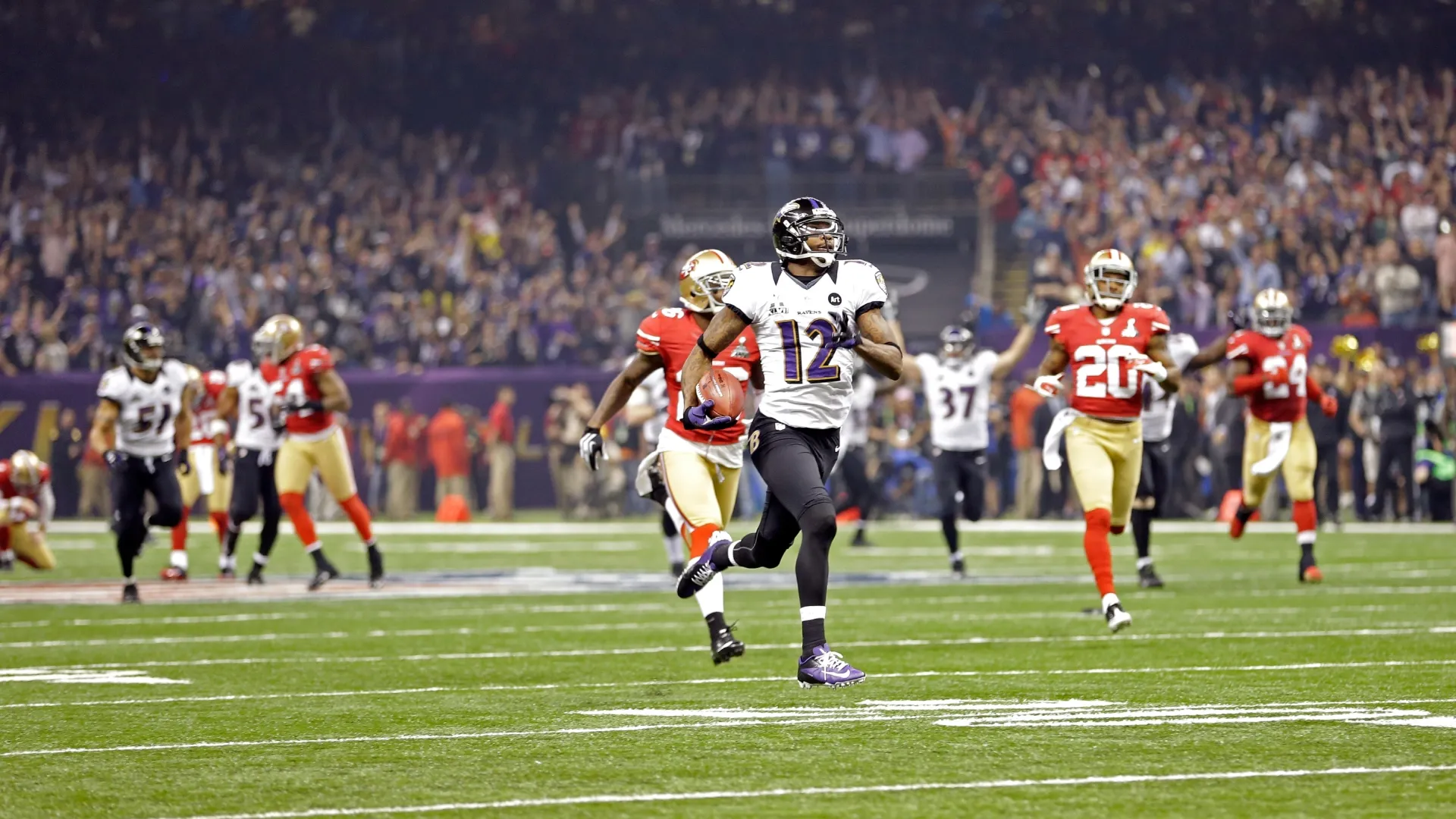
Baltimore Ravens vs the San Francisco 49ers during Super Bowl XLVII (Source: Ezra Shaw/Getty Images)
Outside of extraordinary delays, extended play itself can lengthen a Super Bowl. For example, Super Bowl LVIII reached over four hours of game time in 2024 thanks to overtime before the Kansas City Chiefs edged the San Francisco 49ers 25–22, making it one of the longest in‑play championships.
Super Bowl vs. regular NFL game: How do they compare?
On paper, a football game looks simple: 60 minutes of play, split into four 15‑minute quarters. In reality, that clock only tells part of the story. A regular NFL game averages about 3 hours and 10–15 minutes in real‑time broadcast, includes a standard 12–15 minute halftime and gives fans a compact but complete experience of strategy, stoppages and commercial breaks.
The Super Bowl follows the same basic rules, but the context shifts from a Sunday afternoon matchup to a global television event. Because of extended ceremonials, media activation, and spectacle, its runtime stretches consistently longer.
Part of this difference comes down to scale and broadcast design. A regular season game reserves longer broadcast windows for play action and a moderate number of ad breaks; the Super Bowl, by contrast, places a premium on production value, commercial revenue and viewer engagement, boosting commercial time and spectacle segments like the halftime show.