

The Spanish Super Cup has quietly become one of soccer’s most debated fixtures. For 2026, the spotlight shifts once again far from Spain, with Saudi Arabia hosting a tournament that carries sporting prestige.
What began as a domestic showdown between giants has evolved into a global event shaped by commercial ambition and international strategy. The choice of venue reflects broader changes, where borders matter less than influence.
Behind the scenes, agreements, financial incentives and long-term planning have reshaped the Super Cup’s identity. The decision to stage the 2026 edition in Saudi Arabia is not an isolated move, but part of a story still unfolding.
Why Saudi Arabia is hosting the Spanish Super Cup
Since 2020, the Supercopa de España has shed its purely domestic roots and embraced a global stage. Saudi Arabia is set to host the 2026 edition once again at the King Abdullah Sports City in Jeddah, continuing a trend that has seen the tournament staged in the Middle East on multiple occasions.
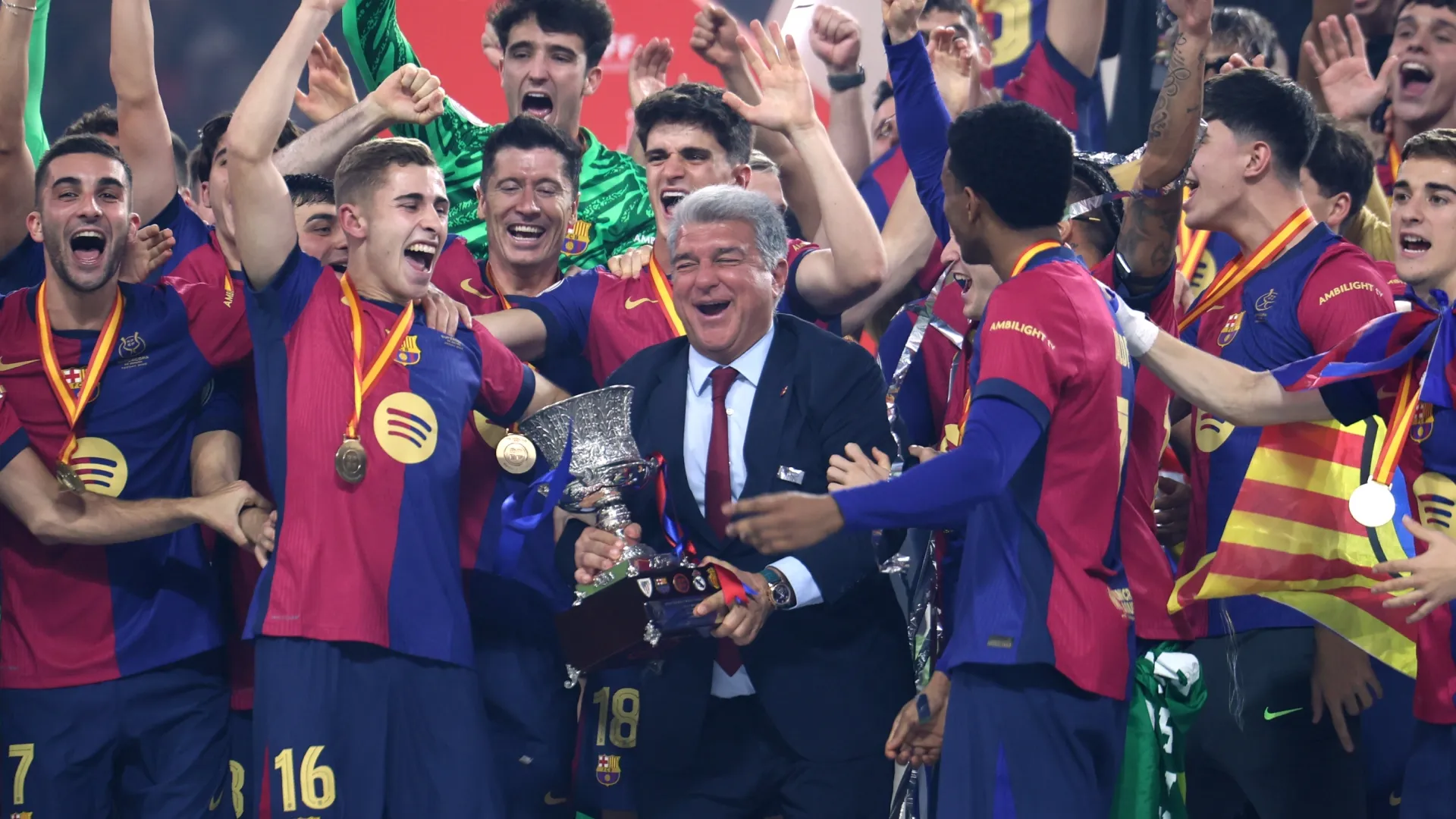
Joan Laporta, President of FC Barcelona, celebrates with the Supercopa de Espana winners’ trophy in 2025. (Source: Yasser Bakhsh/Getty Images)
The four-team format has become a winter highlight, complete with semifinals and a final between January 7 and 11. The decision to export Spain’s Super Cup is closely tied to lucrative commercial deals struck by the Royal Spanish Football Federation with Saudi partners.
Hosting rights in the Kingdom come with substantial financial incentives for the federation and participating clubs, driven by broadcast, sponsorship and prize money arrangements that dwarf what the competition might generate in Spain alone.
Media reports indicate that these agreements have been extended and could remain in place for much of the next decade. But the choice of venue is not without controversy.
Many supporters and commentators argue that staging a national competition thousands of kilometres from its fan base dilutes its identity and makes attendance difficult for travelling supporters.