
Haiti is making a historic return to the international stage for the 2026 World Cup, competing in a highly visible Group C alongside powerhouse nations like Brazil, Morocco, and Scotland. This marks only the second time in history that the Caribbean country has qualified for the tournament, with their only other appearance dating back to 1974. The milestone has sparked immense global interest in the country’s unique culture and background.
Beyond the tactical schemes on the soccer pitch, understanding the everyday reality of the country provides crucial context for the passion surrounding the national team, known as Les Grenadiers. The team carries the hopes of a nation that has faced severe socioeconomic challenges but consistently finds joy and unity through sports. Exploring the fundamental traits of the country helps fans appreciate what the squad is truly representing.
This identity extends far beyond the physical borders of the island to a massive global diaspora. Millions of citizens living at home are joined by millions more in the United States, Canada, and France, completely bridging geographical gaps. This collective backing turns every World Cup fixture into a massive celebration of shared national pride.
How are France and Haiti connected?
The bond between France and Haiti stems from a complex colonial past that ended with Haiti’s independence in 1804. Over the centuries, a massive Haitian diaspora grew across France, giving generations of dual-nationality children access to elite French soccer academies, which is why there are many France-born players playing for Haiti in the 2026 World Cup.
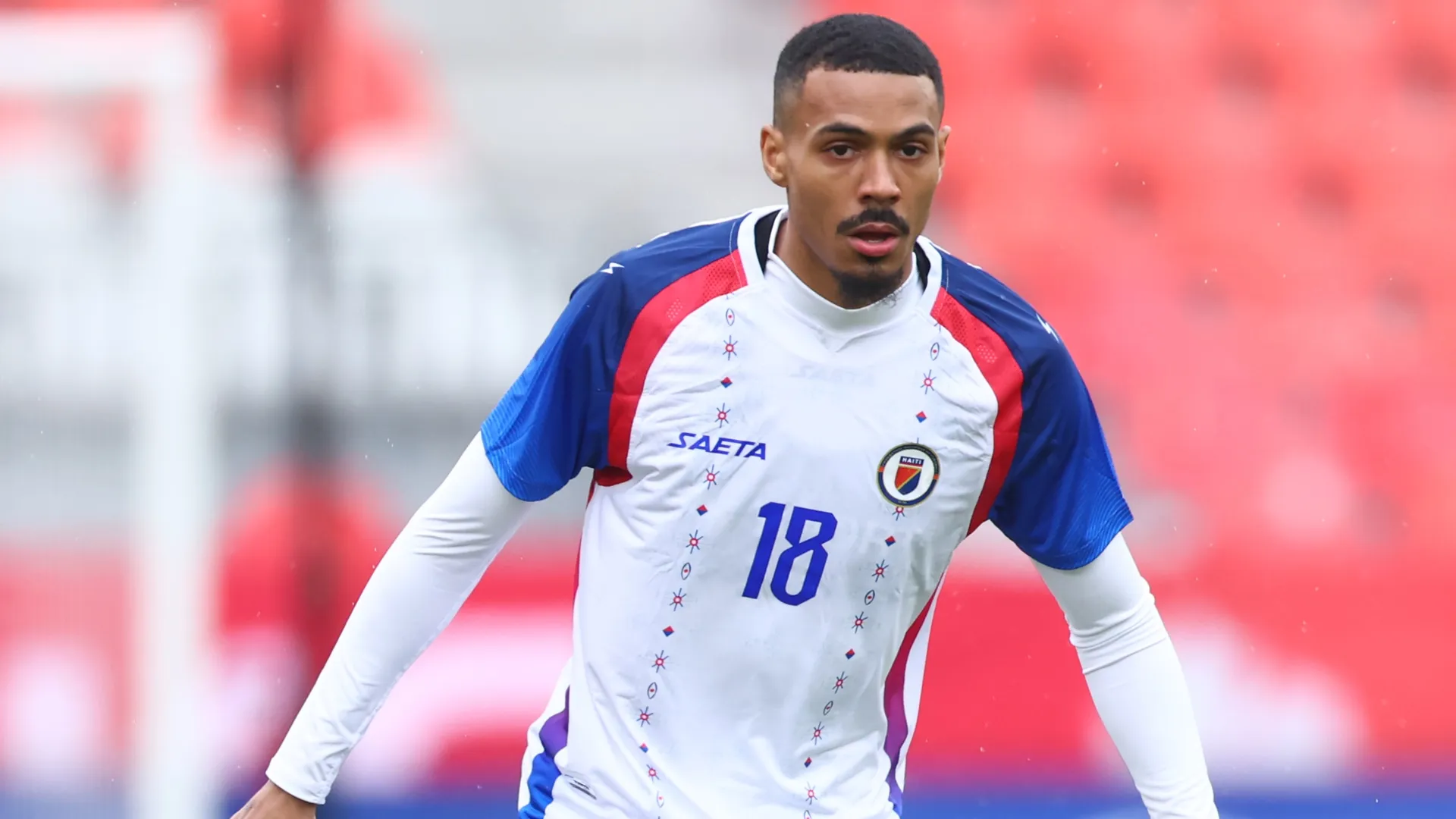
Wilson Isidor of Haiti
Top-flight stars like Wilson Isidor and Jean-Ricner Bellegarde honed their skills in Ligue 1 before choosing to represent Les Grenadiers. Their high-level European experience has transformed a complicated history into a modern celebration of shared identity and sporting success

What is Haiti’s official language?
Language is a core pillar of identity for the island nation and dictates how the citizens communicate both at home and across the globe. Haiti officially recognizes two distinct languages: Haitian Creole and French. Each language carries its own historical weight and serves a unique role within the fabric of modern society.
The first and most widely spoken is Haitian Creole, or Kreyol, which is used universally by the entire population. Developed from a blend of 18th-century French and various West African languages during the colonial era, it is the true heartbeat of the culture. It is the language of daily life, passionate fan chants, and the emotional motivation used in the locker room.
The second official language is French, which is primarily utilized in formal administration, government, and official media. In the context of the 2026 World Cup, French serves as a highly practical tool for the national program. Because the federation relies heavily on foreign-born talent, including twelve players born and raised in France, it provides an immediate linguistic connection for the roster.
What is the population of Haiti?
As of 2026, the total population of Haiti is officially estimated to be over 12 million people. This milestone firmly establishes it as the most populous country within the Caribbean Community (CARICOM). Despite severe domestic and political challenges in recent years, the sheer size of the population ensures a massive, vibrant community of fans tuning in to watch the matches.
This population is also remarkably young, boasting a median age of just over 24 years old. This youthful demographic brings an intense, vibrant energy to the nation’s soccer culture, with the sport serving as a primary source of hope and ambition for the younger generation. Whether watching from Port-au-Prince or international cities, these millions of people are completely united behind their team’s historic tournament run.
Where is Haiti located geographically?
Haiti is geographically located in the heart of the Caribbean Sea, occupying the western third of the island of Hispaniola, which it shares with the Dominican Republic to the east. Positioned within the Greater Antilles archipelago, the country sits strategically between the North Atlantic Ocean to its north and the Caribbean Sea to its south. Its closest maritime neighbors include Cuba, which lies just northwest across the Windward Passage, and Jamaica, situated to the southwest.
The nation’s geography is defined by a highly mountainous terrain—its name actually derives from the indigenous Taino word Ayiti, meaning “land of high mountains”—interspersed with coastal plains and fertile valleys. This tropical location gives Haiti a warm climate year-round, deeply shaping its agricultural roots and coastal lifestyle.