
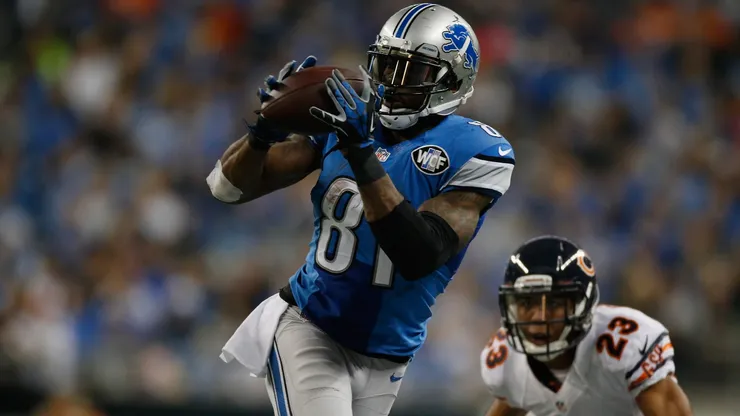
Some NFL seasons tilt the field toward one receiver. Defensive plans adjust, coverage tightens and still the ball keeps going his way, piling up yards that feel less accidental and more unavoidable.
The league’s biggest receiving totals weren’t always about speed alone. They were built through volume, timing, trust and offenses willing to test the same matchup week after week.
Those single-season yardage marks remain rare benchmarks. They tell the story of when opportunity met precision, and how far an NFL passing attack can be stretched in one year.
Calvin Johnson | Rec Yds: 1,964
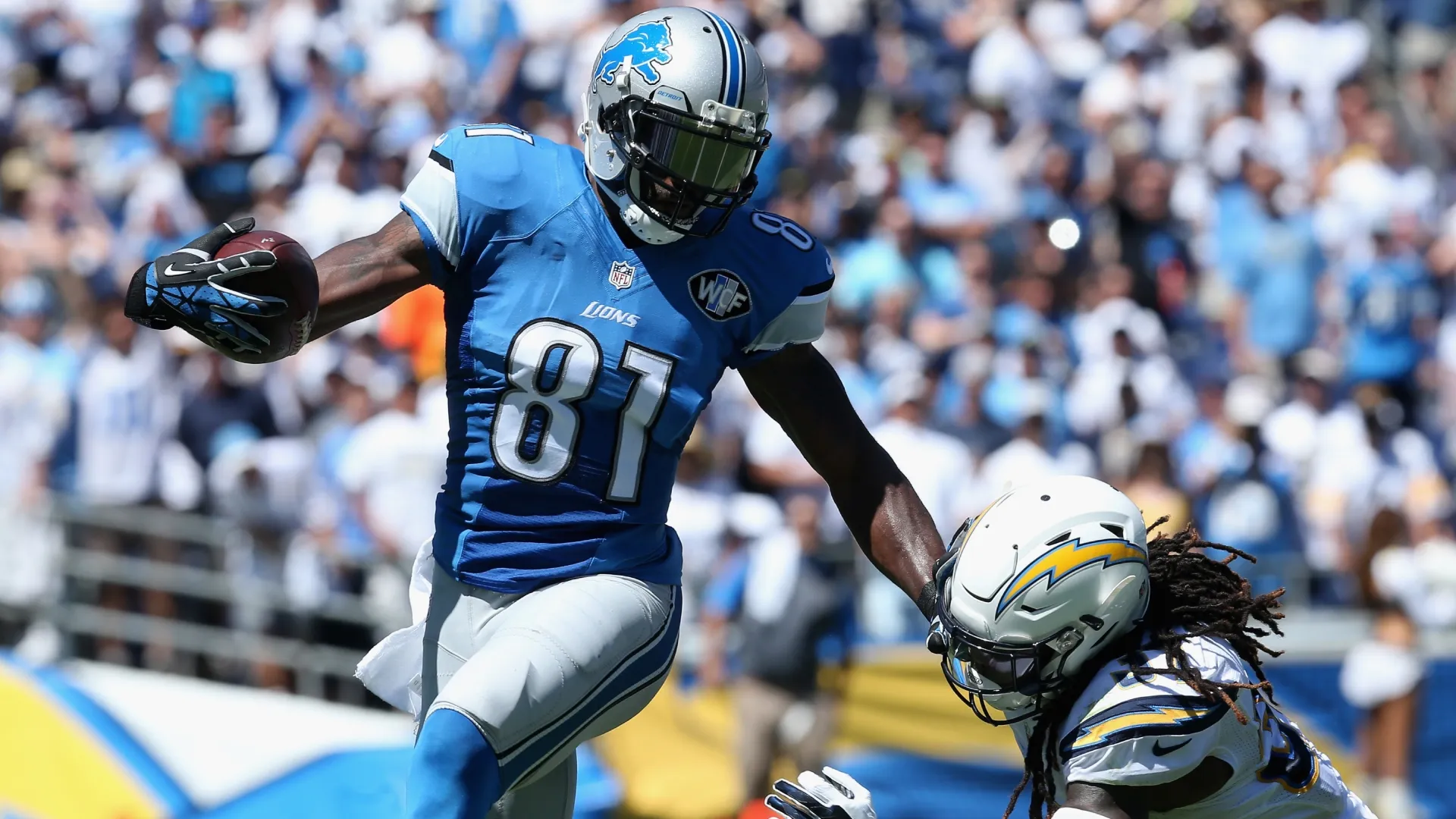
Calvin Johnson (Source: Stephen Dunn/Getty Images)
Calvin Johnson‘s 2012 season with the Detroit Lions was not merely a stellar performance; it was a statistical anomaly that forced a re-evaluation of the limits of the passing game.
Known as “Megatron” for his unique combination of size, speed, and strength, he culminated his masterpiece with 1,964 receiving yards, setting the all-time record in a 16-game season—a mark that, surprisingly, still holds firm.
What makes this record particularly astounding is the context. Unlike other players on this list who benefited from explosive attacks and sometimes more evenly distributed yardage, he was the central, and often nearly solitary, gravitational force of the Detroit offense, drawing monumental defensive attention, including double and triple coverage week after week.
His 122 receptions came from 204 targets, a volume reflecting the trust (and need) of his quarterback, Matthew Stafford, to simply throw the ball in the direction of his elusive giant.
This record, as he himself has expressed, was expected to fall sooner given the recent addition of a 17th game to the league calendar, underscoring the magnificence of achieving it in a shorter format.
Cooper Kupp | Rec Yds: 1,947
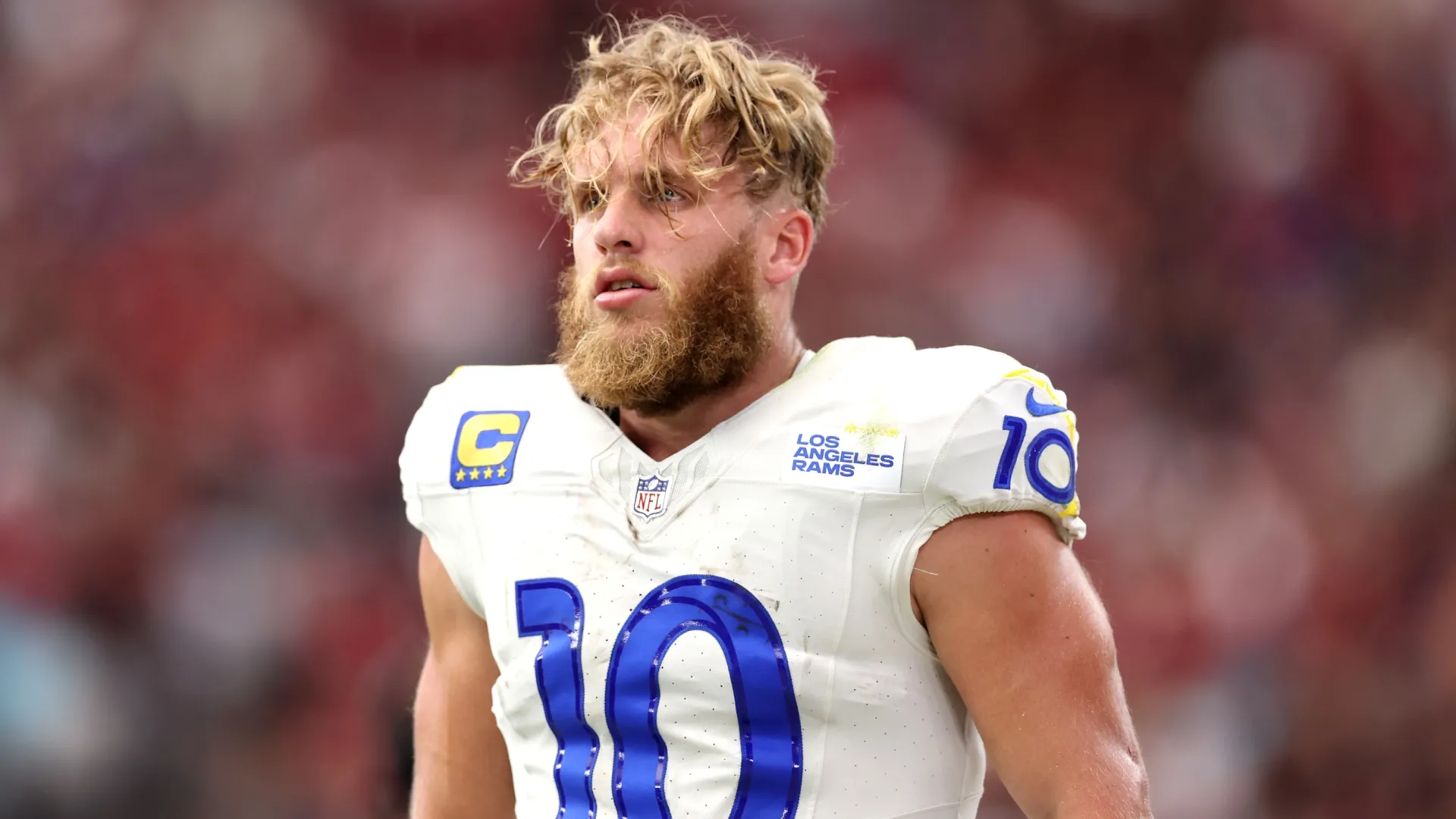
Cooper Kupp (Source: Christian Petersen/Getty Images)
Cooper Kupp‘s 2021 campaign not only placed him second historically in single-season yards but redefined the absolute dominance of a wide receiver in the modern NFL. His performance was a masterclass in route precision, instant chemistry with his new quarterback, Matthew Stafford, and relentless work ethic.
He joined the elite list by recording the receiver Triple Crown, leading the league in receptions (145), yards (1,947), and receiving touchdowns (16). But the story doesn’t end with the regular-season curtain call. His achievement is distinguished by being part of a Super Bowl winning run.
If we consider the yards accumulated during the postseason that culminated in the Rams’ Super Bowl LVI title, he set an even more staggering record: 2,425 combined yards from the regular season and playoffs, crowning his year with the Super Bowl Most Valuable Player award. His season wasn’t just an individual feat; it was the statistical engine that drove team glory.
Julio Jones | Rec Yds: 1,871
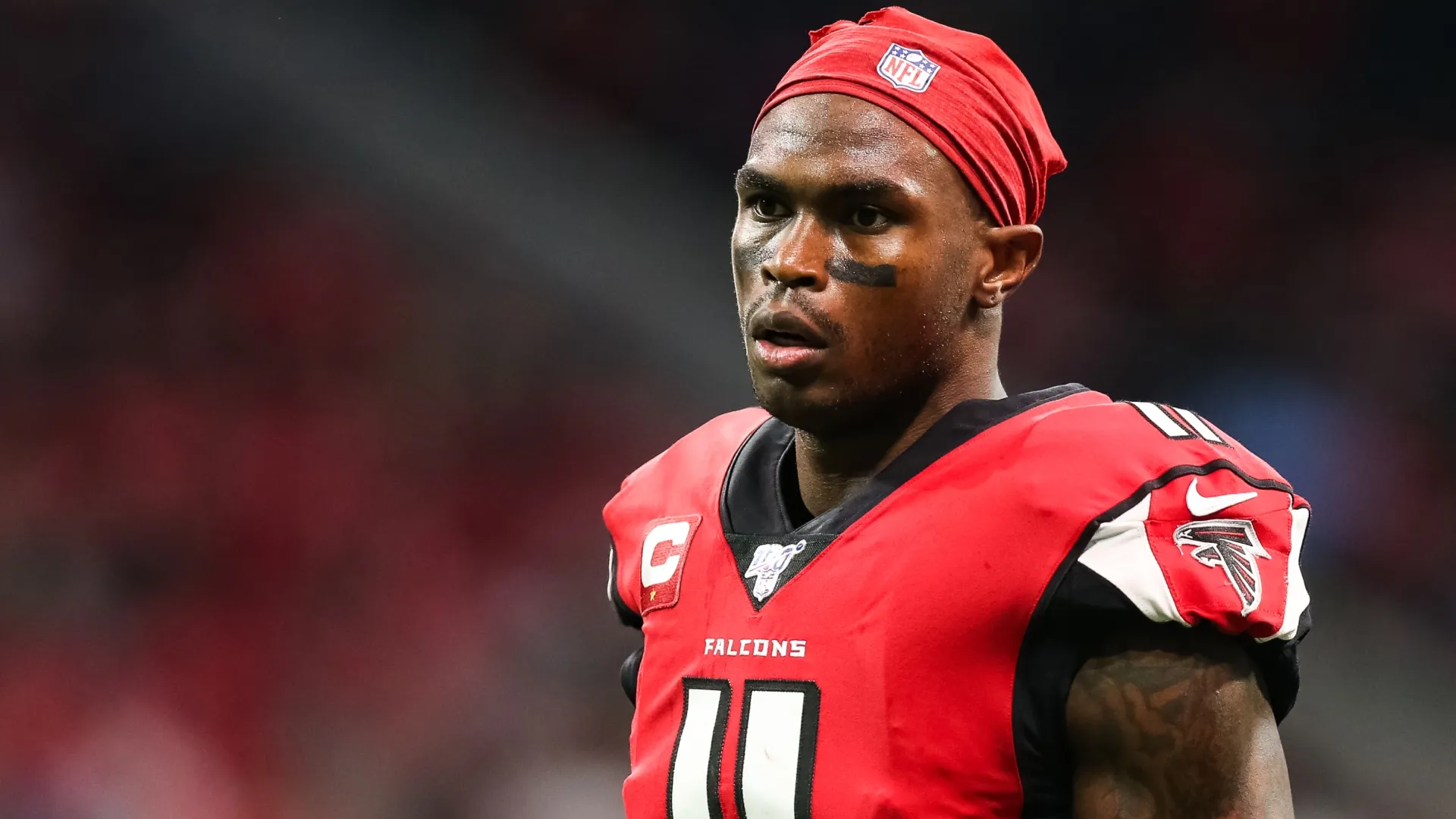
Julio Jones (Source: Carmen Mandato/Getty Images)
If you are looking for the definition of a “generational athlete” at the wide receiver position, Julio Jones‘ name must appear early. His 2015 season is a testament to consistency and athletic power that permanently installed him in the pantheon of the greats. He amassed 1,871 receiving yards, the third-highest total in league history.
That year, he was not just productive, but historically fast in his start, recording the most receptions by any player through the first three games of an NFL season. With an imposing height and elite speed, he made deep plays look routine, while his ability to break tackles made him a threat after the catch.
The Falcons’ offense at the time, under the coordination of Kyle Shanahan, exploited his versatility, moving him around the formation to create constant mismatches. He didn’t rely on luck; he relied on his ability to be virtually unstoppable in every sector of the field.
Jerry Rice | Rec Yds: 1,848
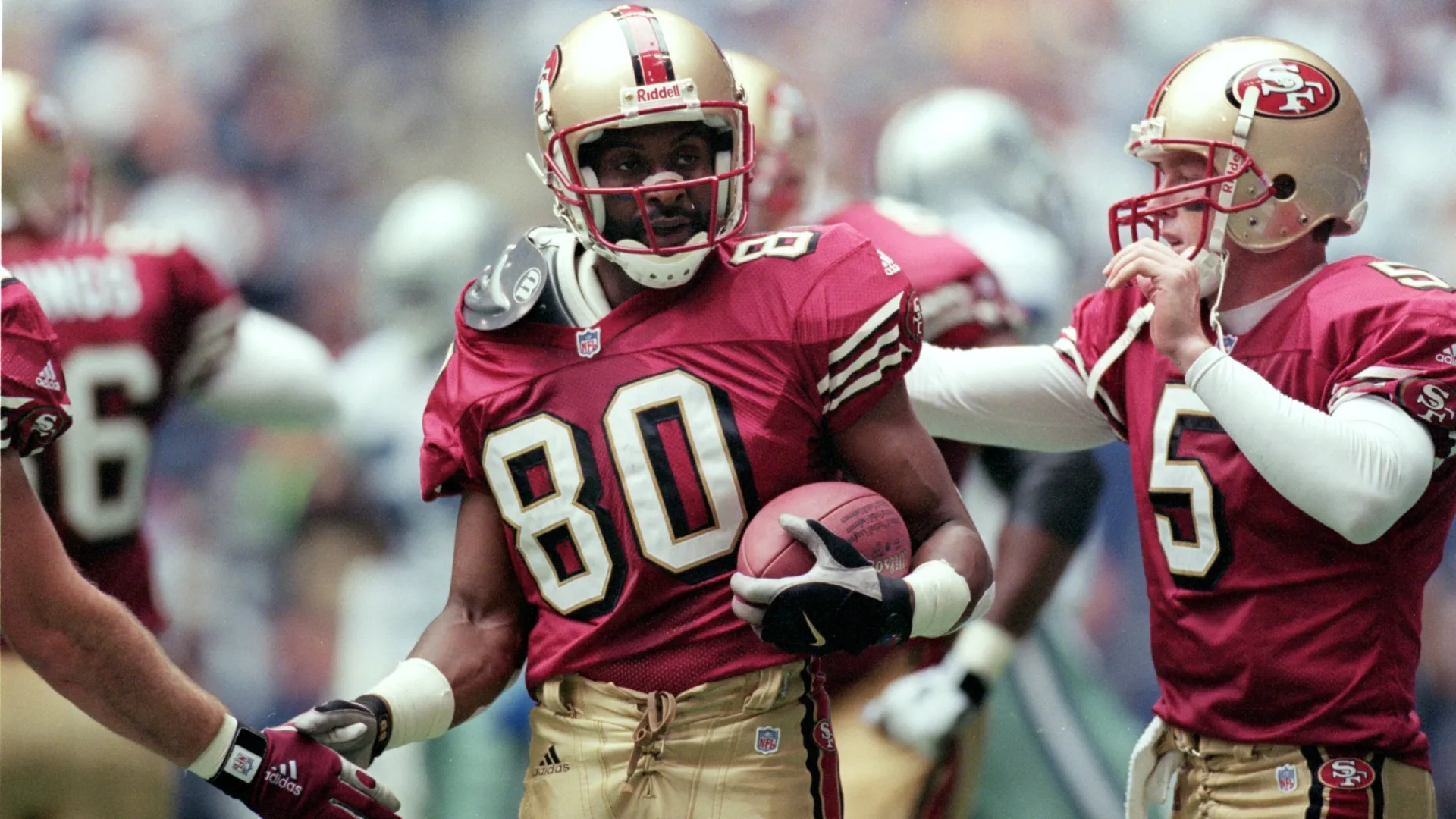
Jerry Rice (Source: Ronald Martinez /Allsport)
To talk about Jerry Rice is to refer to the greatest receiver in NFL history, and his 1995 season is not just a record but a testament to his dominance in a different era. That year, he reached 1,848 receiving yards, a mark that stood as the league’s gold standard for 17 years until it was surpassed by Calvin Johnson.
His 1995 feat is remarkable because it occurred before the full relaxation of rules favoring aerial offenses in the 21st century. His performance was a study in perfection: 122 receptions and 15 touchdowns.
At 33, an age when many receivers begin to decline, he demonstrated a dedication to training and route precision that kept him at the very top. It is a reminder that flawless technique, combined with a legendary work ethic, can transcend any era of football.
Antonio Brown | Rec Yds: 1,834

Antonio Brown (Source: Justin K. Aller/Getty Images)
The peak of Antonio Brown‘s career is undeniable, and his 2015 season stood as the pinnacle of his technical brilliance. Throughout the campaign, he proved to be one of the most difficult receivers to cover in the league, combining agility, speed, and a supernatural ability to haul in contested catches. His total of 1,834 receiving yards places him firmly in the all-time NFL Top 5.
Interestingly, this achievement shares the year 2015 with Julio Jones’ record season, speaking to a particularly prolific year for receivers overall. What distinguished him was his ability to accumulate yards after the catch and his constant use within head coach Mike Tomlin’s scheme and offensive coordinator Todd Haley’s system.
In a memorable game that year, he showed his explosive potential by recording 284 yards in a single contest, one of the highest single-game totals in league history. His record is not just a number, but a reflection of a four-season stretch with at least 100 receptions and 1,280 yards, solidifying his brief but spectacular period as the most productive receiver in the league.
Justin Jefferson | Rec Yds: 1,809
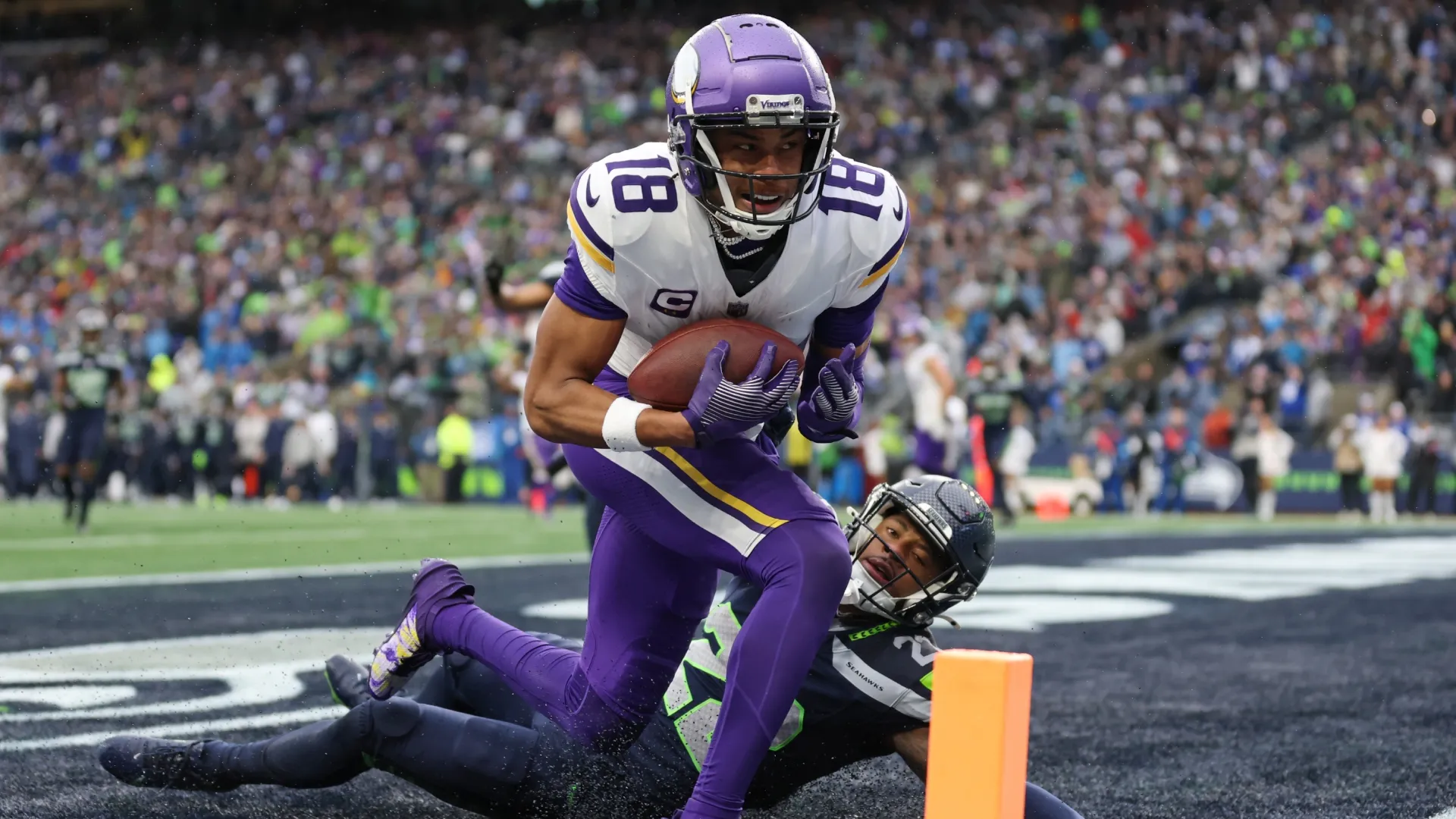
Justin Jefferson (Source: Steph Chambers/Getty Images)
In the landscape of modern NFL receiving, Justin Jefferson‘s 2022 season was an extraordinary demonstration of a young talent peaking early. At just 23 years old, he became the youngest player in history to lead the league in both receptions and receiving yards, a feat that earned him the coveted Offensive Player of the Year award.
Amassing 1,809 receiving yards, he vaulted himself directly into the top echelon of single-season performances, proving his worth as an elite playmaker immediately after entering the league.
What makes his statistical explosion so compelling is his route-running versatility coupled with an innate ability to secure contested catches. He was the focal point of the Vikings’ revitalized passing attack under a new head coach, frequently moving from the slot to the outside to exploit mismatches.
His consistency, averaging 106.4 yards per game, showcased not just a highlight reel of spectacular grabs but a foundational dominance that sustained itself over the new 17-game format. His season solidified him as a face of the next generation of receivers, delivering historic production at an age when many are just beginning to find their footing.
Tyreek Hill | Rec Yds: 1,799
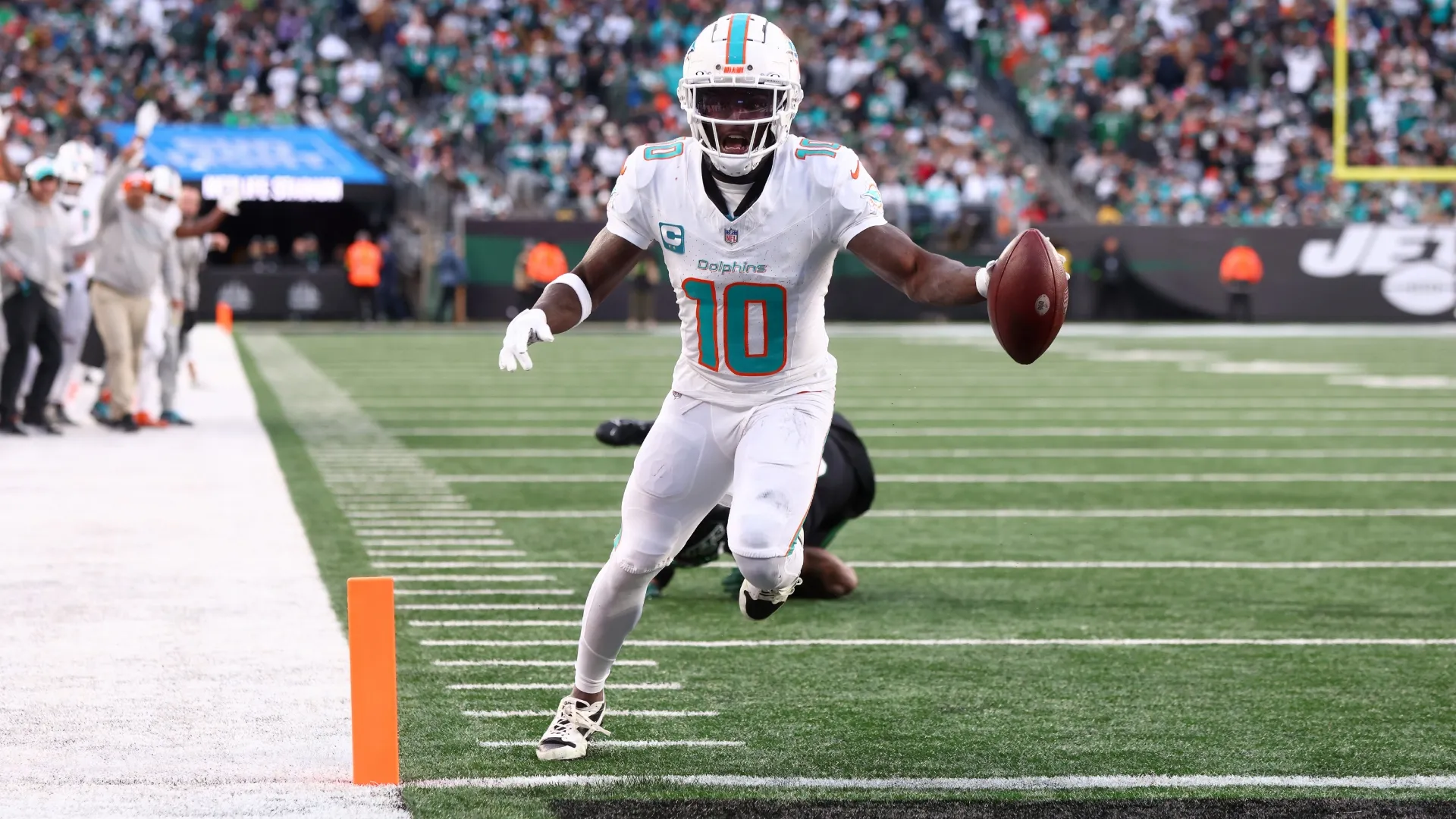
Tyreek Hill (Source: Mike Stobe/Getty Images)
The 2023 campaign for Tyreek Hill was a heart-stopping exhibition of speed and deep-ball artistry that left defensive coordinators grasping at air. Known simply as “The Cheetah”, his 1,799 receiving yards—a personal best and the seventh-highest total in history—were accumulated through a relentless attack that stretched the field to its breaking point.
He openly pursued the 2,000-yard benchmark, a number previously considered mythical, using his unparalleled speed to create massive separation. His 112.4 average receiving yards per game speaks volumes about his explosive impact. Playing in Mike McDaniel’s dynamic offense, he became the league’s preeminent deep threat, but his season wasn’t defined solely by the long ball.
It was a potent mix of quick slants, screens turned into 50-yard gains, and deep post routes, demonstrating that his blazing speed is perfectly complemented by exceptional hands and field vision. His season was a thrilling, high-wire act of offense that pushed the Miami Dolphins to be one of the NFL’s most feared scoring machines.
Isaac Bruce | Rec Yds: 1,781
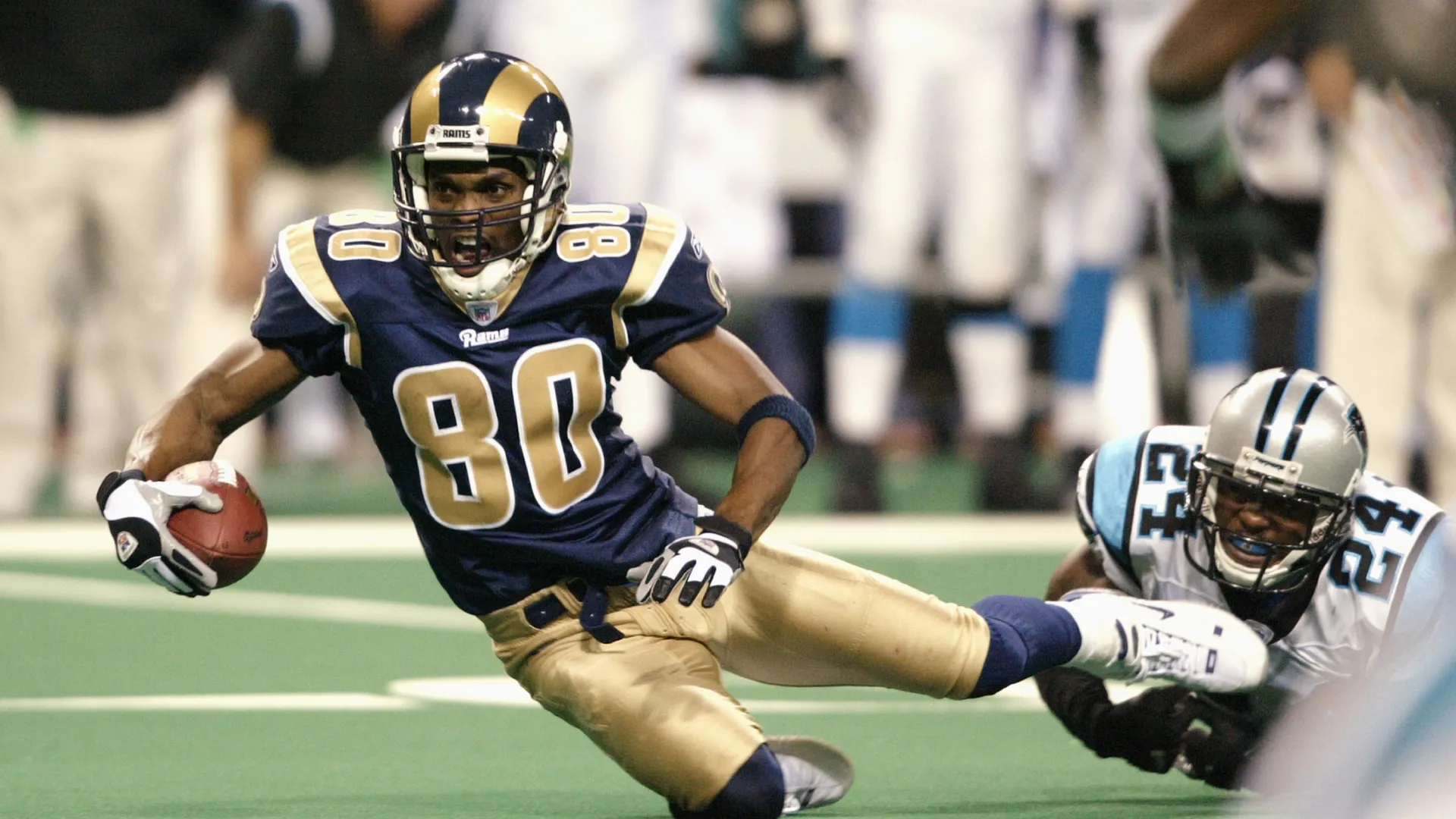
Isaac Bruce (Source: Doug Benc/Getty Images)
Before the “Greatest Show on Turf” era in St. Louis, there was the 1995 season of Isaac Bruce. In only his second year in the league, the Hall of Famer delivered 1,781 receiving yards, a figure that, at the time, was the fifth-highest in NFL history and established a benchmark that remains the Rams’ single-season record.
His performance that year was less about bombast and more about silken route running and smooth precision. He became the first player in NFL history to record three consecutive games with over 170 receiving yards, showcasing a rare consistency and dominance.
His ability to change direction and create space was unmatched, allowing him to thrive even on a team that, at the time, had a less consistent offensive identity compared to the Super Bowl years that would follow. His 1995 season is a testament to the power of pure receiving talent to elevate an offense, a foundational pillar laid before the team’s later championship glory.
CeeDee Lamb | Rec Yds: 1,749
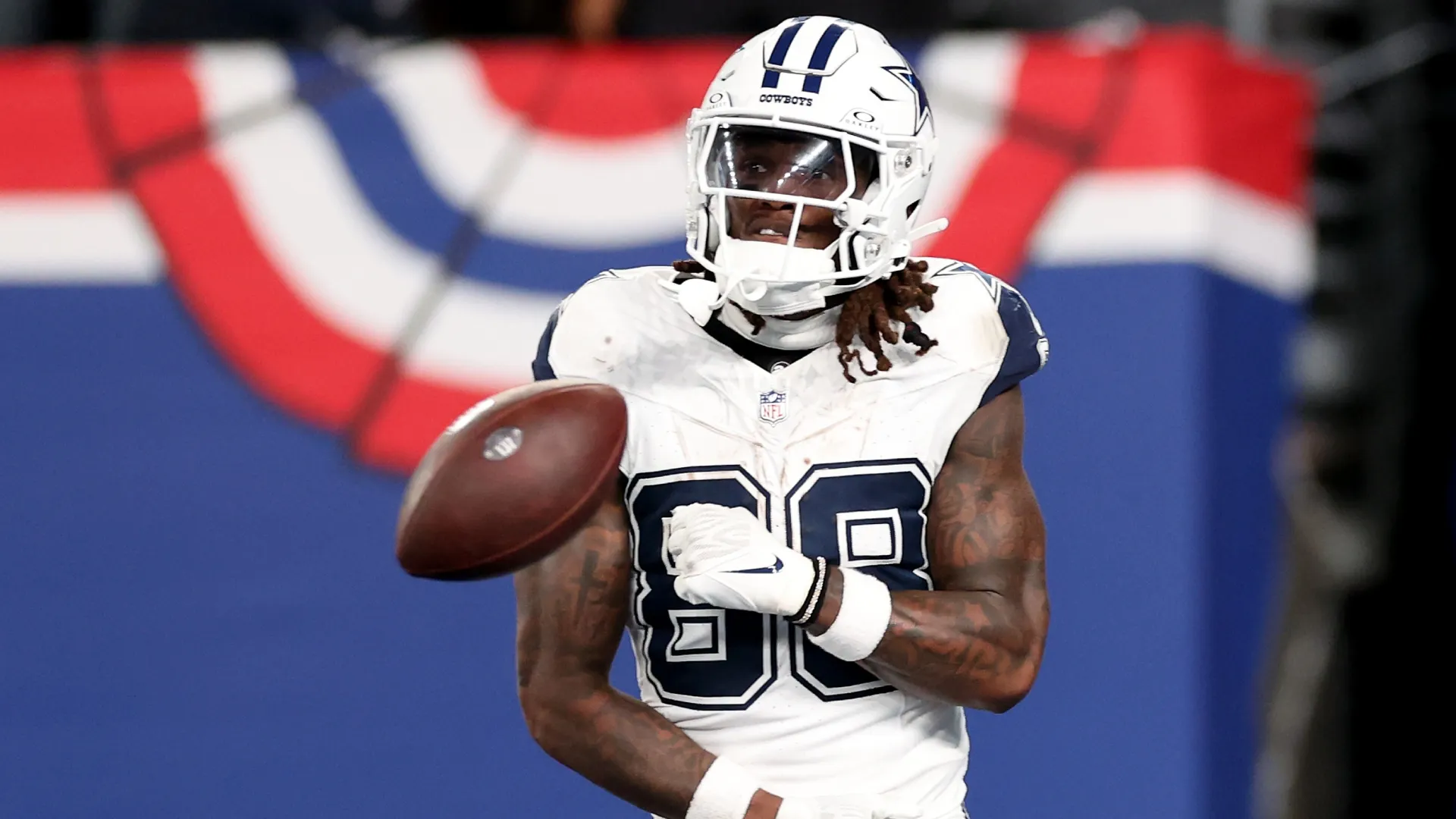
CeeDee Lamb (Source: Luke Hales/Getty Images)
CeeDee Lamb‘s 2023 season was a spectacular leap into true superstar territory, culminating in an NFC-leading 1,749 receiving yards, placing him squarely among the top performers in league history. This campaign was characterized by his versatility and a historic workload, seeing him lead the league in receptions with 135.
He transitioned from a promising star to the unequivocal centerpiece of the Dallas offense. His production wasn’t relegated to one area; he dominated in short-area quickness, extended drives with tough catches over the middle, and showcased breakaway speed on the perimeter.
Crucially, his production became the motor of the Cowboys’ high-flying, up-tempo offense. The fact that he set the all-time franchise record for receptions and yards in a season underscores his pivotal role, stepping into the legacy left by Hall of Fame receivers in Dallas and redefining the peak of productivity for the organization.
Charley Hennigan | Rec Yds: 1,746

Charley Hennigan (Source: Tennessee Titans)
The story of Charley Hennigan‘s 1961 season is one of historical perspective, showcasing dominance in a nascent league era. Playing for the Houston Oilers of the American Football League, he amassed an astonishing 1,746 receiving yards—a professional football single-season record at the time that stood for 34 years.
This performance is particularly remarkable because it occurred during a 14-game season, giving him the highest yardage-per-game average on this entire list. Hennigan’s season was a statistical torrent that included three games with over 200 receiving yards, a professional football record that still stands today.
Playing alongside quarterback George Blanda, he was a revolutionary force whose output in the early 1960s was light years ahead of his contemporaries, a true pioneer who defined the offensive capabilities of the new American Football League.
Michael Thomas | Rec Yds: 1,725
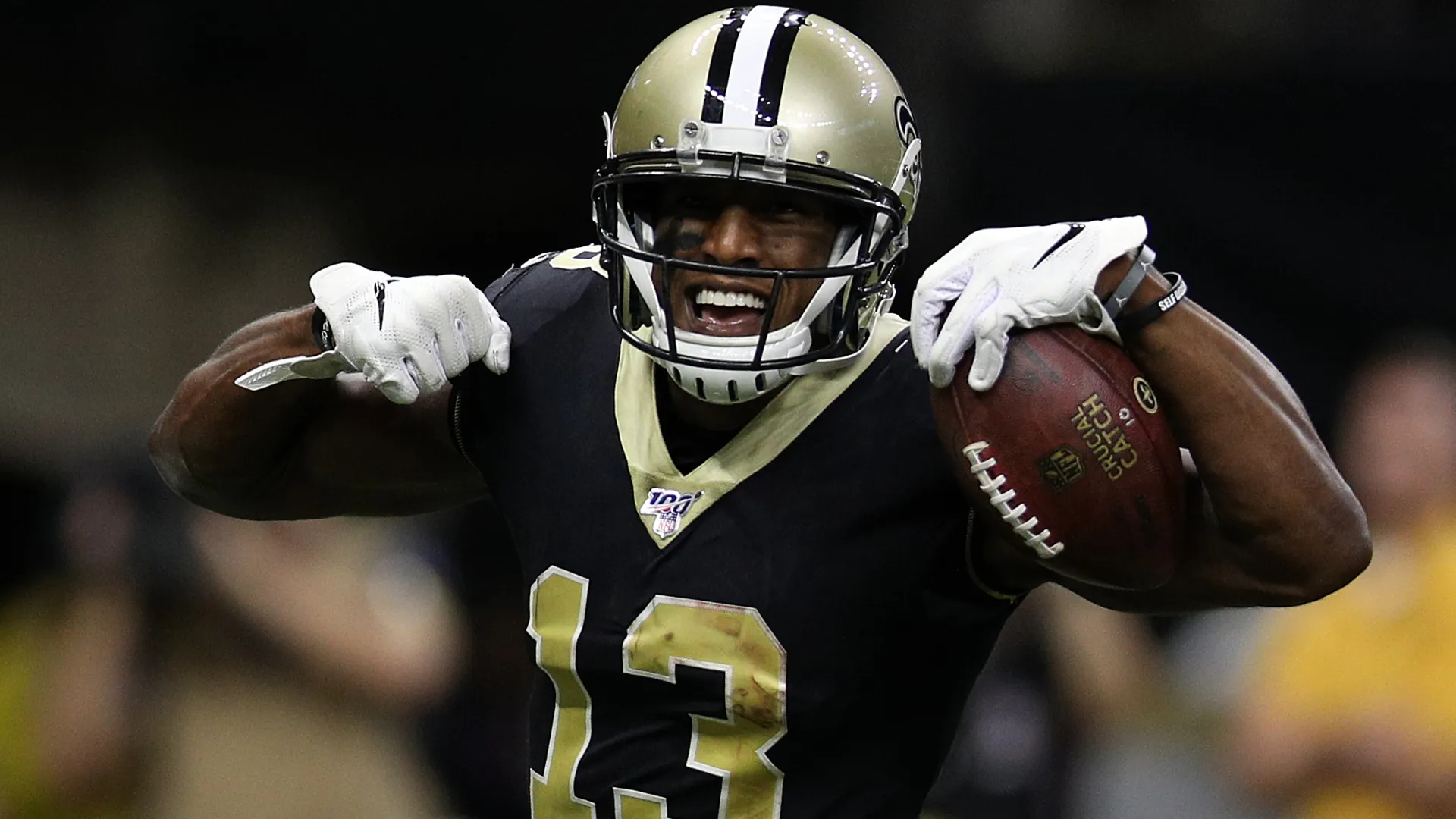
Michael Thomas (Source: Chris Graythen/Getty Images)
When chronicling single-season dominance, Michael Thomas‘ 2019 campaign is defined by one primary metric: volume. While his 1,725 receiving yards are elite, his season is most famous for setting the all-time NFL record for receptions with 149, obliterating the previous mark.
This unparalleled consistency and ability to get open on nearly every down earned him the 2019 Offensive Player of the Year award. He was an absolute tyrant in the short-to-intermediate game, earning the moniker “Slant Boy” for his perfection of the quick, timing-based routes that quarterback Drew Brees executed with mastery.
His yardage total, while slightly lower than the list’s leaders, came with a nearly 80% catch rate on a colossal 185 targets, illustrating an almost machine-like efficiency. His season was less about spectacular deep plays and more about an unyielding, punishing accumulation of first downs and yards that choked opposing defenses drive after drive.
Marvin Harrison | Rec Yds: 1,722
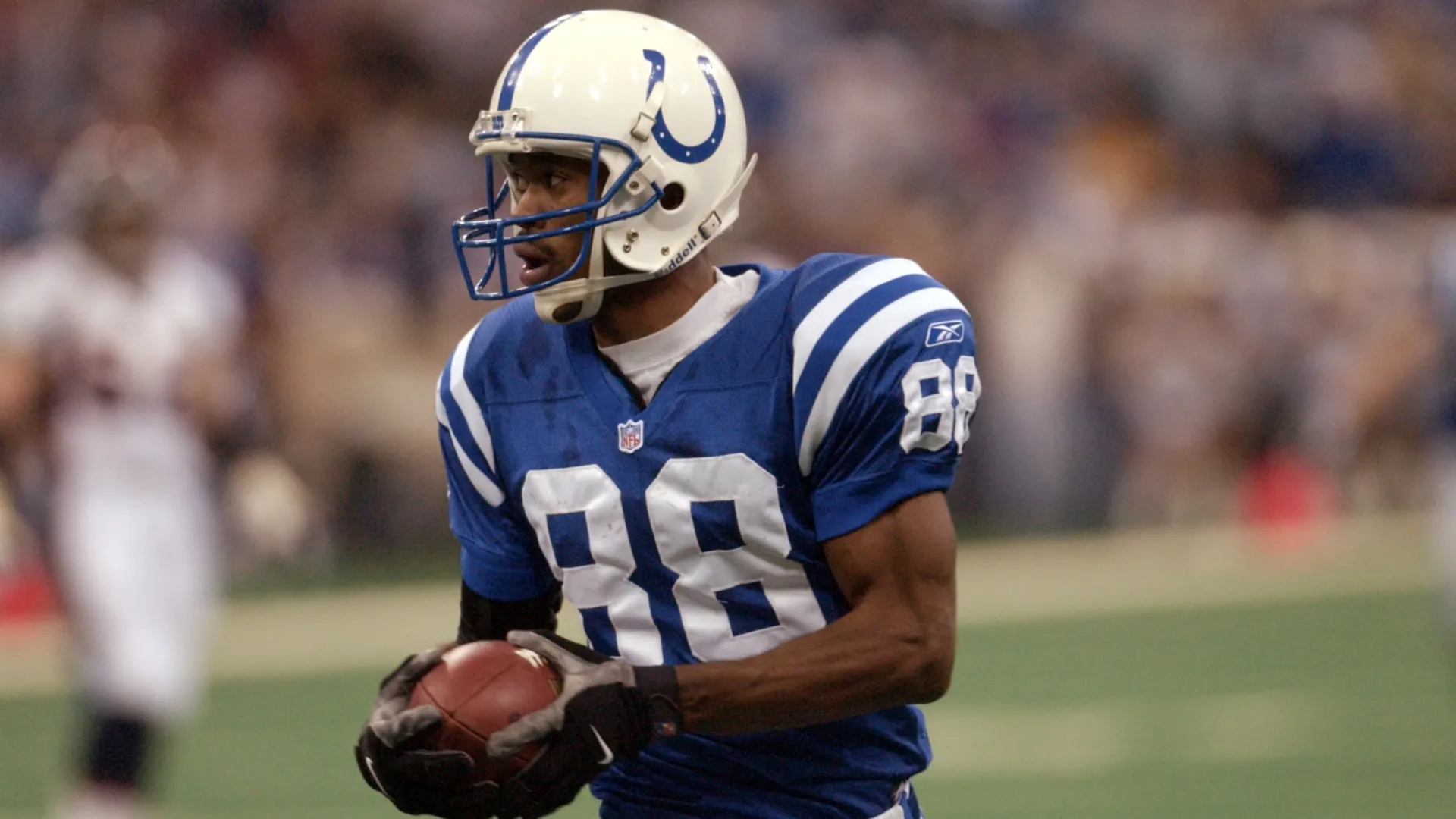
Marvin Harrison (Source: Ron Hoskins/Getty Images)
If efficiency could be measured in yards, Marvin Harrison would be its standard unit. His 2002 season was highlighted not just by the 1,722 receiving yards he accumulated, but by the level of precision and volume he demonstrated, setting a record that, for many, is nearly untouchable: 143 receptions.
Although this catch record was later surpassed, his achievement in a pre-extreme passing era underscores his technical dominance. Harrison, known for his quiet focus and relentless work ethic, was the perfect partner for Peyton Manning in one of the most historic offenses in the NFL.
His game wasn’t based on pure speed or brute strength, but on an absolute mastery of route running, making defensive backs look like they were always reacting a step too late.
His 2002 season is a testament to the perfection in the art of receiving, with an uncanny ability to find the holes in the defense across every sector of the field and a reliability that Manning utilized on almost every crucial down.
Tyreek Hill | Rec Yds: 1,710
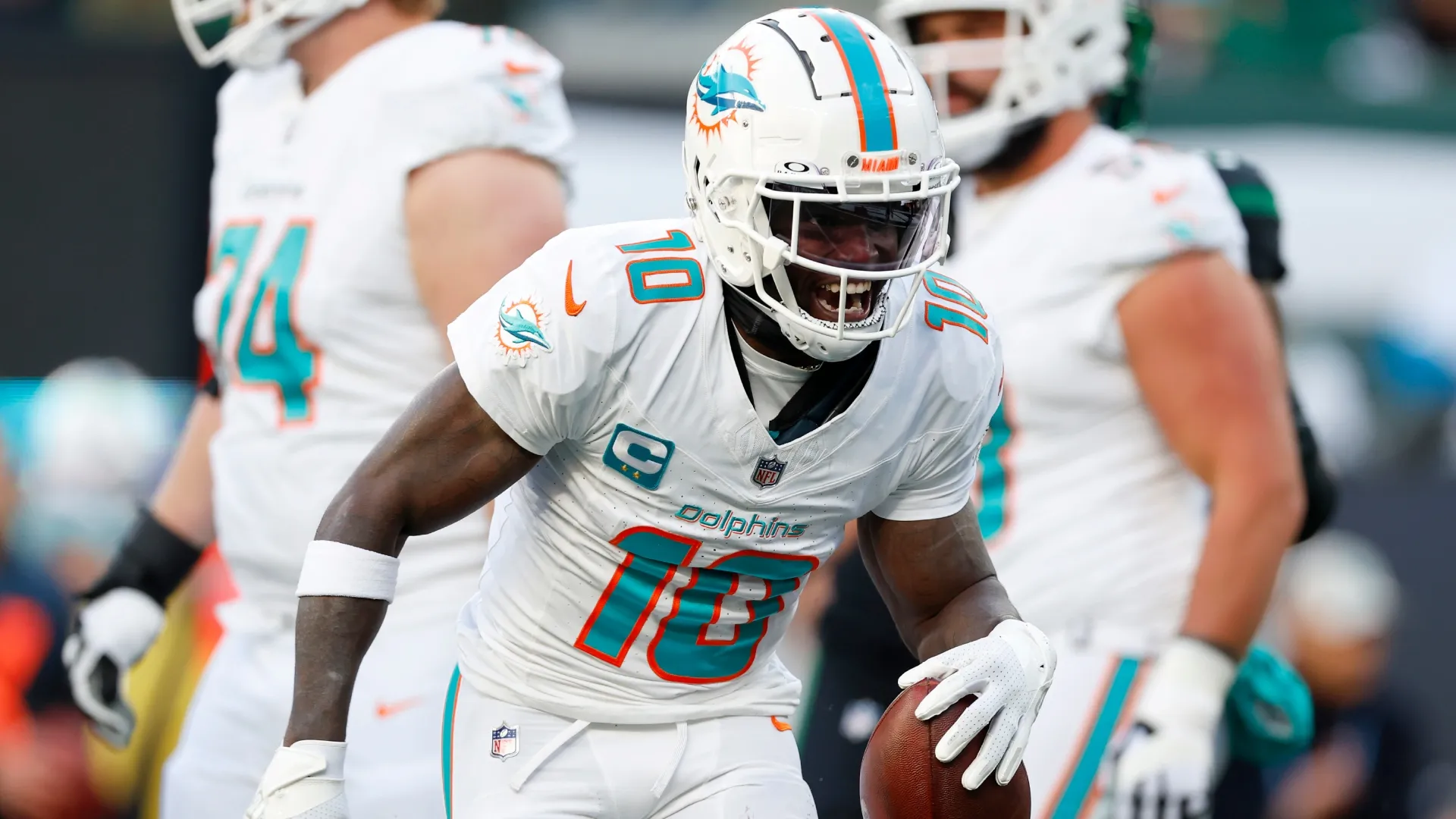
Tyreek Hill (Source: Rich Schultz/Getty Images)
Tyreek Hill‘s 2023 onslaught was not a simple exhibition; it was a historic pursuit of the 2,000-yard record that kept the league captivated until the final game. Before that, “The Cheetah” reached 1,710 receiving yards in 2022, his second-highest total.
His success that season lay in his unprecedented use as a pure speed weapon. The Mike McDaniel offense exploited his ability to create separation not only on deep plays but by turning short passes into explosive medium- and long-yardage gains.
Beyond the raw numbers, his campaign was a playmaking landmark, where every touch of the ball felt like a touchdown threat, proving that speed combined with sure hands can be the most destructive formula in modern football.
Ja’Marr Chase | Rec Yds: 1,708
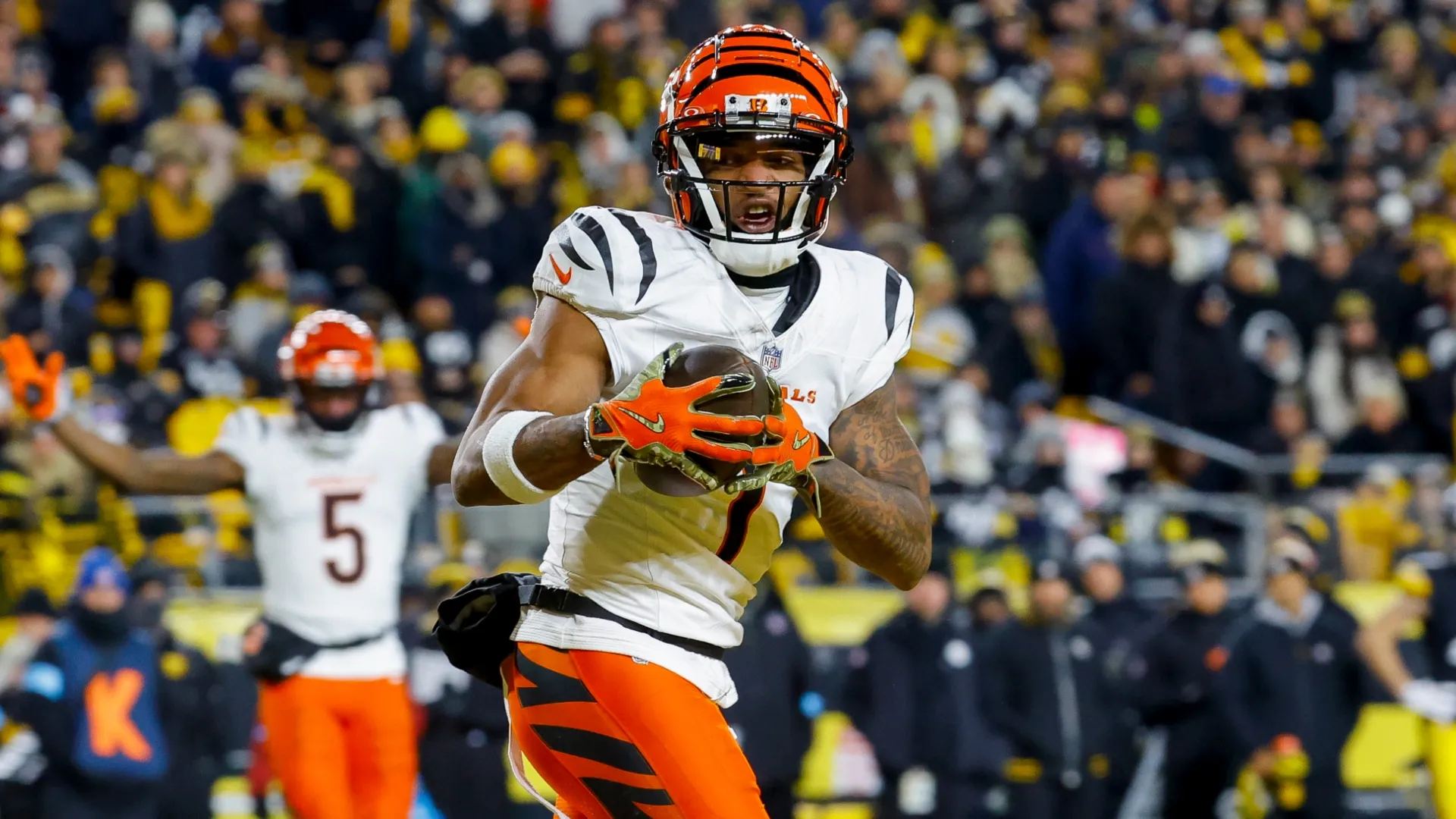
Ja’Marr Chase (Source: Justin K. Aller/Getty Images)
Although Ja’Marr Chase is not yet featured in the all-time Top 10 for single-season yards, his impact on the league with his 1,455 receiving yards in 2021 is worthy of mention in any article about aerial dominance.
His rookie season was not just spectacular, but it set a new NFL record for the most receiving yards by a rookie, breaking Bill Groman’s previous 1,400-yard mark from 1960. He reunited with his college quarterback, Joe Burrow, and the result was instant chemistry that set defenses ablaze.
What distinguishes this performance is the explosive nature of his yardage; he had a remarkable average of 18.0 yards per reception, meaning it wasn’t just about volume, but about big, decisive, game-changing plays.
His season was the catalyst that propelled the Bengals from a losing team to Super Bowl contenders, demonstrating that explosiveness on the offensive side is an invaluable currency.
Antonio Brown | Rec Yds: 1,698

Antonio Brown (Source: Chris Graythen/Getty Images)
Antonio Brown was, at his best, the personification of an all-purpose receiver without weaknesses. His 2015 season, with 1,834 receiving yards, was not a fluke, but the peak of an unprecedented six-year run of elite production. In 2014, he predicted his peak performance with 1,698 receiving yards.
He distinguished himself not just by the yards, but by his mechanical consistency and post-catch prowess. His ability to catch the ball at the highest point, his footwork to manipulate defensive backs, and his relentless motor made him essentially undefendable.
In a field full of giants and sprinters, he utilized an unmatched combination of elite technique and fierce competitive desire to dominate the game, racking up yards at a pace that kept him among the league leaders year after year. This campaign remains a benchmark for technical excellence at the wide receiver position.
| Player | Team | Season | Receiving yards |
| Calvin Johnson | Detroit Lions | 2012 | 1,964 |
| Cooper Kupp | Los Angeles Rams | 2021 | 1,947 |
| Julio Jones | Atlanta Falcons | 2015 | 1,871 |
| Jerry Rice | San Francisco 49ers | 1995 | 1,848 |
| Antonio Brown | Pittsburgh Steelers | 2015 | 1,834 |
| Justin Jefferson | Minnesota Vikings | 2022 | 1,809 |
| Tyreek Hill | Miami Dolphins | 2023 | 1,799 |
| Isaac Bruce | St. Louis Rams | 1995 | 1,781 |
| CeeDee Lamb | Dallas Cowboys | 2023 | 1,749 |
| Charley Hennigan | Houston Oilers | 1961 | 1,746 |
| Michael Thomas | New Orleans Saints | 2019 | 1,725 |
| Marvin Harrison | Indianapolis Colts | 2002 | 1,722 |
| Tyreek Hill | Miami Dolphins | 2022 | 1,710 |
| Ja’Marr Chase | Cincinnati Bengals | 2024 | 1,708 |
| Antonio Brown | Pittsburgh Steelers | 2014 | 1,698 |
| Torry Holt | St. Louis Rams | 2003 | 1,696 |
| Herman Moore | Detroit Lions | 1995 | 1,686 |
| Calvin Johnson | Detroit Lions | 2011 | 1,681 |
| Julio Jones | Atlanta Falcons | 2018 | 1,677 |
| Marvin Harrison | Indianapolis Colts | 1999 | 1,663 |
| Josh Gordon | Cleveland Browns | 2013 | 1,646 |
| Jimmy Smith | Jacksonville Jaguars | 1999 | 1,636 |
| Torry Holt | St. Louis Rams | 2000 | 1,635 |
| Randy Moss | Minnesota Vikings | 2003 | 1,632 |
| Demaryius Thomas | Denver Broncos | 2014 | 1,619 |