
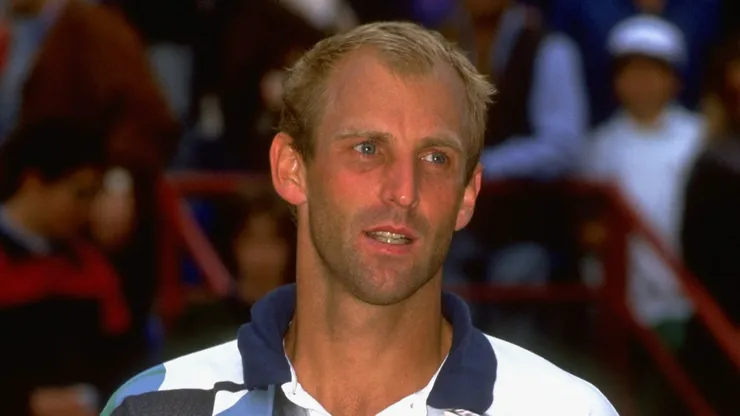
Tennis is filled with stories of resilience, and one of the most memorable is that of Austrian star Thomas Muster. He won the 1995 French Open and earned the title of ‘King of Clay’ long before Rafael Nadal emerged on the ATP Tour. However, before his best season, a devastating accident nearly ended his career.
Muster turned professional in 1985 and quickly climbed the rankings. By 1988, he had reached six top-level tournament finals, winning four titles in Boston, Bordeaux, Prague, and Bari, finishing the year ranked No. 16 in the world.
The following year, he became the first Austrian to reach the Australian Open semifinals, where he lost to eventual champion Ivan Lendl but broke into the Top 10. At the Miami Open, he was in the midst of an impressive run, defeating Yannick Noah in a grueling semifinal. However, just hours after his victory, an accident changed the trajectory of his career.
A career-threatening injury
On the night of March 31, 1989, while retrieving something from the trunk of his car, Muster was struck by a parked vehicle that had been hit by another car. The impact severely damaged the ligaments in his left knee, forcing him to withdraw from the Miami Open final. He was flown to Vienna for surgery, where doctors warned that he might never walk again.
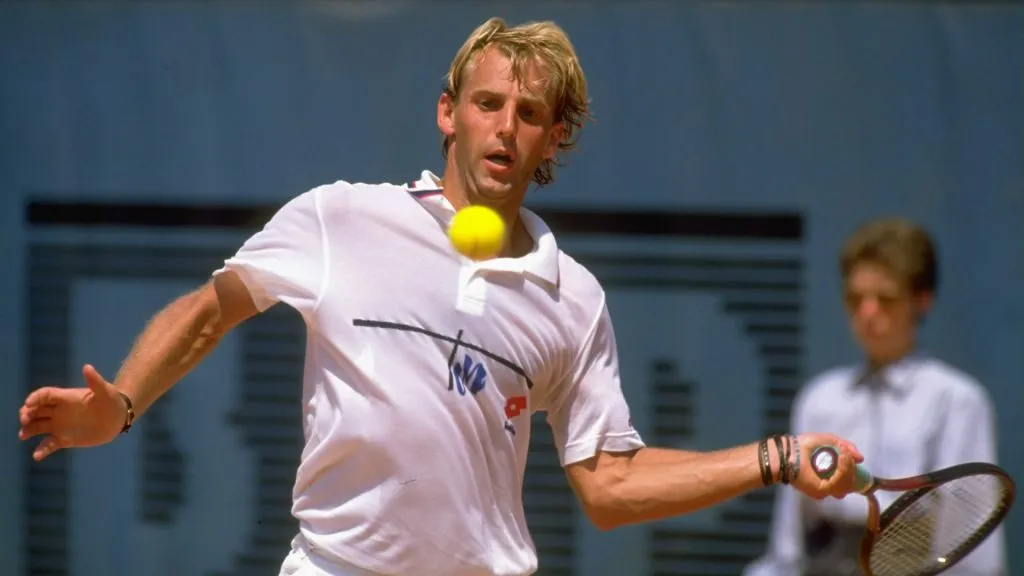
Thomas Muster in 1990 (Getty Images)
Determined to return, Muster and his coach, Ronnie Leitgeb, devised an innovative training method. According to a 1995 Sports Illustrated article, they designed a chair that allowed Muster to practice hitting balls while still in a cast.
“The most remarkable day I ever had with Thomas was when I first put him in that chair on the court,” Leitgeb told the outlet. “Two weeks earlier, he thought he’d never run again. But when he started hitting balls, I saw the fire in his eyes. From that moment, I knew he would come back.”
The comeback and Italian Open triumph
Muster returned to competitive tennis in September 1989. Ahead of the 1990 clay season, he won two Challenger titles in Africa before reaching the finals in Monte Carlo and Munich. He completed his comeback by winning the Italian Open, defeating Andres Gomez in the semifinals and Andrei Chesnokov in the final.
“When you stop playing for so long, you wonder if you’ll ever do it again,” he said of the victory, according to Tennis Channel. “Winning this tournament was satisfying, but my biggest victory was overcoming the injury.”
His French Open title
Muster arrived at the 1995 Roland Garros with a 28-0 record on clay, seeking redemption five years after falling in the semifinals to eventual champion Gomez. He advanced to the quarterfinals with ease, dropping just one set, but faced a tough challenge from 19-year-old Albert Costa, rallying from two sets to one down to secure his return to the last four.
After cruising past Yevgeny Kafelnikov in straight sets in the semifinals, Muster faced Michael Chang, the 1989 champion. In his first and only Grand Slam final, he claimed the Coupe des Mousquetaires with a commanding 7-5, 6-2, 6-4 victory.
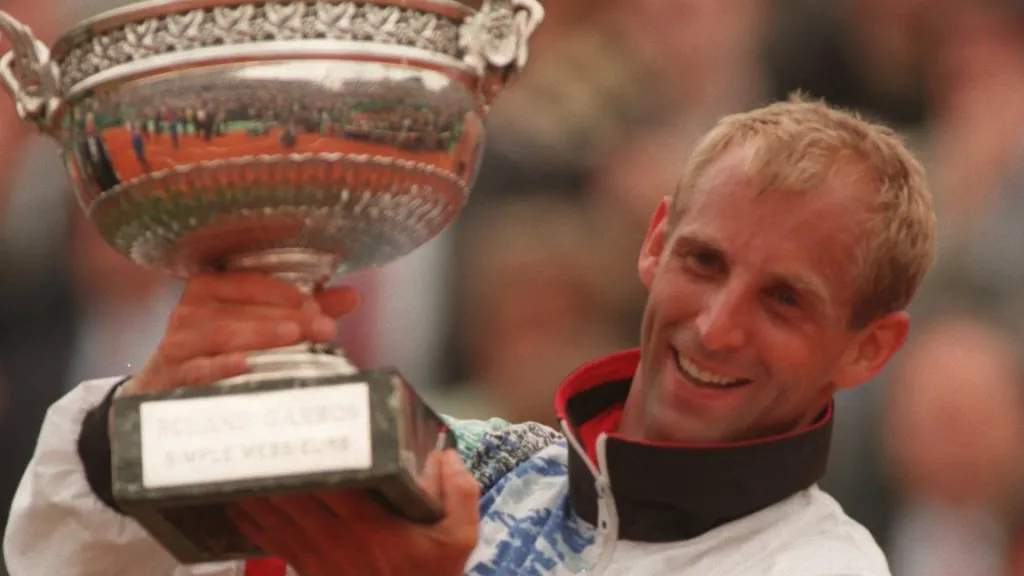
Thomas Muster won the 1995 French Open (Getty Images)
“To win a Slam is very special,” he told the ATP Tour official website in 2020. “That rock that falls off your shoulders when you win match point… I enjoyed that moment. It was very emotional.”
In 1997, Muster reached the Australian Open semifinal again but lost to eventual champion Pete Sampras. He also made three U.S. Open quarterfinal appearances in four years, reaching the last eight in New York in 1993, 1994, and 1996.
World No. 1 ranking
Muster overtook Andre Agassi to reach World No. 1 in the ATP Rankings for the first time on February 12, 1996. His rise was largely built on his dominance on clay in 1995, when he captured the Roland Garros trophy and 10 additional clay-court titles.
“My No. 1 in 1996 was based on my 12 tournament wins in 1995… I don’t know how many people can say that, measurably, they have been No. 1 at something, the best in the world. I loved that moment,” Muster told the ATP Tour Official Website.
He held the top ranking for just one week before Sampras reclaimed it. After three weeks at No. 2, he returned to No. 1 following his fourth straight title in Mexico City, maintaining his position for five more weeks.

She is a former World No. 1, was banned for doping and slammed the ITIA for ‘destroying her’
His best campaign: 1995
During his best season on the ATP Tour in 1995, Muster captured 12 trophies, a record that he shares with Roger Federer since 2006. He won 65 of 67 clay-court matches, including a 40-match win streak, the longest since Björn Borg’s 46 consecutive clay victories between 1977 and 1979. Nadal would later surpass both with his 81-match clay-court winning streak from 2005 to 2007, the longest surface-specific streak in men’s tennis history.
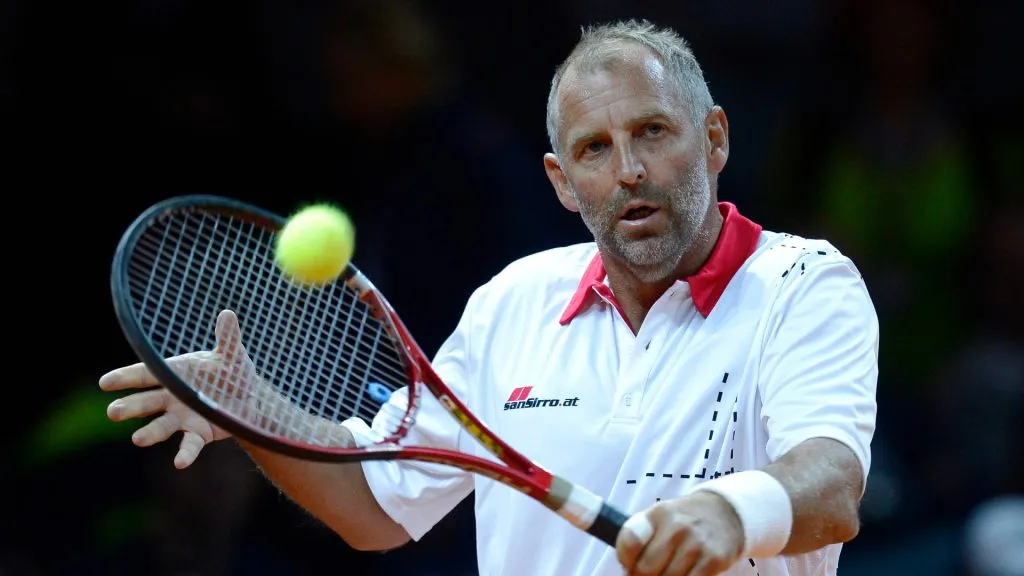
Thomas Muster in 2015 during an exhibition match against Andre Agassi (Daniel Kopatsch/Getty Images)
In 1999, Muster retired from professional tennis and later worked as a coach and captain of the Austrian Davis Cup team in 2003. In 2010, he made a brief comeback before retiring for good in 2011, playing his final match against Dominic Thiem in Vienna.