
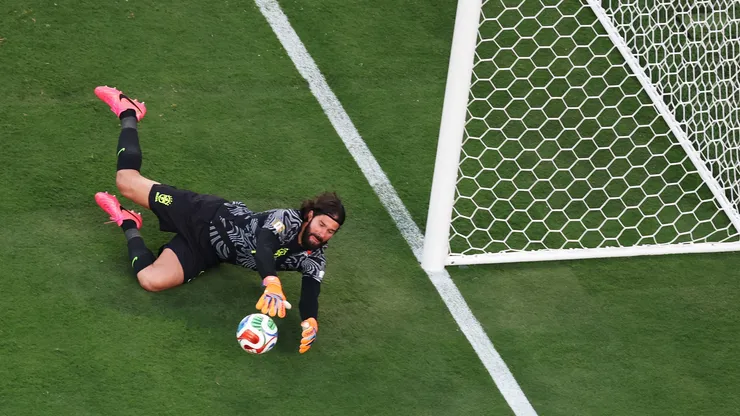
A soccer field has some obvious differences from an American football field, but they are actually more similar than you might think. For instance, an NFL field is only 5 yards longer than the pitches being used for the 2026 World Cup.
A football field measures 120 yards long (360 feet), which is the standard for both the NFL and college level. Interestingly, FIFA didn’t need to stretch these existing fields for length, since a standard international soccer pitch is 115 yards long (345 feet), they actually had to trim them down a bit.
Where the two sports really diverge is width. An American football field is much more compact, coming in at just 53.3 yards (160 feet) wide. For the World Cup, fields had to be widened by nearly 20 yards to accommodate the 48-team tournament and give players enough room to operate.
Football field vs. soccer field dimensions
While they might look comparable in size on TV, the numbers tell a different story. A soccer pitch covers a significantly larger total area, 1.76 acres, which is roughly 33.33% larger than a standard football field.
| Feature | American Football Field | Professional Soccer Field (FIFA International) |
|---|---|---|
| Length | 120 yards (360 feet) | 115 yards (345 feet) |
| Width | 53.3 yards (160 feet) | 74 yards (223 feet) |
| Total Area | 1.32 acres (57,600 sq ft) | 1.76 acres (76,928 sq ft) |
There are also elements outside the official playing boundaries that often get overlooked. For college football or the NFL, the 120-yard length already includes the two 10-yard end zones, which are strictly scoring areas rather than space for open downfield play.

Soccer pitches also feature “extra” space. There is usually about 31 feet of clearance along the sidelines. This gives players a safe runoff zone when running at full speed and provides ample room for throw-ins, which happen constantly throughout a match.
How FIFA modified NFL stadiums
To make these venues World Cup-ready, it wasn’t just a matter of repainting the lines. FIFA required several NFL stadiums to make major structural modifications to fit a soccer pitch, and some of these changes are permanent.
- MetLife Stadium (NY/NJ): To lock down the World Cup Final, the stadium permanently altered its lower bowl, removing roughly 1,740 seats in the corners just to widen the field perimeter.
- SoFi Stadium (Los Angeles): Engineers had to tear out and modify concrete corner sections, removing over 400 seats and altering the stadium’s lower-bowl geometry.
- AT&T Stadium (Dallas): Instead of cutting into the stands, Dallas raised the entire stadium floor by several feet. Because stadium bowls tilt outward as they rise, lifting the floor naturally created a wider surface area.
- Lincoln Financial Field (Philadelphia): Crew tore down entire sections of permanent concrete stands and replaced them with removable metal structures, allowing the stadium to fluidly switch between NFL and soccer widths in the future.
Beyond the structural overhauls, grounds crews had to put in a massive amount of work on the turf. Most NFL stadiums use artificial turf, but FIFA rules strictly mandate real, natural grass. This required massive engineering feats, especially in domed stadiums, to keep the grass alive and healthy throughout the tournament.