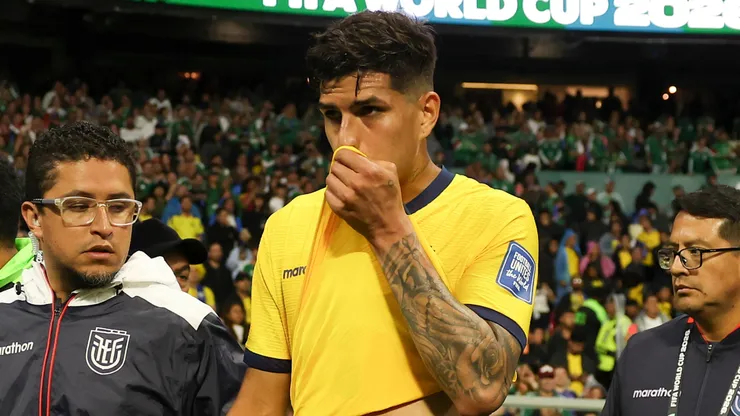
In the heat of the moment, Piero Hincapie of Ecuador lost sight of a new law in FIFA’s rulebook for the 2026 World Cup. After being outplayed by Mexico all night long in the Round of 32 showdown, Hincapie let his emotions get the best of him, and was sent off because of it.
Tempers flared and things got chippy as Mexico walked away with a 2-0 win over Ecuador and advanced to the Round of 16 in the 2026 World Cup. In the dying minutes, Mexico’s Santiago Gimenez engaged in a verbal exchange with Hincapie, who covered his mouth when saying something to the Mexican.
Whether he forgot about the new rule, which states that players will be automatically sent off if they cover their mouths while speaking with opponents or referees, or Hincapie simply didn’t care, referee Slavko Vincic couldn’t look the other way, and Ecuador finished the game with 10 players. Little did they care, though, as Ecuador have been eliminated from the 2026 World Cup.
“Prestianni rule”
This rule is making its debut at the 2026 World Cup. The IFAB (International Football Association Board) approved the amendment to the Laws of the Game to address discriminatory and inappropriate behavior. It was created after the infamous altercation between Gianluca Prestianni and Vinicius Jr. during a UEFA Champions League game between Benfica and Real Madrid.
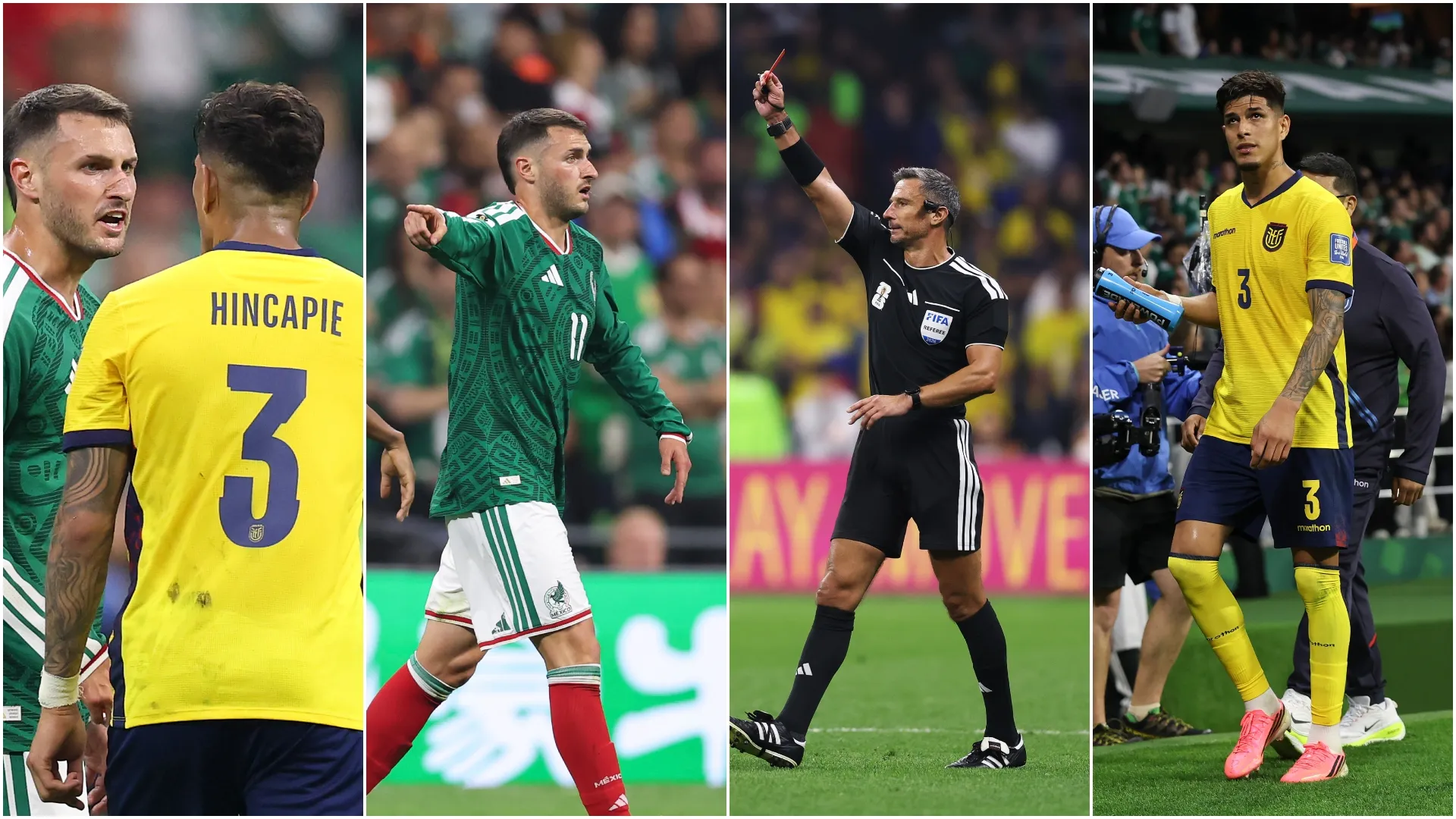
Full sequence: Hincapie covers his mouth, Gimenez makes referee aware, and defender is sent off.
After a long, heated argument, Prestianni covered his mouth with his shirt before saying something to Vinicius. Immediately, the Brazilian forward ran toward the match official and claimed the Argentinian had racially abused him. The racism protocol was signaled by the referee, and a complicated investigation followed. In the end, Prestianni was handed a six-game suspension by UEFA, as he admitted to using a homophobic insult, although he said he didn’t mean it in that sense.
Still, because of the global conundrum and domino effect caused by a simple action like covering one’s mouth, FIFA decided to nip the problem in the bud. Players can no longer cover their mouths when engaged in discussions with opposing players or referees.
Second red card for this infraction in 2026 World Cup
As specific as this rule is and as rarely as it is expected to come into effect, Hincapie wasn’t the first player to be shown a red card for such a mistake. Paraguay’s Miguel Almiron was also sent off for covering his mouth during his team’s win over Turkiye in the group stage.
Curiously enough, both players shown red cards for covering their mouths in the 2026 World Cup were South Americans. Perhaps it’s an indicator of the long-standing custom of players covering their mouths in South American soccer.
Even if Prestianni is taken into account, the three players used as examples by the new rule were all from CONMEBOL national teams: Argentina, Paraguay, and Ecuador.
Key difference to know about “Prestianni rule”
If the conversation is clearly friendly and without animosity, players can still cover their mouths to avoid being lip-read. That key difference has led to confusion at the 2026 World Cup, especially after England’s Jude Bellingham covered his mouth during a conversation with Ghana’s Jordan Ayew.
Because they were talking normally, it didn’t warrant an automatic red card, and Ayew didn’t ask the referee to send Bellingham off. As for Hincapie’s incident with Gimenez, it was far from friendly, so a red card was the right decision.