
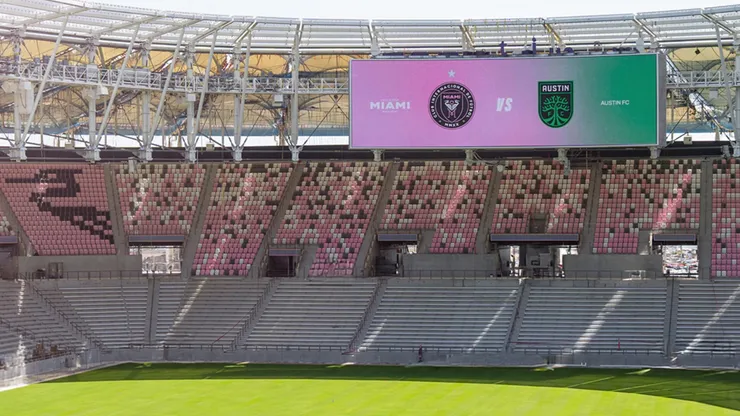
Inter Miami are preparing to move into theor long-term home as the club continues to grow, especially after the arrival of Lionel Messi. The new venue opens this Saturday, April 4, as part of a larger development project.
The stadium holds around 25,000 fans, placing it among the larger soccer-specific venues in Major League Soccer. It features a modern design with covered seating and premium areas, built to meet rising demand.
The stadium alone is estimated at $350 million, while the full Miami Freedom Park project approaches $1 billion. The development includes commercial and public spaces, making it one of the most ambitious club-led projects in U.S. soccer.
What is the total capacity of Inter Miami’s Nu Stadium?
Inter Miami’s new stadium has a capacity of about 25,000 to 26,700 seats. The official baseline sits at 25,000, though some updated projections place the figure closer to 26,700 depending on configuration.
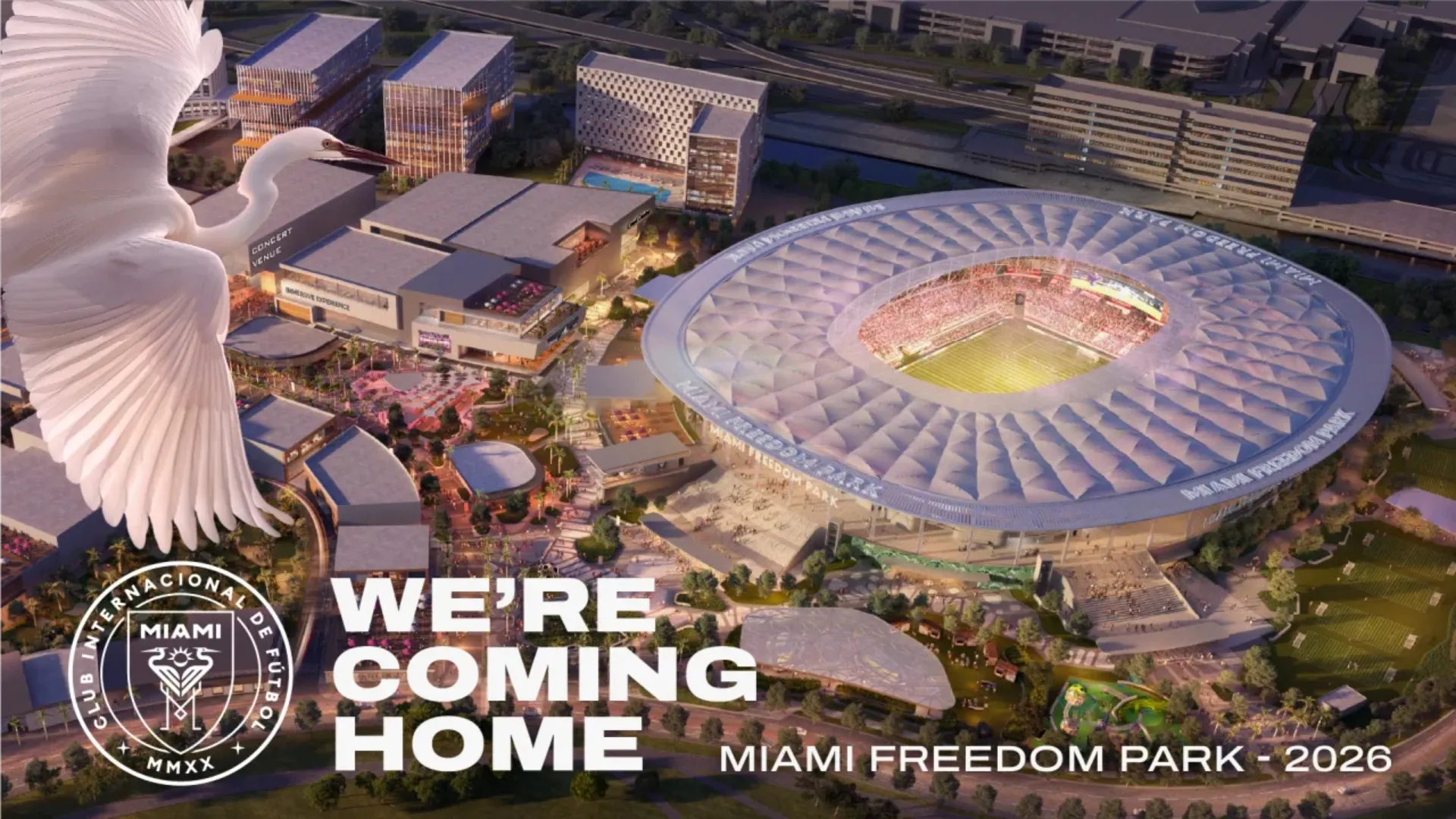
Miami Freedom Park (Source: Inter Miami CF)
This capacity is consistent with modern Major League Soccer trends, where teams favor mid-sized, soccer-specific venues that create a stronger atmosphere and consistent sellouts rather than oversized stadiums.
The design includes a two-tier seating bowl, premium suites and covered sections to protect fans from Miami’s weather, all aimed at enhancing the matchday experience, according to Sports Business Journal.
Where is Inter Miami’s new stadium located?
Inter Miami’s new stadium is located near Miami International Airport, on the former Melreese golf course site. The venue is part of the Miami Freedom Park development in Miami, Florida.
Its location is strategic: close to major transportation hubs, including rail connections and highways, making it accessible for both local fans and international visitors. The site spans over 130 acres, transforming what was previously underutilized land into a major sports and entertainment destination.
When will Inter Miami’s new stadium open?
Inter Miami’s new stadium officially opens on Saturday, April 4, 2026, with a match against Austin FC. The inaugural game will mark the club’s long-awaited debut at its permanent home, known as Nu Stadium, in what is expected to be a historic night.
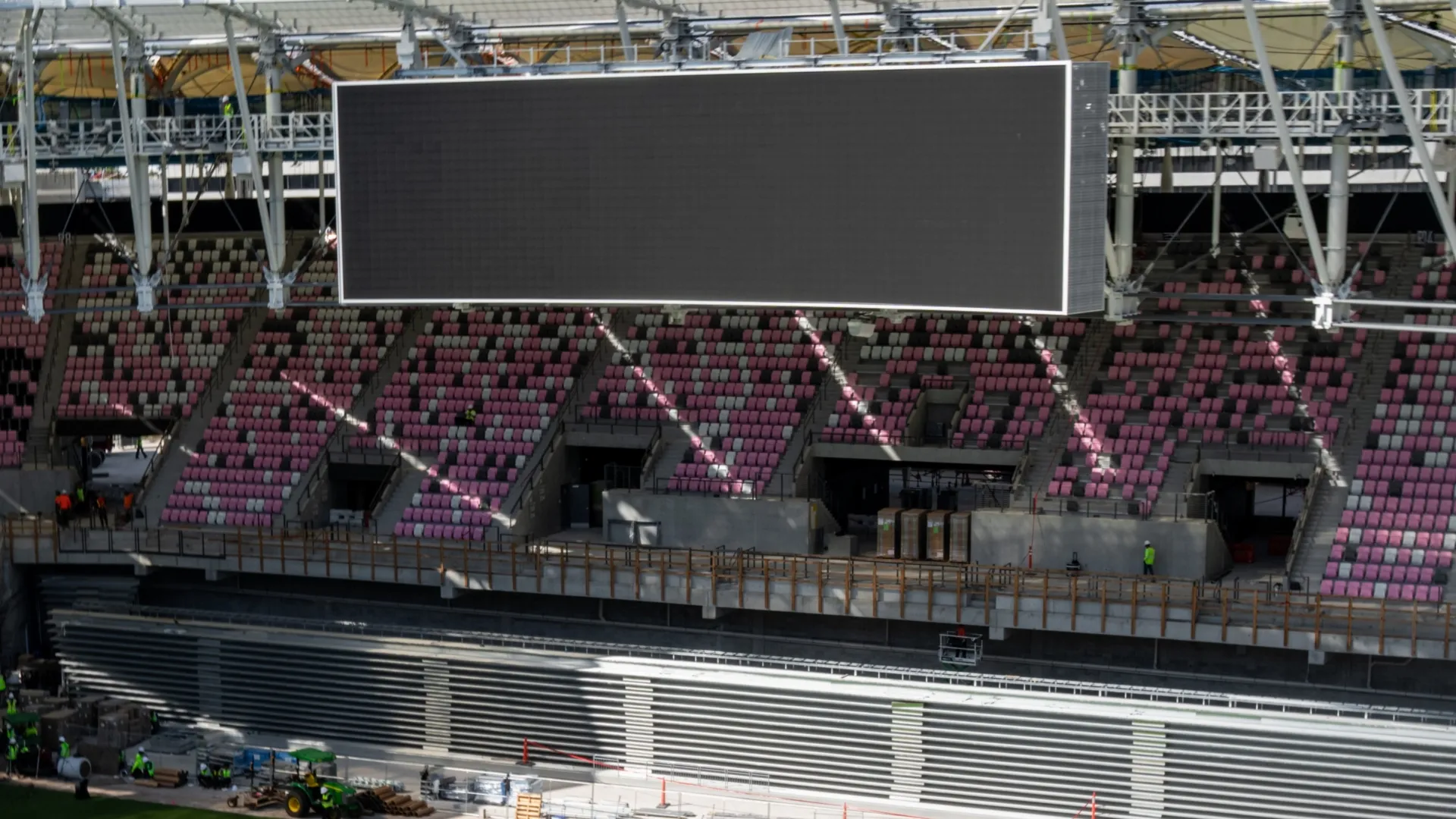
Nu Stadium (Source: @InterMiamiCF)
The opening comes after years of planning and construction, culminating in a milestone moment. The match is part of the 2026 MLS regular season and represents the team’s first official game at the venue after playing previous seasons in Fort Lauderdale.
In the lead-up to the inauguration, Inter Miami also confirmed a major tribute to Lionel Messi: a dedicated “Leo Messi Stand” inside the stadium. It spans multiple areas of the venue and will offer special fan experiences during the opening match.
What is included in the Miami Freedom Park project?
Miami Freedom Park includes a stadium, a 58-acre public park, retail spaces, offices, a hotel and entertainment areas. It is designed as a year-round destination, not just a matchday venue.
The development features restaurants, shops and experiential attractions, along with community sports fields and green spaces. In addition, plans include a large hotel and mixed-use commercial zones.
Why are Inter Miami building a new stadium?
Inter Miami are building a new stadium to establish a permanent home and expand its commercial and global footprint. Since joining MLS, the club has played in a temporary venue in Fort Lauderdale, making a long-term facility a priority.
The arrival of Lionel Messi accelerated that need, dramatically increasing demand for tickets, sponsorships, and global visibility. A modern stadium allows the club to capitalize on that growth. Beyond soccer, the project is designed to generate year-round revenue through events, retail and tourism.
How does Inter Miami’s new stadium compare to other MLS venues?
Inter Miami’s Nu Stadium is slightly above the average and aligns with the league’s top-tier soccer-specific venues. The average capacity across Major League Soccer stadiums is roughly 23,000.
In direct comparison, its size is very close to newer stadiums like Orlando City’s Inter&Co Stadium (25,500), while clearly larger than venues such as LAFC’s BMO Stadium (22,000) or Austin FC’s Q2 Stadium (20,738).
This comparison shows that Inter Miami is following the dominant MLS model… mid-sized, soccer-specific stadiums built to maximize atmosphere and consistent sellouts rather than sheer capacity. So, Nu Stadium can be defined as:
- Larger than most modern MLS venues like BMO Stadium or Q2 Stadium
- Very close to top-tier soccer-specific venues like TQL Stadium
- Much smaller than NFL-scale stadiums used by some MLS teams (like Atlanta)
Where the club clearly differentiates itself is not capacity, but context. While most stadiums are standalone venues, it is part of the Miami Freedom Park project, a large-scale mixed-use development.