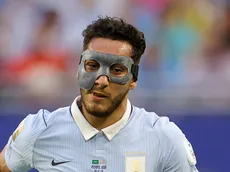

Phil Foden is not playing for England at the 2026 FIFA World Cup after being left out of Thomas Tuchel’s final 26-man squad selection. The Manchester City star was surprisingly omitted despite his pedigree and experience.
The decision by Thomas Tuchel came after months of evaluation, during which squad balance and tactical fit became central factors, while competition for attacking midfield and wide roles reached an all-time high. In fact, Cole Palmer isn’t playing at the 2026 World Cup either.
The head coach prioritized players with clearer positional roles and more consistent form across the 2025–26 season, a campaign in which Foden struggled to maintain his usual impact at Manchester City.
Thomas Tuchel’s decision explained: Why Phil Foden missed out
Phil Foden was left out of England’s World Cup squad mainly because Thomas Tuchel prioritized tactical balance, consistency of form and defined positional roles over reputation or individual quality. Tuchel also left Trent Alexander-Arnold out of the 2026 World Cup.

Phil Foden of England during the international friendly match (Source: Justin Setterfield/Getty Images)
Tuchel repeatedly emphasized that while Foden is an elite talent, England’s system required specialists who fit clearly defined roles, and he was not fully convinced where he best fits in the structure.
Another major factor was his inconsistent club form during the 2025–26 season, with a noticeable dip compared to his peak output in previous years, which reduced his automatic selection case.
Tuchel also pointed to tactical uncertainty: whether Foden should operate as a No.10, a false nine, or a deeper midfielder role. That ambiguity ultimately worked against him in a system that prioritizes clearly defined specialists.
Was Phil Foden’s performance a factor in his exclusion?
Performance was a central factor, but not in isolation. Phil Foden’s omission is widely linked to:
- A dip in goals and overall influence compared to previous seasons
- Reduced consistency at Manchester City, where competition for places limited his rhythm
- Mixed impact in England camp games, where he struggled to fully impose himself in key auditions
Reports from the England camp suggest Tuchel did not feel Foden delivered enough “decisive evidence” in recent performances to justify one of the limited attacking slots.
However, this wasn’t seen as a “punishment” exclusion. Instead, it reflects a broader selection philosophy where even top players must show both form + positional clarity to make the final squad.
Is England’s attack weaker without Phil Foden?
Multiple match reports and tactical breakdowns around Thomas Tuchel’s England show a consistent theme: when Foden is absent, England often lose a key layer of inventiveness between the lines, particularly in matches where space is limited.
In games where he was tested in attacking roles, including as a No.10 or false nine, England struggled to create sustained danger and at times looked blunt in possession against organized defenses.
That matters because his profile is quite unique in the squad. He is one of the few English attackers who can consistently operate in crowded central areas, receive under pressure, turn, and progress the ball into scoring zones.
However, the picture is not purely negative. Tuchel’s approach, as described across recent coverage, prioritizes tactical discipline, balance and defined roles over reliance on individual playmakers.
That means England can still function offensively without him, but the style changes. The attack becomes more structured and systematic, leaning on collective patterns rather than spontaneous creativity.